

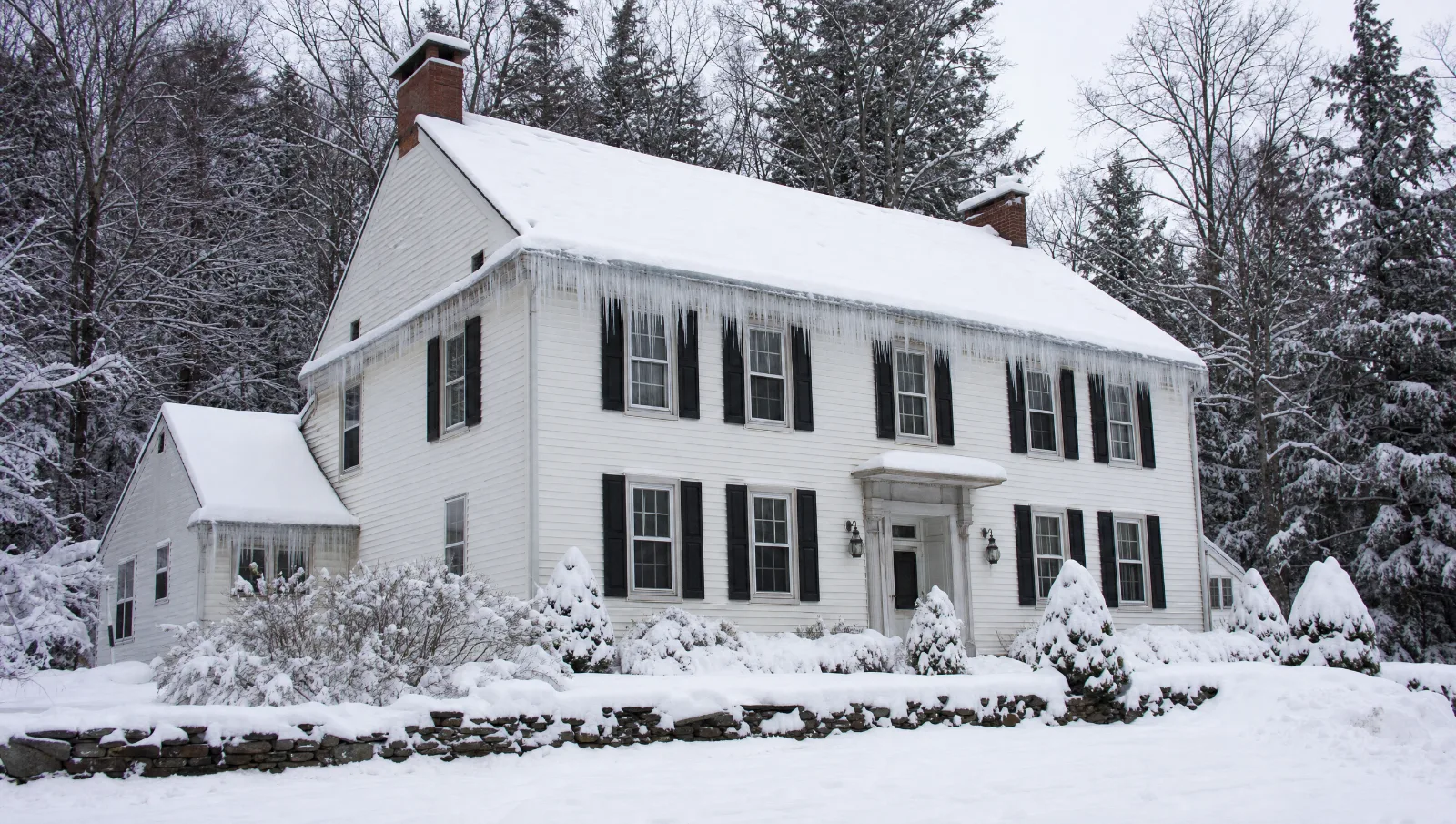
How to Prevent Ice Dams Before the First Poconos Snow
The way to prevent ice dams is to keep the roof deck above your living space cold. That means three jobs, in this order: seal the air leaks from the house into the attic, bring attic insulation up to R-49 or better, and make sure the attic can vent from the soffits to the ridge. Cleaning gutters and installing heat cables help at the edges, but they don’t touch the cause. And the time to do all of it is now, in the fall, while the attic is still a place a person can work.
By January the only thing anyone can do is chip ice and mop ceilings.
Why ice dams form on a roof that looks perfectly fine
An ice dam needs three things at once: snow on the roof, a roof deck that is warmer than 32°F over the heated part of the house, and eaves that stay below freezing because they hang out past the warm walls. Heat escaping into the attic melts the underside of the snow. The water runs down under the snow blanket, reaches the cold overhang and freezes. Every day that repeats, the ridge of ice at the edge gets taller, and the meltwater behind it pools on a roof that was designed to shed water, not hold it.
Shingles overlap like fish scales. They don’t seal against standing water. Once the pond behind the ice is deep enough, it backs up under the shingle courses, past the underlayment and into the top of your exterior wall. You see it days later as a brown stain on a bedroom ceiling or paint bubbling on the inside of a window frame.
Here’s the part most people get backwards: a big row of icicles is not a gutter problem. It is an attic telling you it is leaking heat. University of Minnesota Extension, which has studied ice dams in a far harsher climate than ours, puts the blame squarely on warm air in the attic, and so does the U.S. Department of Energy’s Building America Solution Center.
Why the Poconos gets them worse than the Lehigh Valley
Altitude. Mount Pocono sits around 1,900 feet, and the higher parts of Monroe County see 60 inches of snow or more in a normal winter. More snow on the roof means a thicker insulating blanket over the deck, and a thicker blanket means more melt underneath it. Add the freeze-thaw swings we get between January storms, when a sunny afternoon climbs above freezing and the night drops back into the teens, and you get the daily melt-and-refreeze cycle ice dams feed on.
Second homes are the other half of the story. A cabin in Bushkill or a place in the Saw Creek community can sit empty from New Year’s to Presidents’ Day. Nobody is there to notice the icicles thickening, so a small ice dam runs for six weeks instead of six days.
How to prevent ice dams: the fall checklist, in order of payoff
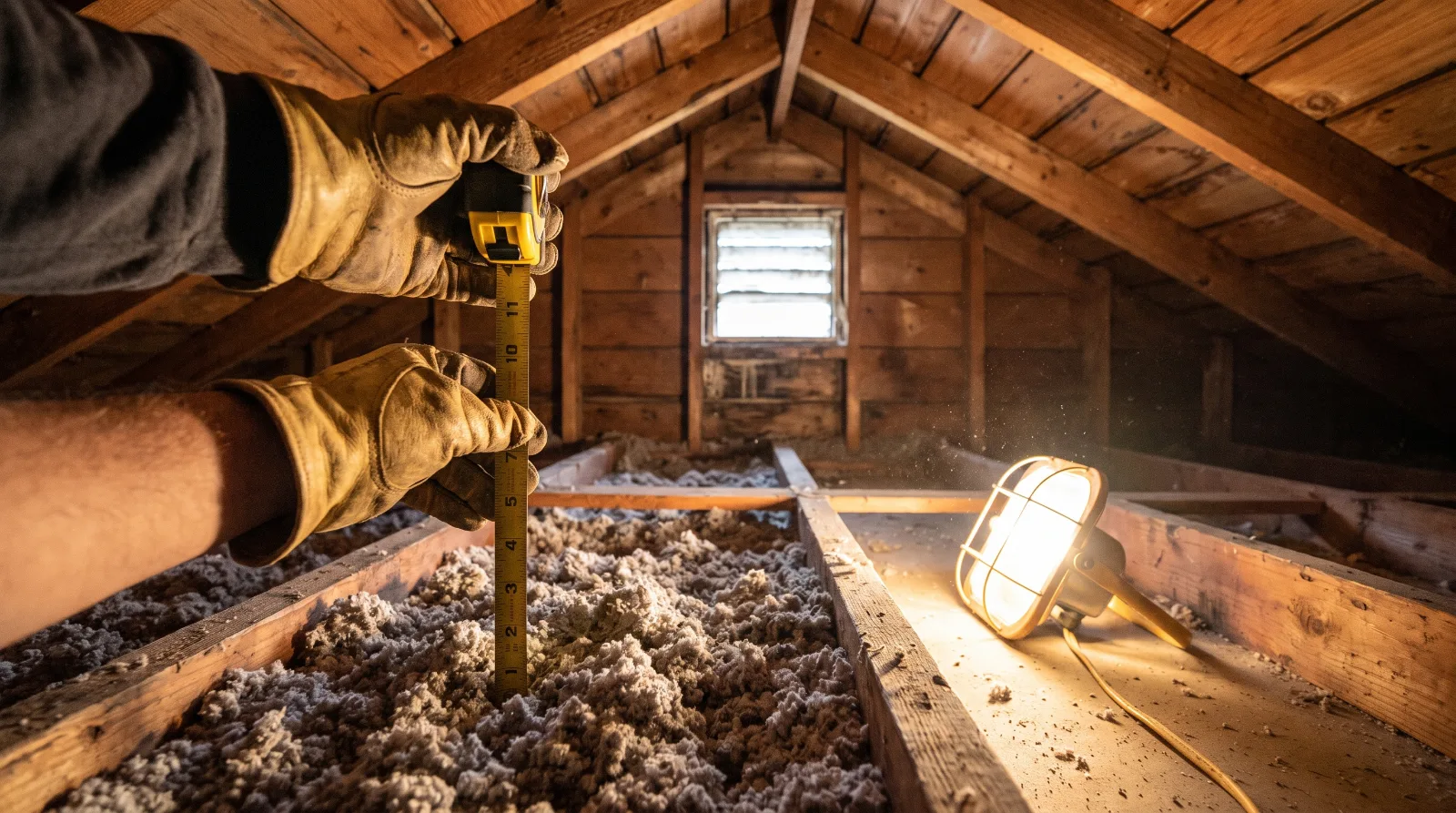
Do these in order. Each step makes the next one work better, and the first one is the cheapest.
- Seal the attic bypasses. Gaps around the attic hatch, recessed light cans, bathroom fan housings, plumbing stacks, the chimney chase and the top plates of interior walls leak far more heat than thin insulation does. Foam and caulk, done from the attic side.
- Top up the insulation. Monroe and Pike County are both in climate zone 5A, where ENERGY STAR recommends R-49 to R-60 in an attic. Depending on the material, that is roughly 14 to 20 inches of blown insulation. Many older homes have a fraction of that.
- Open the ventilation path. Cold outside air should enter at the soffits and leave at the ridge, carrying away whatever heat still sneaks through. Baffles at every rafter bay keep the new insulation from choking the soffit vents.
- Vent the bathroom and dryer fans outside. A bath fan that dumps into the attic is pumping warm, wet air straight at the underside of your roof deck. It’s common in older homes and easy to miss, because the fan still works fine from inside the bathroom.
- Clean the gutters after the last leaves drop. A packed gutter doesn’t create an ice dam, but it gives one a head start. That’s why we recommend scheduling gutter cleaning in Stroudsburg for after the leaves are down, not before.
What the fall fixes cost
| Fix | Typical cost | What it solves |
|---|---|---|
| Attic insulation top-up | $1,000 – $2,700 on average; $1 – $4 per sq ft | Slows heat loss through the ceiling |
| Blown-in insulation (loose fill) | $0.90 – $2.40 per sq ft | Best for topping up over what you have |
| Soffit baffles | $2 – $3 per baffle | Keeps the intake vents open |
| New roof vent | $200 – $700 | Adds exhaust where the attic has none |
| Roof heat cable (installed) | $5 – $15 per linear foot | Keeps a drain channel open at the edge only |
Figures are national averages from HomeGuide’s attic insulation and roof heating cable cost data. Air sealing is usually folded into the insulation quote; if a contractor insulates without sealing first, ask why.
Compare that with the other side of the ledger. HomeGuide puts roof repair after ice dam or snow damage at $800 to $2,500, and that’s before anyone opens up a stained ceiling or replaces wet insulation.
The one ice dam fix that only happens at reroof time
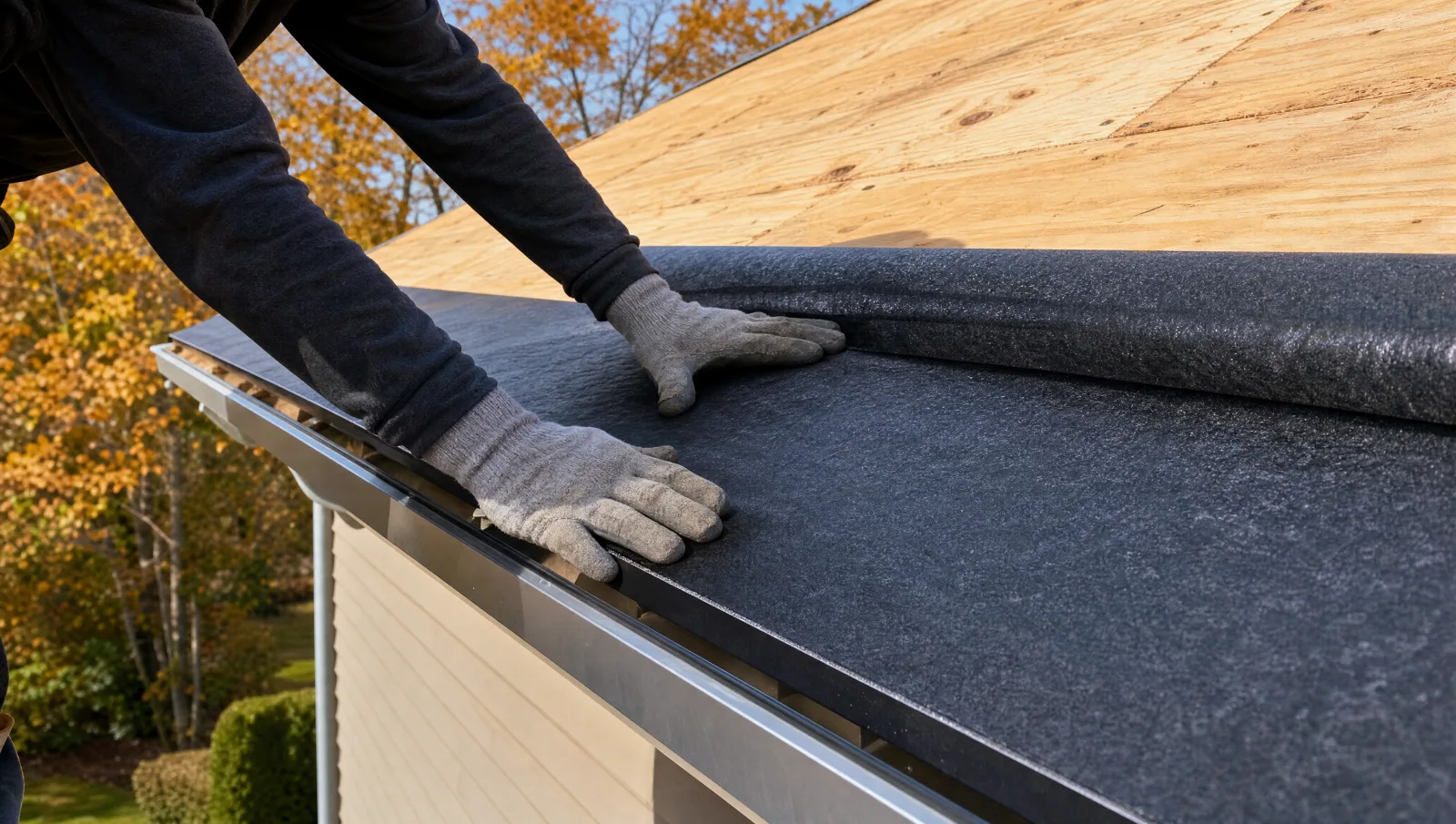
There is a layer under your shingles that decides whether a small ice dam becomes a ceiling stain or nothing at all: the ice barrier. It’s a self-adhering rubberized membrane, often called ice and water shield, that seals itself around every nail driven through it.
The International Residential Code, section R905.1.2, which Pennsylvania’s Uniform Construction Code is built on, calls for an ice barrier in areas with a history of ice dams. It has to run from the lowest edge of the roof to a point at least 24 inches inside the exterior wall line. On a house with a deep overhang, that often means two courses of membrane, not one.
You can’t add it to an existing roof. It goes on the bare deck, under everything. So if your roof is within a few years of replacement anyway, ask to see the ice barrier plan in writing before you sign. On a roof replacement in the Poconos, shaving it down to a single short course to save a few hundred dollars is the worst trade in the whole estimate.
What it can’t do is fix the attic. A membrane stops the water that gets past the shingles. It does nothing about the heat that made the water in the first place, so the ice still forms, the gutters still tear off, and the icicles still hang over your front steps.
What doesn’t prevent ice dams (and what makes them worse)
- Heat cables as the whole plan. They melt a channel so water can drain, which is useful on a problem valley or a porch roof. They don’t stop the melt. We cover when they’re worth it, and what they cost to run on a Pennsylvania electric bill, in our guide to roof heat cables and what they cost.
- Chipping the ice with a hammer or a hatchet. You will cut shingles, and shingles are brittle at 20°F. Chipping often does more harm to the roof than the ice dam would have.
- Rock salt on the roof. It kills the plants under the drip line and corrodes aluminum gutters and flashing.
- More attic vents with no air sealing. Extra vents on a leaky attic can pull more warm air out of the house. Seal first, then vent.
- Turning the heat way down in an empty cabin. A cooler house does lose less heat into the attic, but pipes freeze long before the ice dams stop. Keep second homes at a safe setting and fix the attic instead.
If you already have ice built up, that’s a different job. Our guide to ice dam removal in East Stroudsburg explains how it’s taken off without tearing up the roof.
Signs your house had ice dams last winter
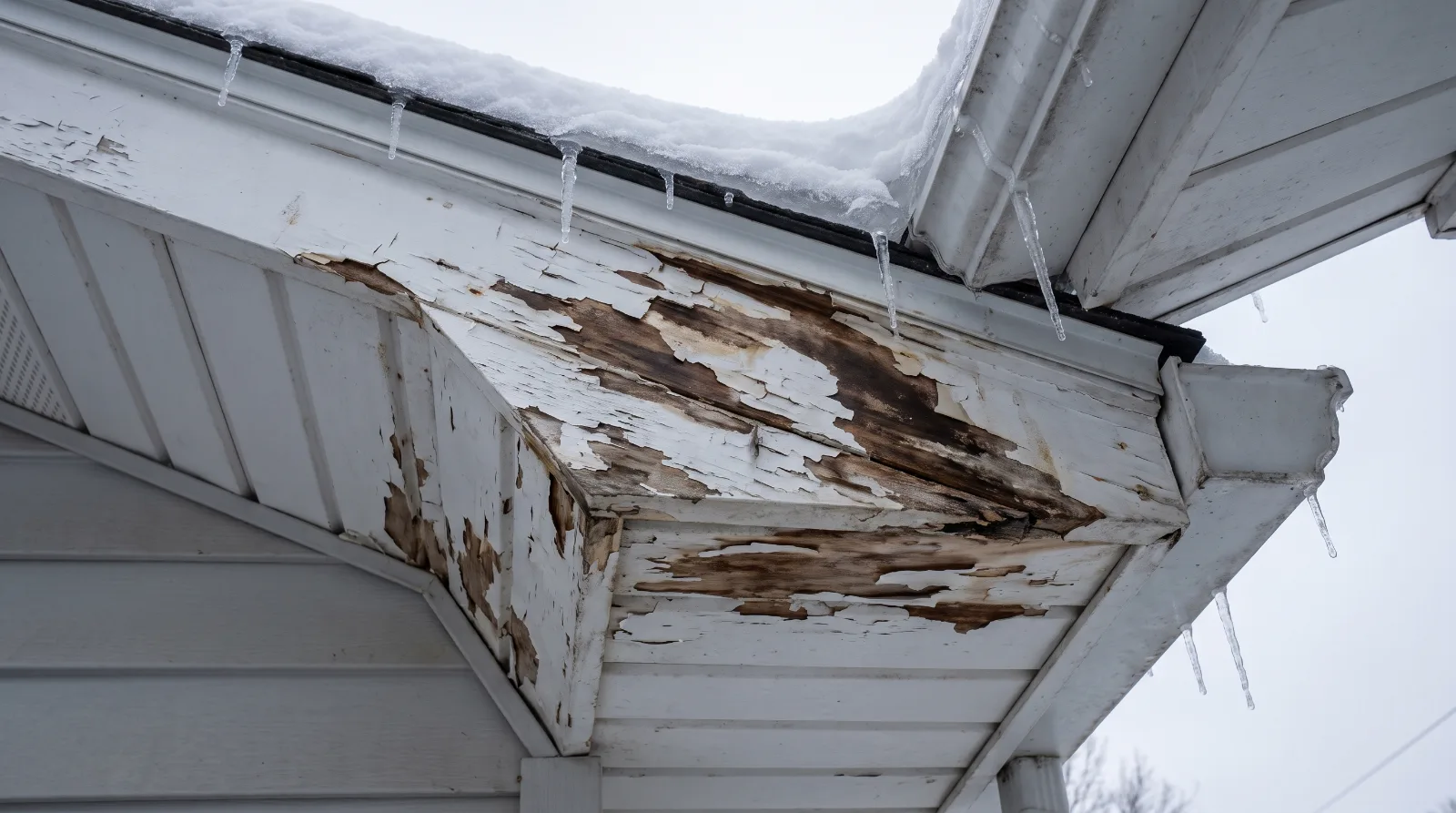
A lot of homeowners don’t know they have an ice dam problem until the first leak. The evidence is usually already on the house. Walk around it this weekend and look for:
- Brown streaks or peeling paint on the soffits and fascia, especially on the north side
- Rust stains running down from gutter hangers, or gutters pulled away from the fascia
- Stains or bubbled paint in the upper corners of exterior-wall rooms
- Warped or dark boards at the bottom edge of the roof deck, visible from inside the attic
- A strip of shingles at the eave that looks darker, worn or cupped compared to the rest
- Frost or dark, damp spots on the underside of the roof deck on a cold morning, which our post on signs of poor attic ventilation covers in more detail
Any one of those is worth a look before the snow flies. Wet fascia or soft decking at the edge is a roof repair that is cheap in October and expensive in February.
Frequently asked questions
Do ice dams mean I need a new roof?
Almost never on their own. Ice dams are an attic problem showing up on the roof. Fix the air sealing and insulation and the same roof usually stops damming. A new roof only enters the conversation if the edge decking has rotted or the roof is near the end of its life anyway.
Will cleaning my gutters prevent ice dams?
No, but it helps. Clean gutters let the first melt drain away instead of freezing in place, which slows how fast the dam builds. A house with a warm attic will still get ice dams with spotless gutters.
Is fall really the best time to fix this?
Yes. Attic work is miserable and slow in July heat and nearly impossible once there are two feet of snow on the roof. September through November gives you mild attic temperatures, dry weather and time to find the bypasses before they matter.
Does homeowners insurance cover ice dam damage?
Many policies cover the sudden water damage inside the house, but not the cost of fixing the attic that caused it, and repeated claims for the same problem get harder to collect. Our guide to whether insurance covers a roof leak in PA walks through the distinction.
If water is already coming through the ceiling, here’s what to do about an ice dam roof leak and what insurance will pay.
How much snow is too much on a Poconos roof?
Weight and ice dams are separate problems. For structural limits and what heavy snow does to older roofs, see our guide to roof repair from heavy snow in the Poconos.
Get your roof and attic checked before the first storm
We’ve been working on roofs across Monroe and Pike County for more than a decade. We’ll look at the roof edge, the soffits and the attic, and tell you straight whether you have an ice dam problem, what’s causing it and which of the fixes above you actually need. Sometimes the answer is an afternoon of air sealing and nothing to do with the roof at all. The inspection is free either way.
Call (570) 426-3505. We cover Stroudsburg, East Stroudsburg, Mount Pocono, Bushkill, Delaware Water Gap and the rest of the Poconos.
2 Comments