Shingle Granule Loss: What It Means for Your Poconos Roof in 2026
You just finished clearing your gutters after a heavy Poconos storm, but instead of just wet leaves, you find a thick layer of dark, sand-like grit settled at the bottom of the downspout. It is a frustrating sight that immediately brings up questions about hidden leaks and the actual health of your home. You probably wonder if this is a natural part of your roof’s life cycle or if a contractor is going to tell you that you need a total replacement right away. Understanding shingle granule loss what it means for your property is the best way to move from uncertainty to a clear plan of action.
We agree that your roof should be a source of security, not a cause for constant repair anxiety. This article will show you how to distinguish between normal shedding and serious balding that leaves your home vulnerable to our local freeze-thaw cycles. We will preview the latest 2026 building code requirements for Pennsylvania homeowners and provide a simple checklist to help you decide when it is time to call in a dependable local professional to verify your roof’s condition. You will gain the knowledge needed to protect your home without the fear of being overcharged for unnecessary work.
Key Takeaways
- Understand the protective role of ceramic-coated granules and why their loss is more than just a cosmetic issue for your shingles.
- Learn how to use a visual scale to determine shingle granule loss what it means for your roof’s health, distinguishing between normal shedding and dangerous “balding.”
- See how local Poconos weather, including heavy snow and ice dams, creates unique friction that can strip away your roof’s protective layer faster than expected.
- Gain a clear framework for deciding when a simple shingle repair will fix the problem or when a full replacement is the smarter long-term investment for your home.
What Are Asphalt Shingle Granules and Why Are They Falling Off?
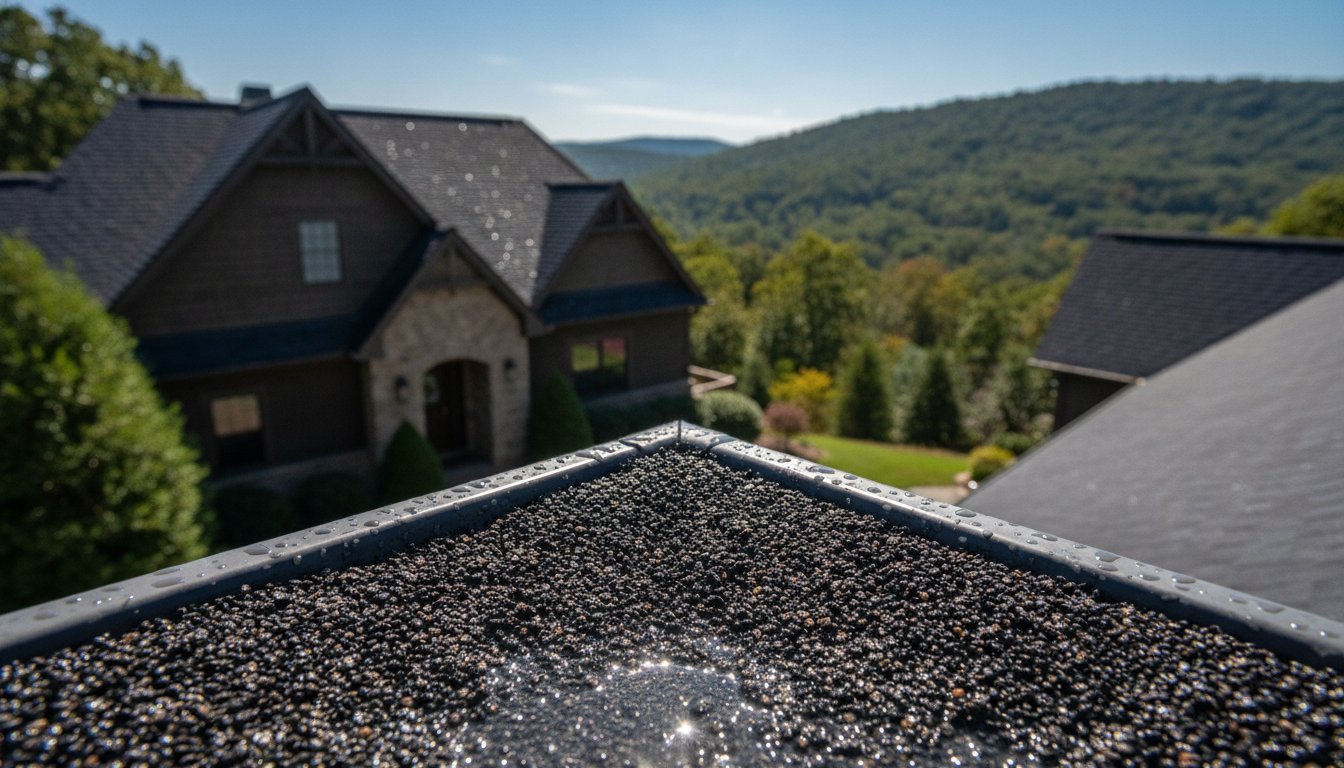
If you have ever looked closely at your roof, you have seen those tiny, rough particles that give the surface its texture and color. These are not just decorative sand. They are actually crushed stone and minerals coated in a durable ceramic layer. To understand the basics of What are asphalt shingles?, you have to look at these granules as the primary line of defense for your home. Shingle granule loss what it means for your property is the natural or accelerated shedding of these protective layers, which eventually leaves the underlying material exposed to the elements.
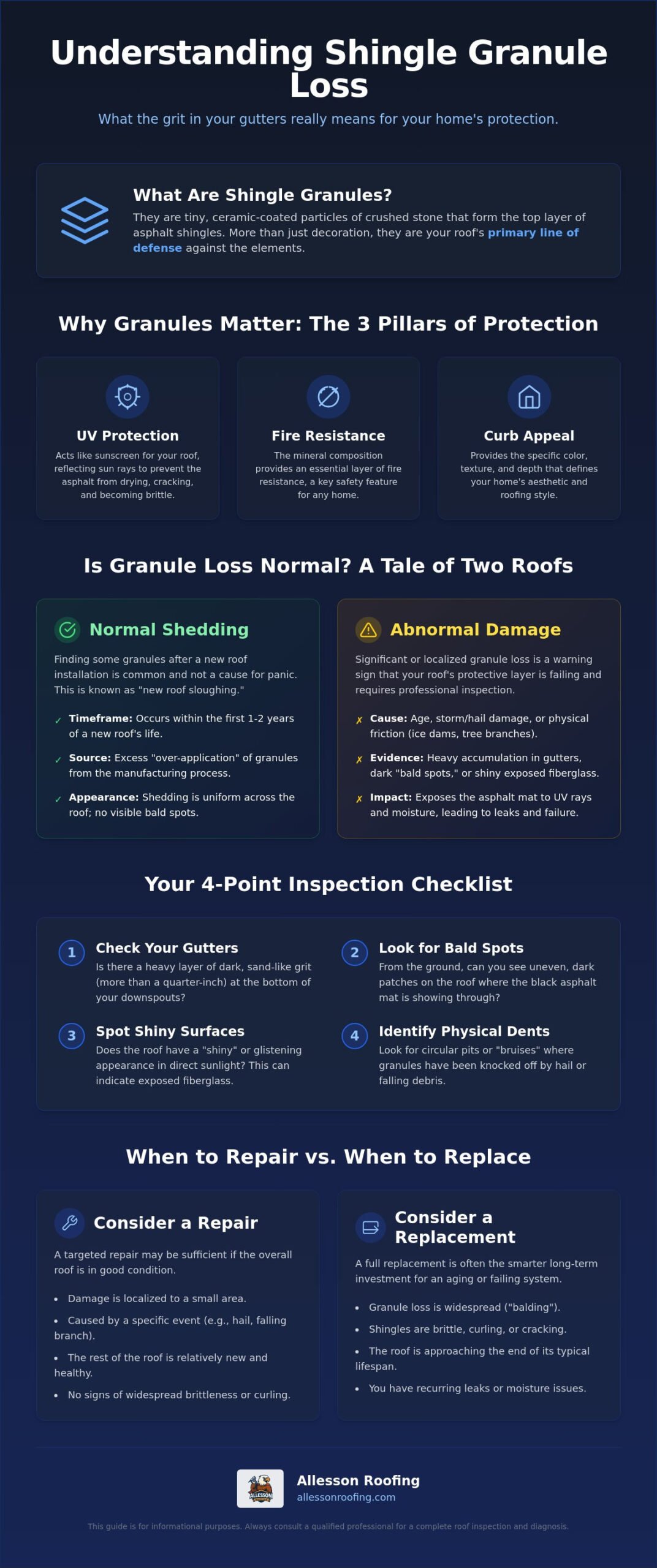
These granules serve three critical purposes. First, they provide UV protection by reflecting the sun’s rays. Second, they offer fire resistance, which is a key safety feature for any residential structure. Finally, they give your home its curb appeal by providing the specific colors and depths that define modern roofing styles. Without this layer, your roof would just be a series of black, sticky mats that would quickly fail under the Poconos sun.
The Critical Role of Granules in Roof Longevity
Granules act like sunscreen for your roof. Asphalt is naturally sensitive to heat and light. Without that stone barrier, the sun’s UV rays would quickly bake the underlying asphalt, causing it to dry out and lose its essential oils. High granule density keeps the shingle flexible, which is vital in our local climate where temperatures swing wildly between seasons. When these particles disappear, the shingle becomes brittle and prone to cracking under the weight of winter snow. Once the asphalt is exposed and “baked,” it loses its ability to shed water, which is often how small leaks start to form in older Poconos homes.
New Roof Sloughing: When Not to Panic
Finding a handful of grit in your downspouts after a new installation is actually quite common. During the manufacturing process, companies often apply more granules than the asphalt can actually hold to ensure complete coverage. This is known as “over-application.” You can expect to see this “factory fresh” shedding for about the first two years of the roof’s life. It is easy to identify because the shedding is usually uniform and doesn’t leave visible bald spots. If you want to learn more about maintaining your new system, you can check out our latest advice on the Allesson Roofing blog. This initial loss is simply the extra, unbonded particles finally washing away after a few heavy rains.
Normal Wear vs. Abnormal Damage: Identifying the Severity
Evaluating shingle granule loss what it means for your Poconos home starts with a simple ground-level inspection. You don’t need to be a roofing pro to spot the early warning signs of a failing system. Start by looking at your downspout splash blocks or the areas where your gutters drain. If you see a heavy accumulation of “shingle sand” that looks like dark coffee grounds, it is time to take a closer look at the roof surface itself. While some shedding is expected, knowing the difference between a roof that is just aging and one that is failing can save you from a sudden, expensive leak.
Use this quick checklist to gauge the health of your shingles:
- Grit Accumulation: Check if the layer of granules in your gutters exceeds a quarter-inch in depth.
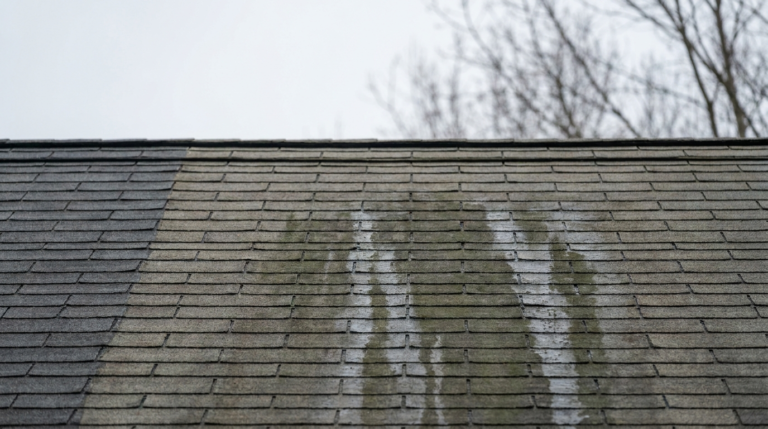
- Color Shifts: Look for dark patches or “bald spots” where the black asphalt is clearly visible through the colored stones.
- Reflective Spots: Watch for a “shiny” appearance when the sun hits the roof, which often indicates exposed fiberglass.
- Physical Dents: Identify circular pits or “bruises” that look like someone pressed a thumb into the shingle.
Signs of Age-Related Thinning
As your roof reaches the end of its lifespan, the asphalt binder naturally dries out and loses its grip. This results in uniform thinning across the entire roof surface. You will likely notice this process happening first on south-facing slopes because they endure the most intense UV exposure throughout the day. When the loss becomes severe, the shingles will appear brittle and may even start to curl at the edges. This type of wear is a clear signal that the protective barrier is gone and the structural integrity of the shingle is declining.
Spotting Storm and Hail Damage
Unlike the slow, even wear of age, storm damage is usually localized and aggressive. Hail creates distinct “bruising,” which looks like dark, circular craters where granules were physically punched into the asphalt mat. You might also see scoured lines if high winds have caused overhanging tree branches to scrape against the roof. Because these spots leave the asphalt completely unprotected, they can lead to leaks much faster than standard aging. If you notice these specific patterns after a storm, it is a good idea to reach out to a local professional to document the damage for insurance purposes before it leads to interior water damage.
How Poconos Weather Accelerates Shingle Deterioration
Living in the Poconos means dealing with weather that can be tough on any exterior material. While manufacturers design shingles to last decades, the specific climate in East Stroudsburg often speeds up the aging process. Understanding shingle granule loss what it means in our region requires looking at the physical stress your roof faces daily. Between the heavy snow loads of winter and the high winds that sweep through the Lehigh Valley, your shingles are under constant pressure. These elements act like sandpaper, slowly scouring away the protective surface that keeps your home dry.
Thermal expansion and contraction also play a massive role in our area. In Pennsylvania, it is common to see a 40-degree temperature swing in a single day. This causes the asphalt mat of your shingles to expand and shrink repeatedly. This constant movement eventually loosens the bond between the asphalt and the ceramic-coated stones. When that bond fails, the granules wash away during the next rainstorm, leaving the “shingle sand” you might have found in your downspouts.
Ice Dams and Granule Displacement
Ice dams are a primary culprit for localized damage in the Northeast. When snow melts and refreezes at your eaves, it creates a block of ice that traps water against the shingles. This standing water softens the asphalt binder over time. When the ice finally shifts or slides off, it often takes a significant layer of granules with it. We often see homeowners try to fix this by “shoveling” their roof or using salt to melt the ice, but these actions cause immediate surface damage and friction. To minimize this, focus on improving your attic ventilation to keep the roof surface cold and prevent the melt-freeze cycle from starting.
The Impact of High Elevation UV Exposure
If your home is at a higher elevation in the Poconos, you are dealing with more intense UV radiation. This increased exposure accelerates the degradation of the essential oils in the asphalt. Once those oils are gone, the shingles lose their flexibility and their ability to hold onto the protective grit. Recent summer heat waves have only added to this cumulative “baking” effect. Because of these local factors, an inspection after a harsh winter is the best way to catch thinning before a leak develops. If you have concerns about your roof’s durability, schedule a professional assessment to see if your system still meets the 2026 protection standards required for our climate.
When to Repair or Replace Your Roof Based on Granule Loss
Deciding between a quick fix and a full investment is the most important choice you will make after spotting damage. If the thinning is localized to one area, perhaps from a fallen branch or a single ice dam, a targeted repair might buy you several more years. However, when you see widespread bald spots or fiberglass peeking through across multiple slopes, you have reached the point of no return. Understanding shingle granule loss what it means for your long-term budget is vital. Patching a roof that has lost its protective layer is often just a temporary bandage on a system that can no longer shield your home from the elements.
A professional inspection is the only way to verify if the underlying structure is still sound. While you can see the grit in your gutters, an expert can tell if the asphalt has become too brittle to hold a new seal. In Pennsylvania, the 2026 updates to the building code mean that any major renovation must now meet stricter standards for ventilation and ice barriers. We help you navigate these requirements so your home remains compliant and fully protected against the next winter storm. You can find more tips on maintaining these standards on the Allesson Roofing blog.
The Cost of Waiting: Why Granule Loss Can’t Be Ignored
Ignoring those sand-like particles is a gamble that rarely pays off. Once the granules are gone, the sun and rain quickly degrade the exposed asphalt, leading to cracks that invite water into your attic. This moisture often results in hidden mold and structural wood rot that is far more expensive to fix than the roof itself. Proactive maintenance is always more cost-effective than waiting for a ceiling leak to force your hand into emergency storm damage restoration. A 2026 survey found that nearly 60% of homeowners described their roof replacement as an urgent or emergency matter; staying ahead of granule loss helps you avoid being part of that statistic.
Choosing a Dependable Local Authority for Your Inspection
You need a partner who knows the East Stroudsburg area and the specific challenges our weather creates. It is important to work with a team that has a deep understanding of asphalt shingle installation in PA and follows the latest safety and material guidelines. We take pride in offering transparent advice without the high-pressure sales tactics common in the industry. Our goal is to ensure your home is ready for whatever the Poconos climate throws at it next. Schedule a thorough inspection with Allesson Roofing today to get a clear, honest assessment of your roof’s current state.
Secure Your Home Against the Poconos Elements
We’ve explored how granules act as your roof’s primary defense against UV rays and fire. You now have the tools to distinguish between normal “sloughing” on a new roof and the serious bald spots caused by our local freeze-thaw cycles. Understanding shingle granule loss what it means for your property’s safety is the best way to prevent hidden leaks from turning into major structural repairs. Proactive care is always more manageable than reacting to a sudden emergency after a heavy snowstorm.
As a locally owned and operated business in East Stroudsburg, we are specialists in Poconos storm damage restoration. Our team brings extensive expertise in asphalt shingle systems to every project, ensuring your home meets the latest 2026 protection standards. Don’t let uncertainty about your roof’s condition weigh on you. Get a Professional Roof Inspection in East Stroudsburg to verify your home is fully prepared for the year ahead. Taking this simple step today ensures your family stays dry and comfortable through every season.
Frequently Asked Questions
Is it normal to see granules in my gutters after a storm?
Yes, seeing a small amount of grit after a heavy Poconos rain is common. High winds and driving rain naturally dislodge loose particles from the shingle surface. However, if you find a layer of sediment thick enough to block water flow, it’s a sign of trouble. We recommend clearing your gutters and monitoring the volume of debris to catch accelerated wear before it leads to a leak.
How much granule loss is too much for an older roof?
Loss is considered excessive when you see “bald spots” where the black asphalt mat is visible or shiny fiberglass is showing. If multiple bare patches appear across your roof, the shingles can no longer protect your home from UV rays. Understanding shingle granule loss what it means for an aging roof helps you plan for a replacement before interior water damage starts.
Can I just paint or seal my shingles to stop granule loss?
No, you shouldn’t paint or apply DIY sealants to your roof. These products trap moisture inside the shingle mat and can actually accelerate rot or cause the shingles to buckle. They also typically void your manufacturer’s warranty. The only safe way to stop serious loss is to address the underlying cause or replace the damaged shingles with new, factory-coated materials designed for our mountain climate.
Does homeowner insurance cover granule loss caused by hail?
Yes, most policies cover granule loss if it results from a sudden event like a hailstorm. Insurance adjusters look for specific “bruising” or circular impact patterns rather than the uniform thinning caused by old age. Since 60 percent of 2026 roof replacements in Pennsylvania are classified as urgent matters, documenting this damage immediately with a professional inspection is the best way to support your insurance claim.
How long do shingles usually last in the Poconos before balding?
Standard 3-tab shingles often show significant balding in as little as 18 years due to our local freeze-thaw cycles. Premium architectural shingles are more resilient and can last 45 years or more in the East Stroudsburg area. Homes at higher elevations may experience faster degradation because of more intense UV exposure, making regular inspections vital to getting the most value out of your residential roofing investment.
Why are my shingles losing granules in only one specific spot?
Localized loss is usually caused by physical friction or a mechanical issue. Common culprits include tree branches rubbing against the surface, foot traffic from other contractors, or a “hot spot” caused by poor attic ventilation. If the loss is concentrated near the eaves, it’s likely the result of past ice dam damage. Identifying shingle granule loss what it means in a specific spot helps you fix the source.