

Roof Heat Cables: Do They Work and What Do They Cost?
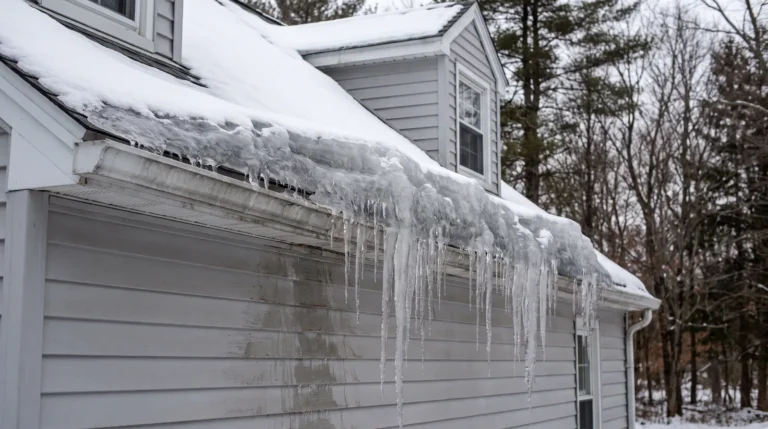
Roof heat cables work, but only at the edge. A properly installed cable keeps a narrow channel open through the ice so meltwater can drain off the roof and down the gutter instead of backing up under the shingles. It doesn’t stop the melt that causes ice dams in the first place. Installed, heat cable runs $5 to $15 per linear foot, or $500 to $2,000 for a typical house, and running it can add $40 to $200 a month to a Pennsylvania electric bill in the dead of winter.
Whether that’s money well spent depends almost entirely on why your roof is icing up.
What roof heat cables actually do
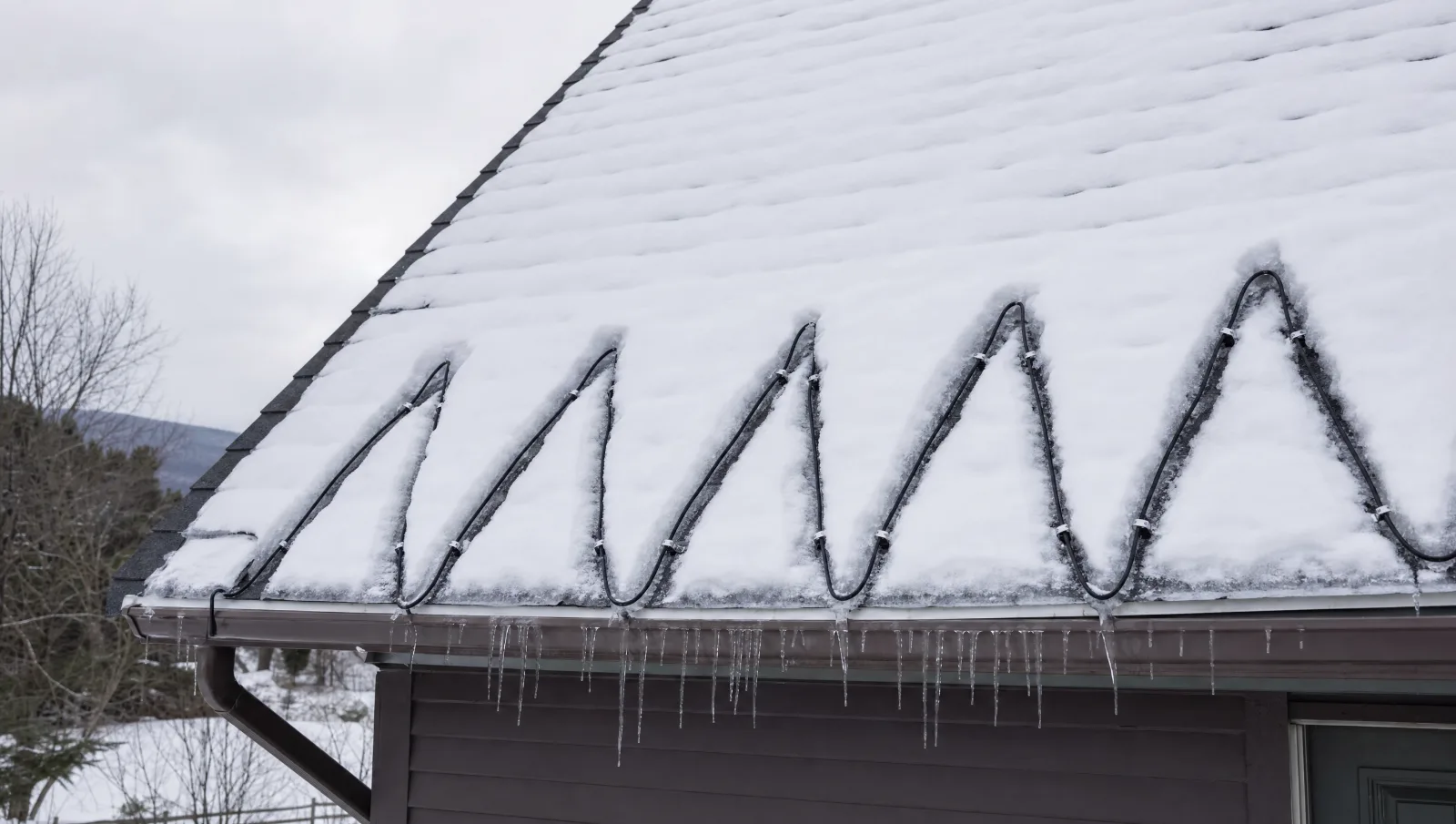
A roof heat cable, also sold as heat tape or roof de-icing cable, is an electric resistance cable clipped to the roof in a zigzag along the eaves, laid through the gutters and run down inside the downspouts. When it’s on, it warms a strip of roof and gutter just enough to keep water liquid.
It does not melt the snow off your roof. It doesn’t remove an ice dam that’s already there, and it does nothing about the warm attic that’s melting the snow from underneath. Think of it as keeping a drain open, not turning off the tap.
That’s why we treat cables as a targeted tool, not a fix. If your ice dams come from heat leaking into the attic, the permanent answer is air sealing, insulation and ventilation, which we lay out step by step in our guide on how to prevent ice dams before the first Poconos snow.
Where heat cables make sense on a Poconos house
There are places where the attic fix isn’t possible or isn’t enough, and those are where heat cables earn their keep:
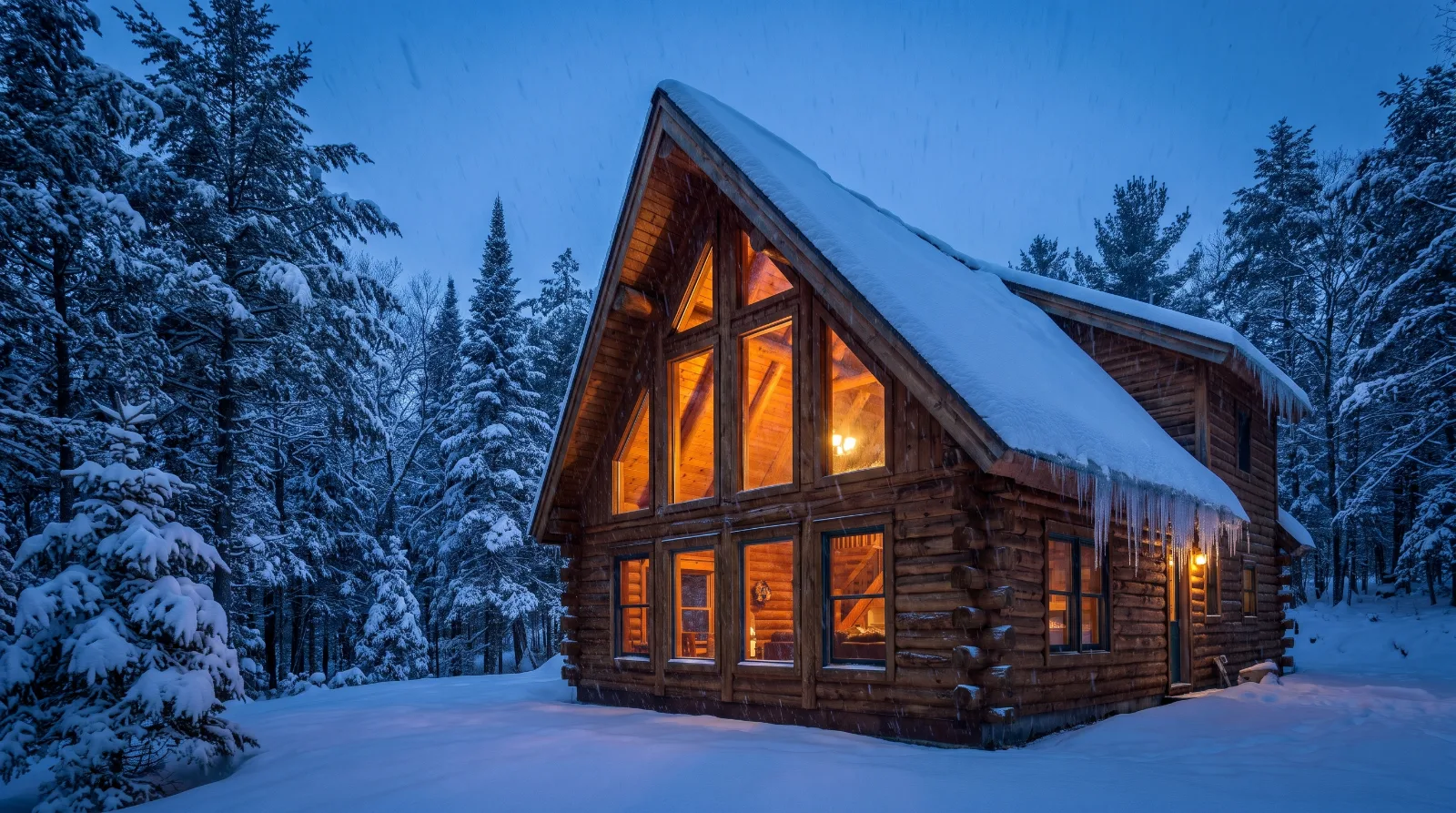
- Cathedral ceilings and A-frames. When the ceiling is the underside of the roof, there’s no attic to insulate or ventilate from inside. Vacation cabins with vaulted great rooms, a familiar sight in the wooded communities around Bushkill and Dingmans Ferry, are textbook heat cable candidates.
- Valleys that dump onto a walkway. Where two roof planes meet over a door or a deck, ice builds fast and falls on people. A short cable run in that valley is a safety measure.
- North-facing eaves and shaded porches. Some edges never see sun between December and February. Water that reaches them refreezes no matter how good the attic is.
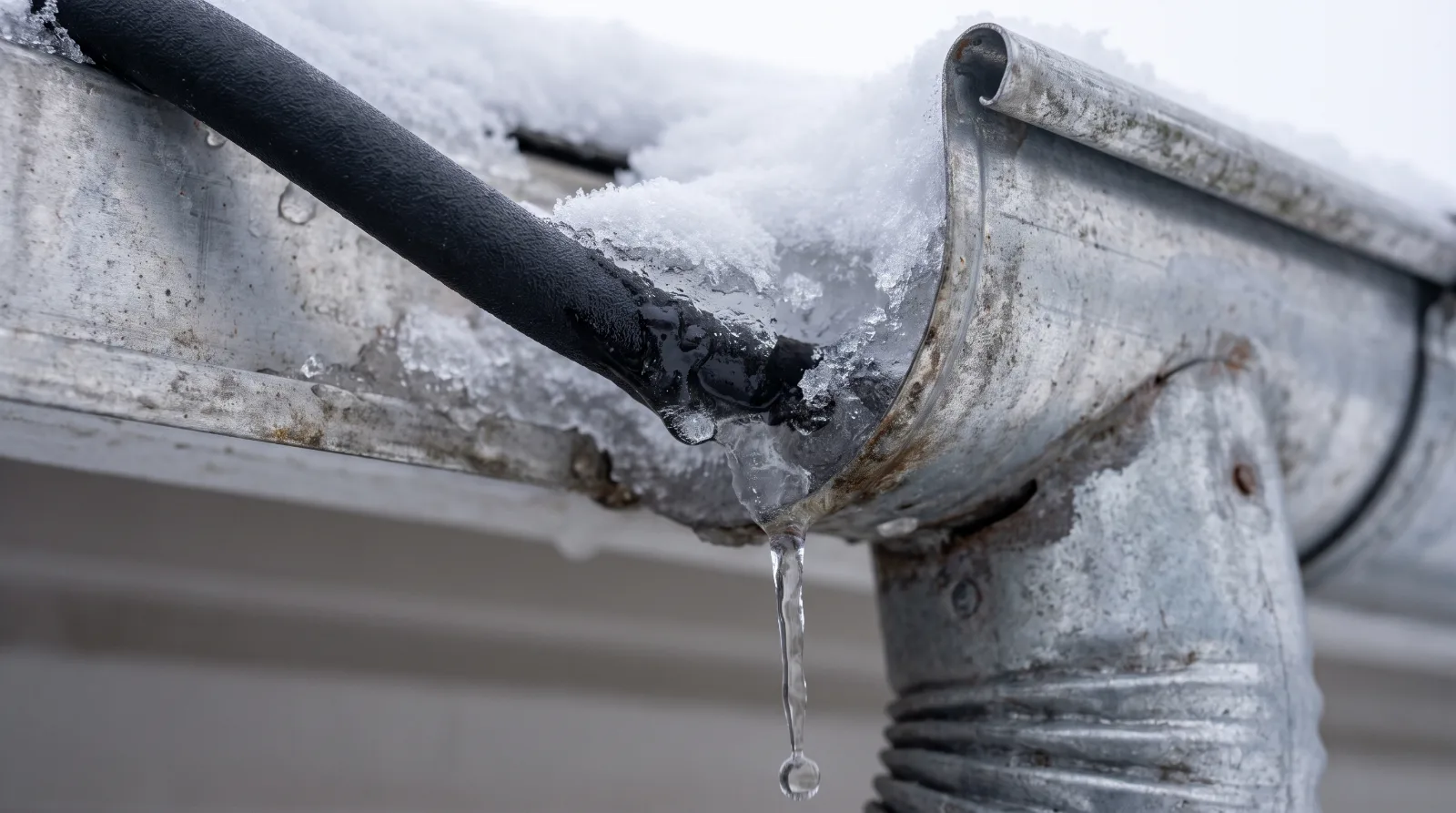
- Downspouts that freeze solid. A frozen downspout backs the whole gutter up. A cable run down the inside of the spout is often the cheapest fix of all.
- Homes where you’ll replace the roof in a year or two. A cable can buy a winter while you plan the real repair.
If none of those describe your house and you still get ice dams every winter, the cable is treating a symptom. Put the money into the attic first.
What roof heat cables cost to install and run
| Item | Typical cost |
|---|---|
| Professional installation | $5 – $15 per linear foot |
| Typical house, installed | $500 – $2,000 |
| 100 ft of roof edge, installed | $500 – $1,500 |
| 200 ft of roof edge, installed | $1,000 – $3,000 |
| Self-regulating cable (material) | $2.50 – $4.50 per foot |
| Constant-wattage cable (material) | $0.70 – $1.70 per foot |
| Automatic controller / thermostat | $40 – $120 |
| Heat cable added to existing gutters | $400 – $1,400 |
Figures from HomeGuide’s roof heating cable cost data. Add an electrician if there’s no weatherproof outdoor outlet near the eave.
The electric bill, worked out for Pennsylvania
This is the number most sales pitches leave out. Roof heat cable draws roughly 5 to 8 watts per foot while it’s on. The average residential electricity price in Pennsylvania was 21.72 cents per kWh in July 2026, according to the U.S. Energy Information Administration. Here’s a realistic example:
- A two-story house with 100 feet of eave can easily need 200 feet of cable once you count the zigzag, the gutters and two downspouts.
- 200 feet × 5 to 8 watts = 1,000 to 1,600 watts, or 1 to 1.6 kWh every hour it runs.
- Left on around the clock from mid-December to mid-March (about 2,160 hours), that’s 2,160 to 3,456 kWh.
- At 21.72 cents, that’s roughly $470 to $750 for the season.
Run the same cable only when it’s actually needed, with a controller that switches it on in freezing, wet conditions, and the cost drops to a fraction of that. HomeGuide’s range of $40 to $200 a month reflects that spread. The cable is the cheap part. Leaving it plugged in all winter is where the money goes.
Self-regulating vs constant-wattage cable
Constant-wattage cable puts out the same heat whenever it’s plugged in, sunny afternoon or subzero night. It’s cheaper to buy and more expensive to run, and if a section overlaps itself or gets buried under leaves, it can overheat.
Self-regulating cable has a conductive core that puts out more heat as it gets colder and less as it warms up. It costs two to three times as much per foot and it’s the one we’d put on a Poconos roof, because it won’t run full blast on a 45°F January afternoon.
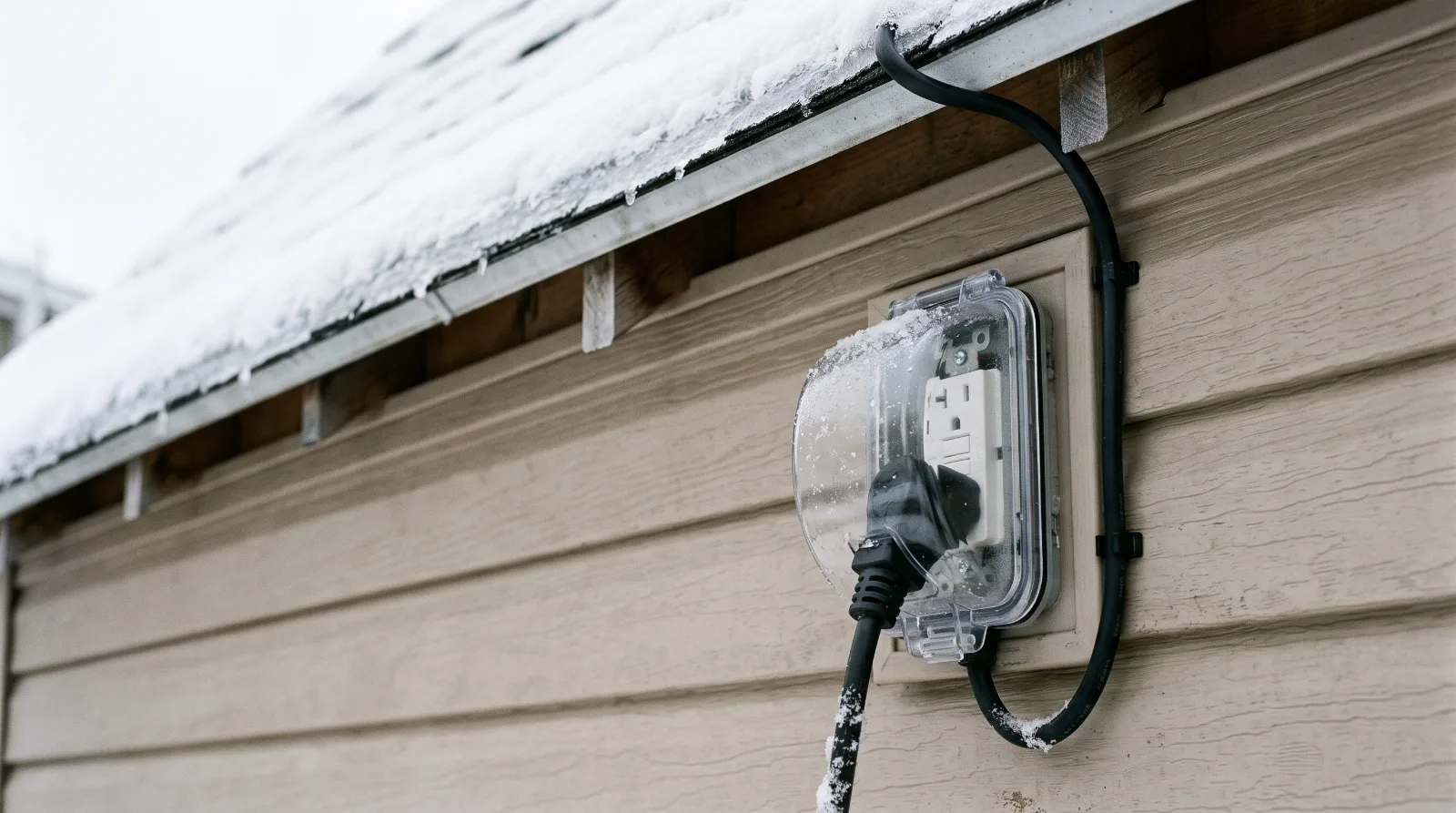
Either way, the circuit needs ground-fault protection. The National Electrical Code, section 426.28, requires it for fixed outdoor deicing equipment. A plug-in kit should go into a GFCI outlet with an in-use weatherproof cover, and a hardwired system is an electrician’s job.
How heat cables damage roofs (and how to avoid it)
Heat cable doesn’t hurt shingles by itself. Bad installation does. The problems almost always come from a handful of installation mistakes:
- Clips nailed through shingles. Every nail through the exposed part of a shingle is a future leak. Clips should hook under the shingle tabs or use the manufacturer’s adhesive system, never fasteners through the roof surface.
- Clips installed in the cold. Lifting frozen shingle tabs to slide clips under them cracks the tabs and breaks the adhesive seal. Install in the fall, on a day warm enough that the shingles are flexible.
- Cable run only in the gutter. Water melts at the gutter and refreezes on the roof a foot above it. The zigzag on the roof and the run down the downspout both matter.
- Cheap cable left on for years. Jackets crack in UV and freeze-thaw cycles. Inspect it every fall before plugging it in, and replace any section with a damaged jacket.
- Cable over a roof that’s already failing. If the shingles at the eave are curled or the decking is soft, a cable just hides the problem for a season.
Honest advice: if your roof is sound and you only have one trouble spot, a plug-in kit on a single valley or downspout, installed carefully in October, may be all you ever need. You don’t need a whole-house system to fix one icicle over the back door.
Frequently asked questions
Do roof heat cables really work?
Yes, for what they’re designed to do: keep a drainage path open at the eaves, valleys and downspouts. They don’t stop ice dams from forming on a roof with a warm attic, and they won’t clear heavy snow.
When should heat cables be turned on?
Before ice forms, not after. Turn them on when snow is on the roof and temperatures are hovering around freezing, and off during long dry cold spells when nothing is melting. A controller with a moisture and temperature sensor does this for you.
How long do roof heat cables last?
Quality self-regulating cable can last many years if it’s installed right and checked every fall. Cheap constant-wattage kits often need replacing after a few seasons because the outer jacket cracks.
Is a heat cable cheaper than fixing the attic?
Up front, often yes. Over five winters, usually no. A cable costs money every season to run and treats the symptom. Air sealing and insulation are a one-time cost that also cuts your heating bill.
Can I install heat cable myself?
A plug-in kit on a single downspout or a first-floor valley is a reasonable DIY job. Anything that means working on a snow-season roof, a second-story eave or a new circuit should go to a pro.
Not sure a cable is the right fix?
We’ll look at the roof, the eaves and the attic and tell you whether your ice problem is a cable problem, an attic problem or a roof that’s at the end of its life. If a short cable run on one valley is all you need, that’s what we’ll tell you. If the ice has already done damage, it goes on the list as an ice dam roof repair in Stroudsburg before winter sets in. For ice that’s already backing up water into the house, see emergency roofing in Stroudsburg.
Call (570) 426-3505 for a free inspection. We work across Stroudsburg, East Stroudsburg, Mount Pocono and the rest of Monroe and Pike County.
One Comment