Ice Dam Roof Leak: What to Do Today and What Insurance Will Pay
An ice dam roof leak is usually covered by homeowners insurance as sudden water damage: the stained ceiling, the wet insulation, the drywall and the roof sheathing the water reached. What a standard policy usually won’t pay for is the ice itself before it causes damage, the attic problem that created it, or a leak you already knew about and left alone. Most of the money in an ice dam claim is won or lost in the first 48 hours, by what you do and what you photograph.
Here’s how to handle the leak today, and what to expect from the claim afterward.
What to do in the first hour of an ice dam leak
Water coming through a ceiling in February feels like an emergency, and it is one. But the wrong move on an icy roof can turn a $1,500 ceiling into a hospital bill. In order:
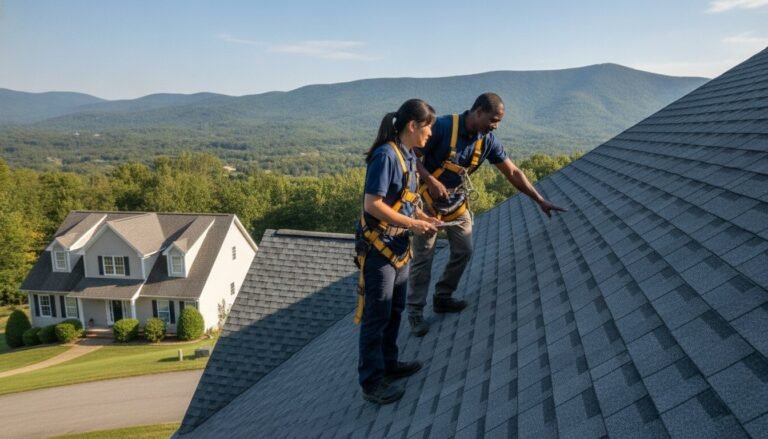
- Stay off the roof. Ice over shingles is the most dangerous surface a roofer works on, and we do it harnessed. Don’t climb a ladder to an icy gutter either.
- Protect the room. Buckets, towels, plastic over furniture. If the ceiling is bulging with trapped water, a small hole at the lowest point of the bulge, with a bucket underneath, drains it in a controlled way instead of letting the whole panel give.
- Cut power to the area at the breaker if water is near a light fixture, ceiling fan or outlet.
- Photograph everything before you clean up: the ceiling, the wall, the floor, the outside of the roof edge with the ice still on it, and the date. Those photos are your claim.
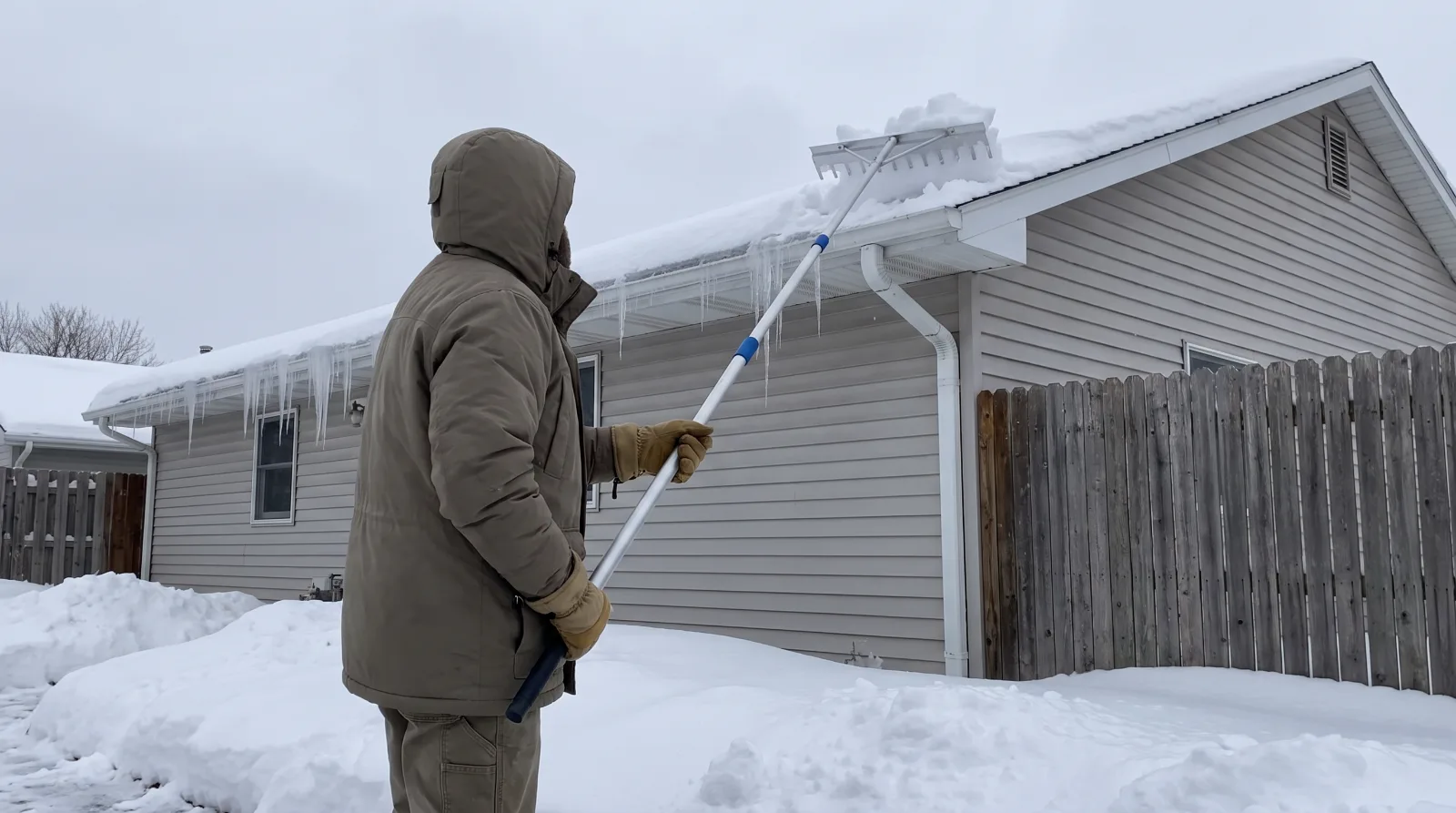
- Pull the snow, not the ice. A roof rake from the ground, taking the bottom three or four feet of snow off the roof edge, slows the meltwater feeding the dam. Don’t chip at the ice with a hammer or shovel, and don’t throw rock salt on the roof; both damage shingles you may later need the insurer to replace.
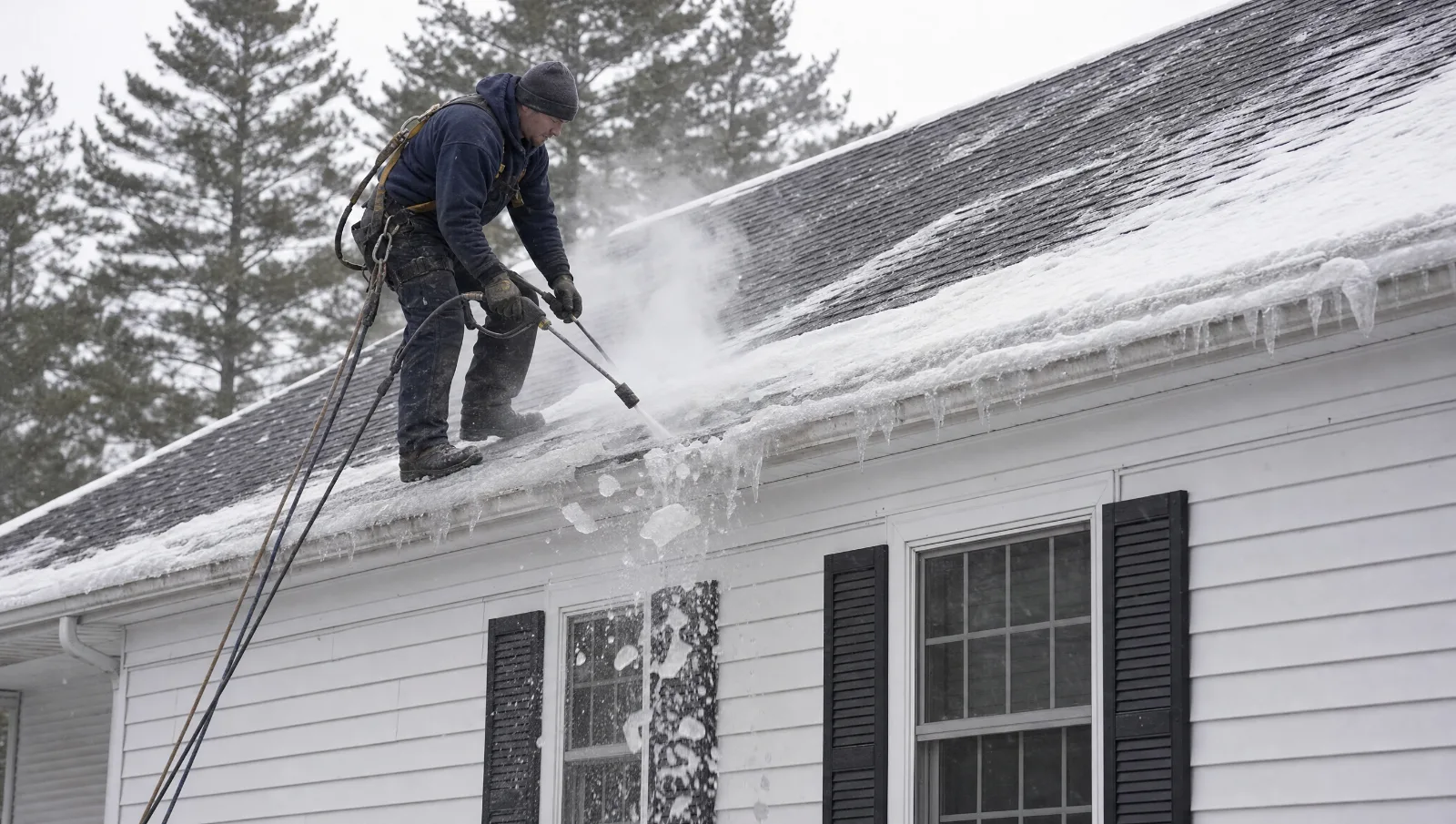
- Call a roofer who removes ice with steam. Low-pressure steam cuts a channel through the dam so the water behind it can drain, without tearing the shingles underneath. Our emergency roofing service in Stroudsburg handles exactly this call.
- Call your insurance company the same day. You don’t need a repair estimate to open a claim. Late notice is one of the easiest reasons for a carrier to push back.
Steps 2 through 6 are what policies call mitigation: the reasonable things you do to keep the damage from getting worse. Most homeowners policies expect it, and the reasonable cost of doing it is normally part of the claim. Keep every receipt, from the tarp to the steam crew.
What homeowners insurance covers after an ice dam
Pennsylvania homeowners mostly carry the standard HO-3 form, and on an HO-3 the house and its contents are treated differently. The structure is covered for any cause that isn’t excluded. Your belongings are covered only for a list of named causes. That’s why the ceiling over your sofa can be paid while the sofa isn’t.
| Usually covered | Usually not covered | Depends on your policy |
|---|---|---|
| Stained or collapsed ceilings and walls, paint, trim | Removing an ice dam that hasn’t caused damage yet | Furniture, rugs and electronics soaked by the leak |
| Wet attic insulation that has to come out | Adding insulation or ventilation so it doesn’t happen again | Mold, which many policies cap or exclude |
| Roof sheathing, shingles and flashing damaged by the ice and water | Gutters pulled down by ice weight, on some carriers | Steam removal once the dam is actively leaking |
| Drying and water mitigation | Damage from a leak that showed up last winter and wasn’t fixed | Hotel costs if the house can’t be lived in |
Two of those lines surprise people every year. First, contents: water from an ice dam isn’t one of the named causes for personal property on most HO-3 forms, so belongings are often excluded unless you carry an HO-5 or an open-perils contents endorsement. Lemonade’s own explainer says plainly that its policy won’t cover belongings damaged by an ice dam leak. Second, the ice: insurers generally won’t pay to clear a dam as prevention, but once it’s pushing water into the house, removing it is part of stopping the loss. Policygenius describes the same line: removal is covered only after damage has started.
Read your declarations page tonight, not after the next storm. Look for the form number (HO-3 or HO-5), your deductible, and whether you have replacement cost or actual cash value on the roof.
Ice dam leak or roof leak? How an adjuster tells them apart
The adjuster’s first question is whether the water came from a sudden event or from a roof that was already failing. Ice dam leaks leave a recognizable pattern, and knowing it helps you describe the loss accurately on the first call.
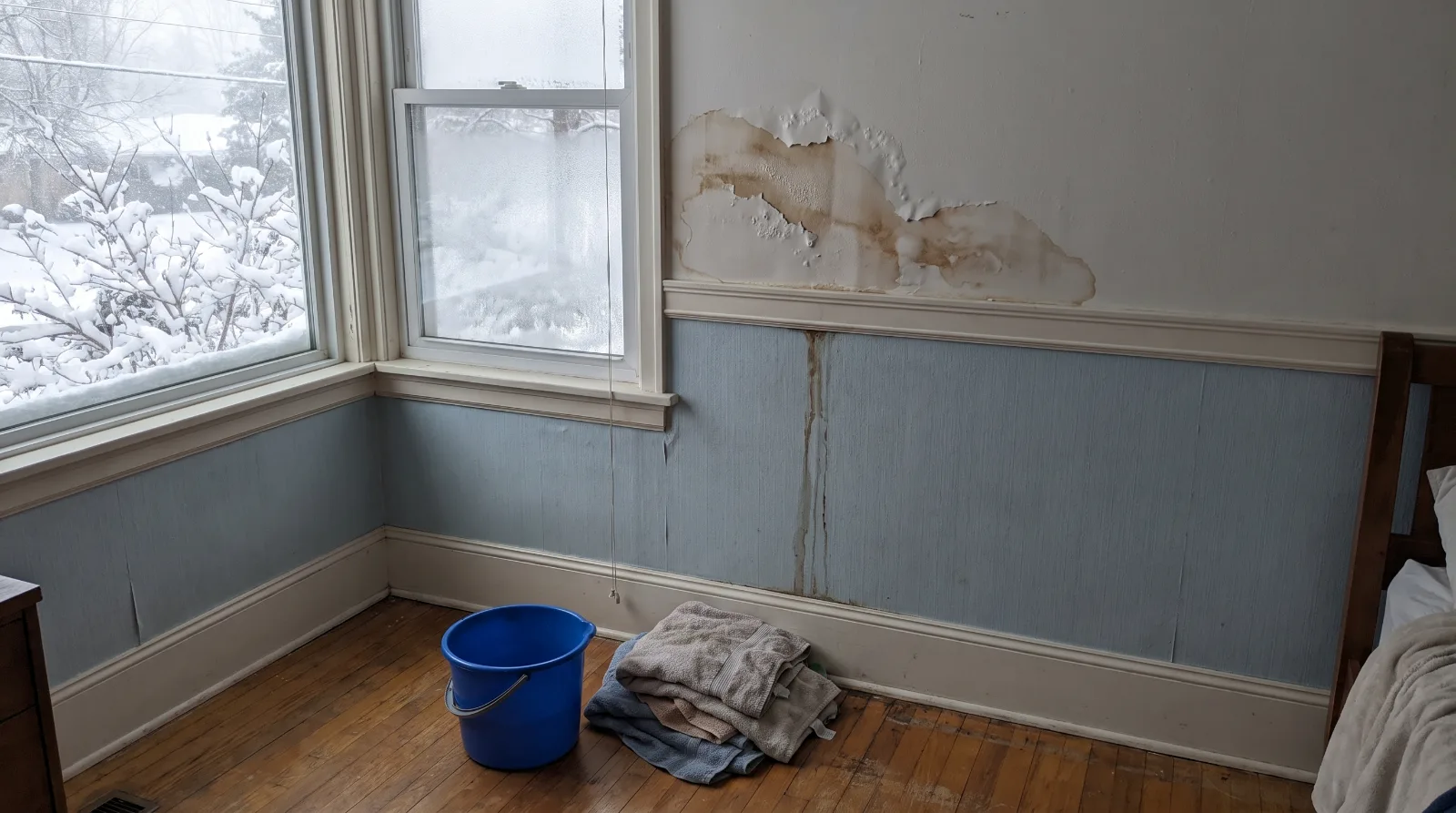
- Where it shows up. Ice dam water enters at the roof edge, so it appears within a few feet of an exterior wall: the ceiling along the eave side of a room, the top of a window frame, the inside of an exterior wall. A leak in the middle of a ceiling, far from the walls, points elsewhere.
- When it shows up. During a thaw after a long cold stretch with snow on the roof, often on a sunny day when it hasn’t rained at all. A leak that appears only when it rains is a different problem.
- How it behaves. It stops when the ice melts or is removed, and comes back with the next freeze-thaw cycle.
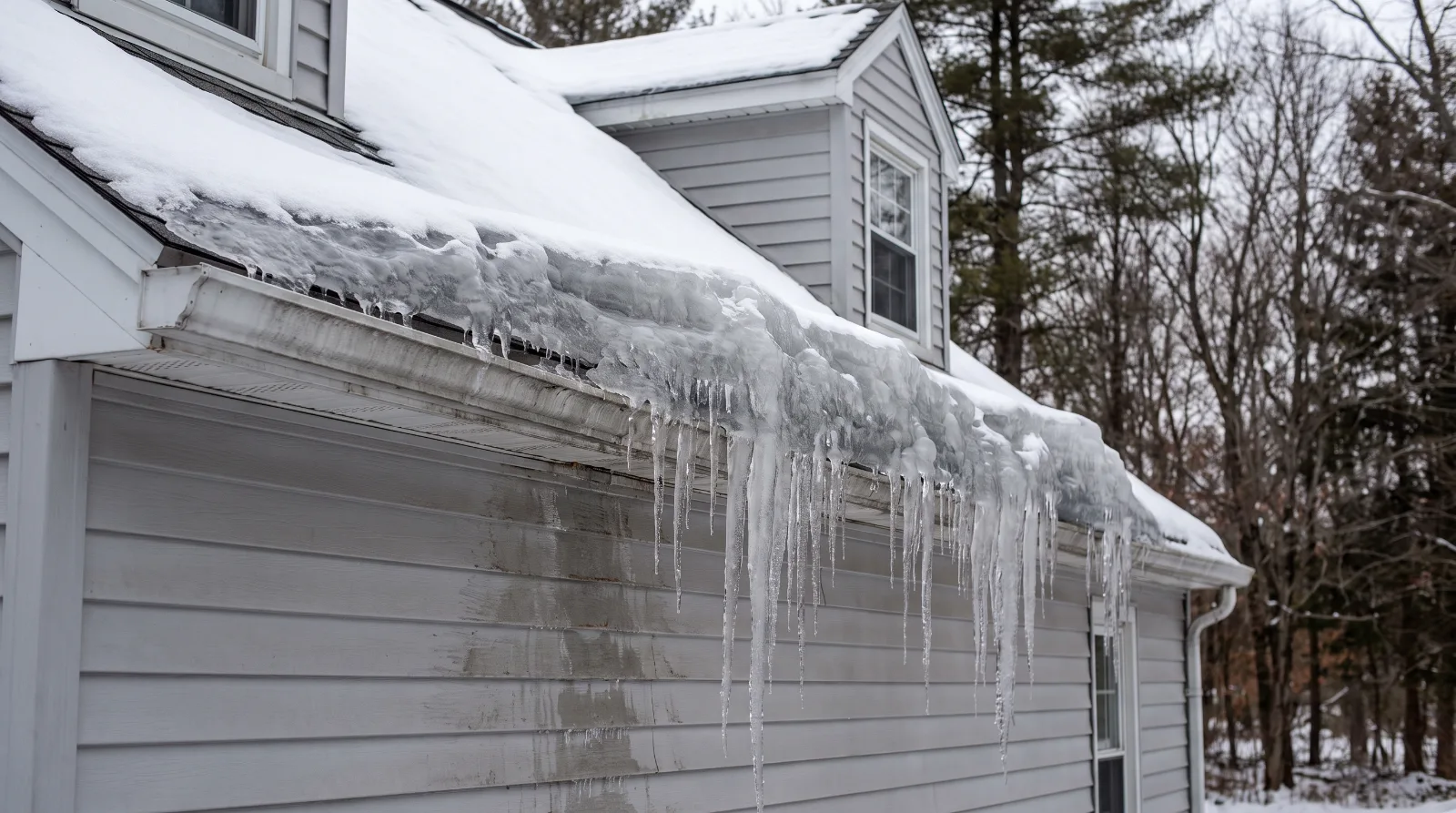
- What the roof edge shows. A ridge of ice at the eave, icicles, and often a wet streak down the siding below the gutter.
A leak through cracked flashing or a failed pipe boot is ordinary roof leak repair, and insurers treat wear and tear very differently from a sudden ice event. We cover that distinction in depth in does insurance cover a roof leak in PA; the short version is that “sudden” gets paid and “gradual” usually doesn’t.
Why the same leak can be paid one winter and denied the next
This is the part nobody tells homeowners. An ice dam is a symptom. The cause is heat escaping from the house into the attic and melting the snow from underneath, and that cause doesn’t go away when the ceiling is repainted.
Once you’ve filed one ice dam claim, your carrier knows the house makes ice dams. If the same ceiling leaks the next February and nothing was done about the attic, the insurer has a straightforward argument that the second loss came from a known, unrepaired condition rather than a sudden one. Some carriers pay twice. Many push back, and a third claim can affect whether your policy renews at all.
So the honest advice, even though it doesn’t sell a roof: spend part of the settlement on the cause. Air sealing the attic floor, insulation and soffit-to-ridge ventilation are what actually stop ice dams, and they’re all in our guide on how to prevent ice dams in the Poconos. Heat cables can protect a problem edge, but they treat the symptom.
What ice dam damage costs to fix, and when a claim is worth it
Before you file, compare the likely bill with your deductible. Most Pennsylvania homeowners carry a deductible of $1,000 or more, and every claim stays on your loss history for years.
| Item | Typical cost | Usually claimable? |
|---|---|---|
| Steam removal of an ice dam | $400 – $600 per hour of steaming | Once it’s actively leaking |
| Roof edge repair (shingles, drip edge, flashing) | $150 – $1,000 | Yes, if the ice caused it |
| Ceiling drywall repair and repaint | $220 – $1,300 per area | Yes |
| Removing and replacing wet attic insulation | Varies with area; often $1,000+ | The wet section, yes; upgrading the rest, no |
| Ice and water shield along the eaves | Installed during a roof replacement | Rarely, unless the roof is being replaced as part of the claim |
Sources: Fixr ice dam removal costs; Inch Calculator ceiling repair guide; roof edge range from our own roof leak repair cost guide.
A rule of thumb that holds up: a single small stain, a dry attic and a quick steam visit usually cost less than the deductible. Pay it yourself and keep your claim history clean. A soaked ceiling, wet insulation across several rafter bays, or water inside a wall is a claim. Wet insulation stops insulating, and water left in a wall cavity is where mold starts, so don’t let a small-looking stain talk you out of checking the attic.
Poconos homes where ice dam leaks are most common
Ice dams form wherever snow sits on a roof over a heated, leaky attic, but some houses up here have more of the ingredients than others:
- Cape cods and anything with a finished half-story. The sloped ceilings and knee walls leave almost no room for insulation, so heat goes straight to the roof deck. The eave side of an upstairs bedroom is the classic leak spot.
- A-frames and cabins with cathedral ceilings. No attic at all, just a few inches of rafter space between the living room and the snow.
- Houses at elevation. Mount Pocono, Pocono Pines and Pocono Lake hold snow on the roof longer than the valley around Stroudsburg, and more days of snow cover means more freeze-thaw cycles.
- Second homes. A weekend house kept at 55°F can leak for two weeks before anyone sees it. Insurers expect a vacant house to be checked, so read the vacancy or unoccupancy wording in your policy and arrange for someone to look in after every big storm.
If your roof is near the end of its life anyway, the permanent fix at the roof edge is a self-adhered ice and water shield membrane run up from the eaves, under the new shingles, during a roof replacement in the Poconos. It won’t stop a dam from forming, but it keeps the water that backs up behind one out of the house.
How to file an ice dam insurance claim in Pennsylvania
- Report it the day you find it, by phone or app, and write down the claim number and the name of whoever you spoke to.
- Send your photos and receipts for mitigation: buckets and tarps, the steam crew, any emergency dry-out company.
- Keep damaged materials until the adjuster has seen them, or photograph them thoroughly before they go in the dumpster.
- Get a roofer’s written report describing the ice dam, where the water entered and what’s damaged. An adjuster gives more weight to a dated report than to a phone call.
- Be on site for the inspection, with the roofer if you can. Point out the eave-side pattern described above.
Pennsylvania regulations put deadlines on your insurer too, from acknowledging the claim to accepting or denying it. We list them in our article on insurance and roof leaks in PA, along with what to do if the claim is denied. And if anyone offers to “take care of” your deductible, say no: inflating a claim to cover it is insurance fraud, and the policy is in your name, not theirs.
Frequently asked questions
Does homeowners insurance pay to remove ice dams?
Not as prevention. Once an ice dam is forcing water into the house, the reasonable cost of removing it to stop further damage is usually part of the claim. Keep the invoice and photos showing the active leak.
Will insurance cover mold after an ice dam leak?
Sometimes, and often with a limit. Many policies cap mold coverage or exclude it unless it results directly from a covered sudden leak that you dried out promptly. The faster the wet insulation and drywall come out, the stronger your position.
Should I knock the icicles and ice off myself?
No. Hammering or prying at ice breaks shingles and gutters, and the falling ice is dangerous. Rake the snow from the ground and let a crew with steam handle the ice.
Will a new roof stop ice dams?
A new roof with ice and water shield along the eaves stops most ice dam leaks, but the dam itself keeps forming until the attic stops leaking heat. The lasting fix is a roof done right plus an attic that stays cold.
How long do I have to file an ice dam claim?
Your policy requires prompt notice, and the written deadline for a lawsuit is set in the policy itself. Practically, report it the same day or the next. Delay gives the insurer room to argue the damage grew because nobody acted.
Get the leak stopped and the damage documented
For more than a decade we’ve been working on roofs across Monroe and Pike County, through every kind of Poconos winter. If water is coming in right now, we’ll steam the ice, find where the water entered, and give you a written report you can hand to your adjuster. If it’s already stopped, we’ll check the roof edge and the attic and tell you straight whether it’s worth a claim. The inspection is free.
Call (570) 426-3505. We cover Stroudsburg, East Stroudsburg, Mount Pocono, Bushkill, Delaware Water Gap and the rest of the Poconos. You can also see our roof repair services in Stroudsburg.