

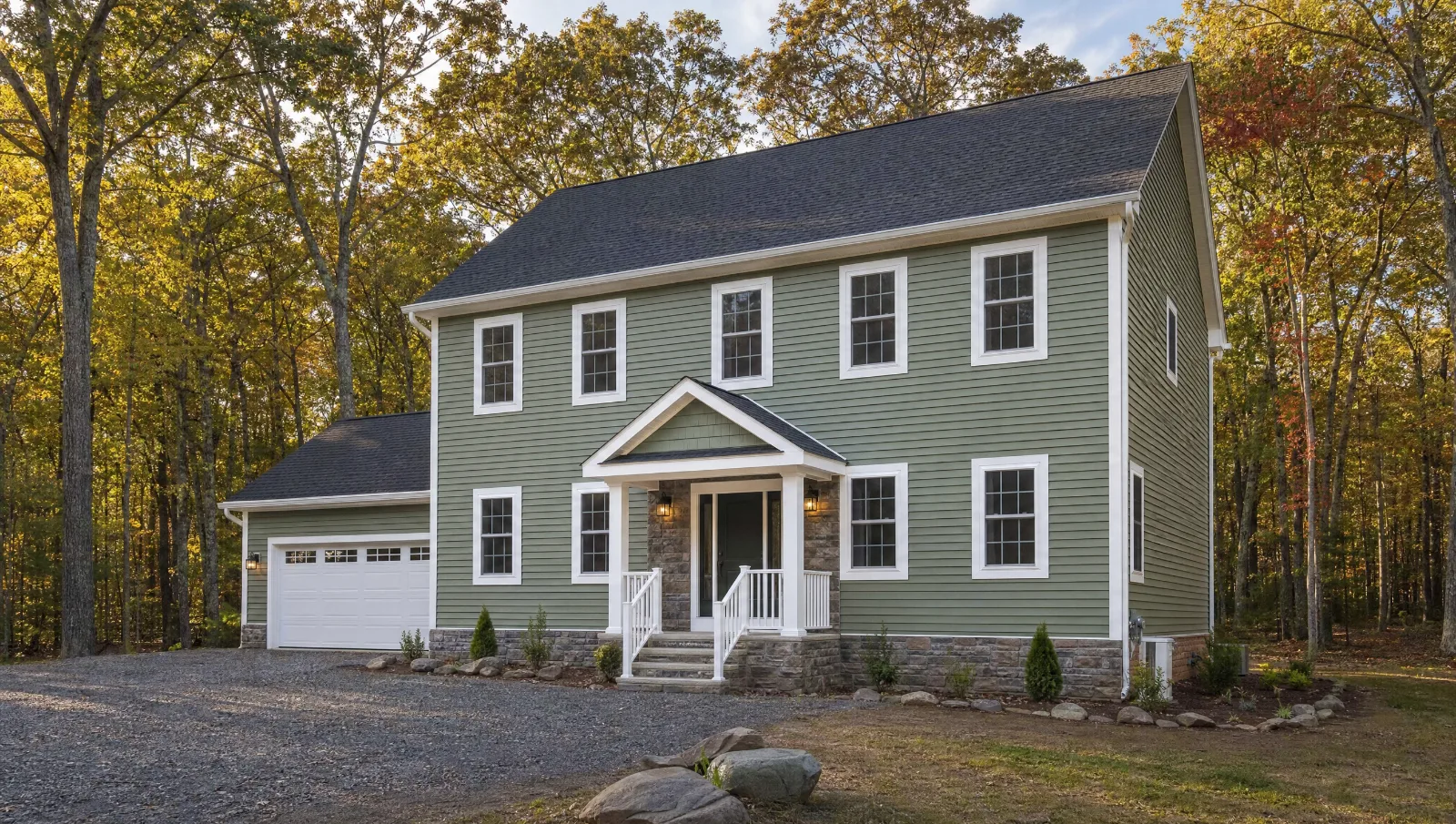
Vinyl Siding Colors That Hold Up in the Poconos
The most popular vinyl siding colors in 2026 fall into four families: soft whites and creams, light-to-mid grays, warm “greige” and clay tones, and deep colors like charcoal, navy and forest green. For a house in the Poconos, the light and mid neutrals are the safest long-term choice. Dark colors look great and hold up well now, but only on a product built and color-certified for dark shades, and not on a wall that catches reflected sun from a neighbor’s windows.
Siding is a 30-year decision you make in an afternoon, holding a sample the size of a playing card. Here’s how to pick a color you’ll still like in 2040.
The most popular vinyl siding colors in 2026
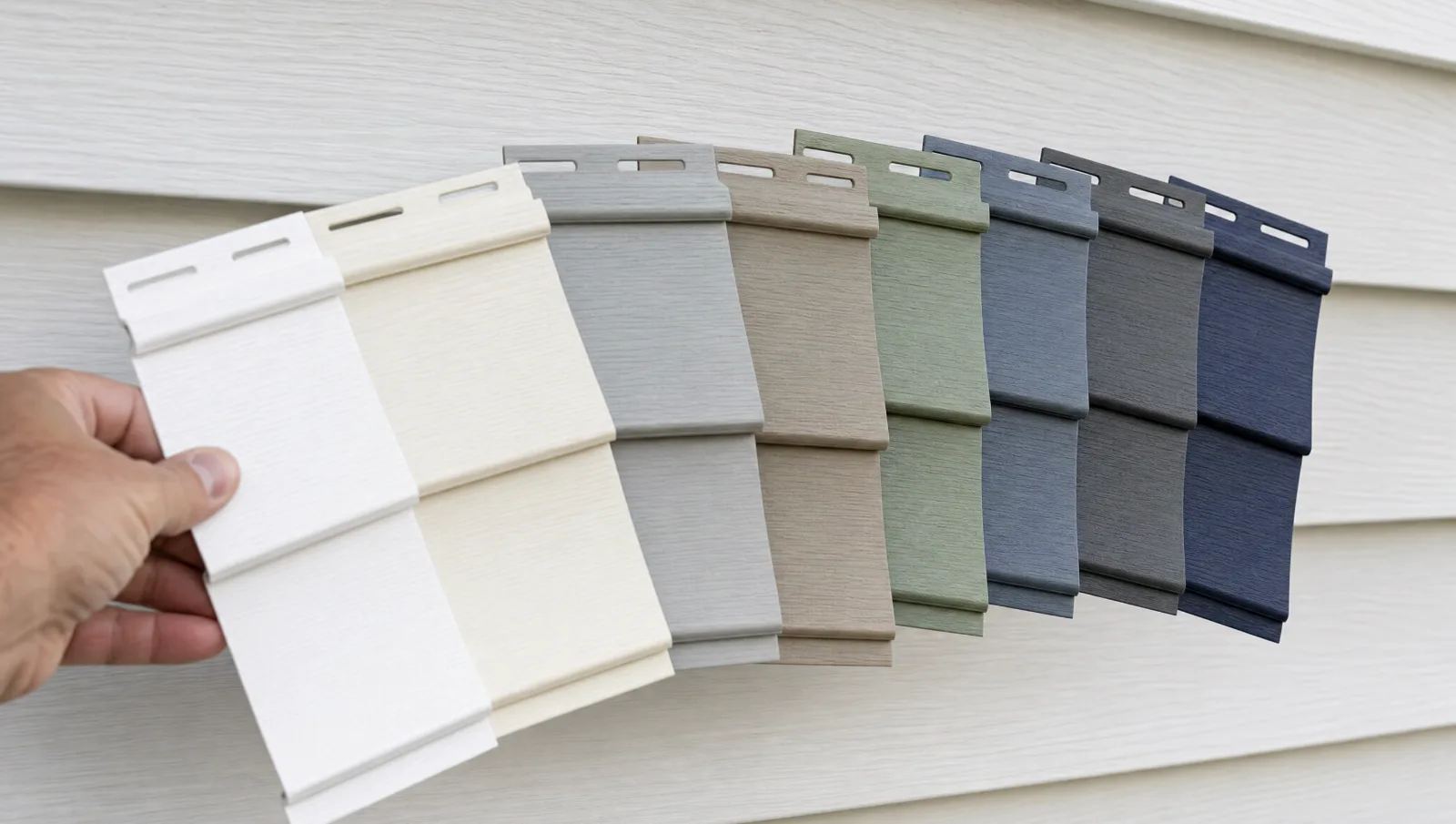
| Color family | Why people choose it | How it ages here | Looks best on |
|---|---|---|---|
| Soft white, cream, linen | Clean, classic, makes a small house look larger | Barely fades; shows mildew and pollen on shaded walls | Colonials, farmhouses, capes |
| Light to mid gray | Neutral, goes with almost any roof | Very stable; hides dirt better than white | Ranches, split-levels, newer builds |
| Greige, clay, sandstone | Warm without looking dated like 1990s beige | The best at hiding pollen, dust and road spray | Houses with stone or brick accents |
| Sage and muted green | Blends into a wooded lot | Stable in mid tones; deep greens need a dark-rated product | Houses surrounded by trees |
| Slate blue and navy | Coastal and traditional at once | Mid blues are stable; navy needs a dark-rated product | Colonials with white trim |
| Charcoal and near-black | Modern, dramatic, the 2026 trend color | Absorbs the most heat; choose certified dark lines only | Modern cabins, board-and-batten accents |
The trend is real: charcoal, navy and deep green are showing up on more new-construction and renovation jobs every year. But the most-ordered colors are still the quiet ones. Builders and homeowners keep coming back to whites, grays and greige because they work with any roof, sell to any buyer, and forgive a lot of dirt.
How color changes the way vinyl siding behaves
Vinyl is plastic, and plastic responds to heat. The Vinyl Siding Institute puts the softening point of standard vinyl siding at around 160–165°F. A white wall in full July sun never gets close. A black wall can get a lot closer, because darker pigments absorb more of the sun’s energy.
Two things changed that made dark vinyl practical:
- Capstock. Most quality siding today is co-extruded: a weather-resistant outer layer, often acrylic or ASA, bonded over the PVC core. That cap carries the color and the UV protection.
- Heat-reflective pigments. Dark lines from the major manufacturers use pigments that reflect part of the infrared light, so a charcoal panel runs cooler than its color suggests. Pro Trade Craft explains the chemistry in plain terms.
The label to look for is VSI color retention certification. To earn it, each color goes through a two-year outdoor weathering study in several climates and has to stay within strict color-change limits under the ASTM D6864 standard. It doesn’t mean the color never changes. It means it won’t change in a way you’d object to. If a product line can’t show it for the dark color you’re considering, pick a different line or a lighter shade.
Panel thickness matters just as much as color. Thin builder-grade vinyl is what waves in the sun and cracks in a January cold snap; we recommend .044 inches or heavier, as we explain on our siding installation page for Stroudsburg. A dark color on a thin panel is the combination we’d talk you out of.
The window reflection problem nobody mentions in the showroom
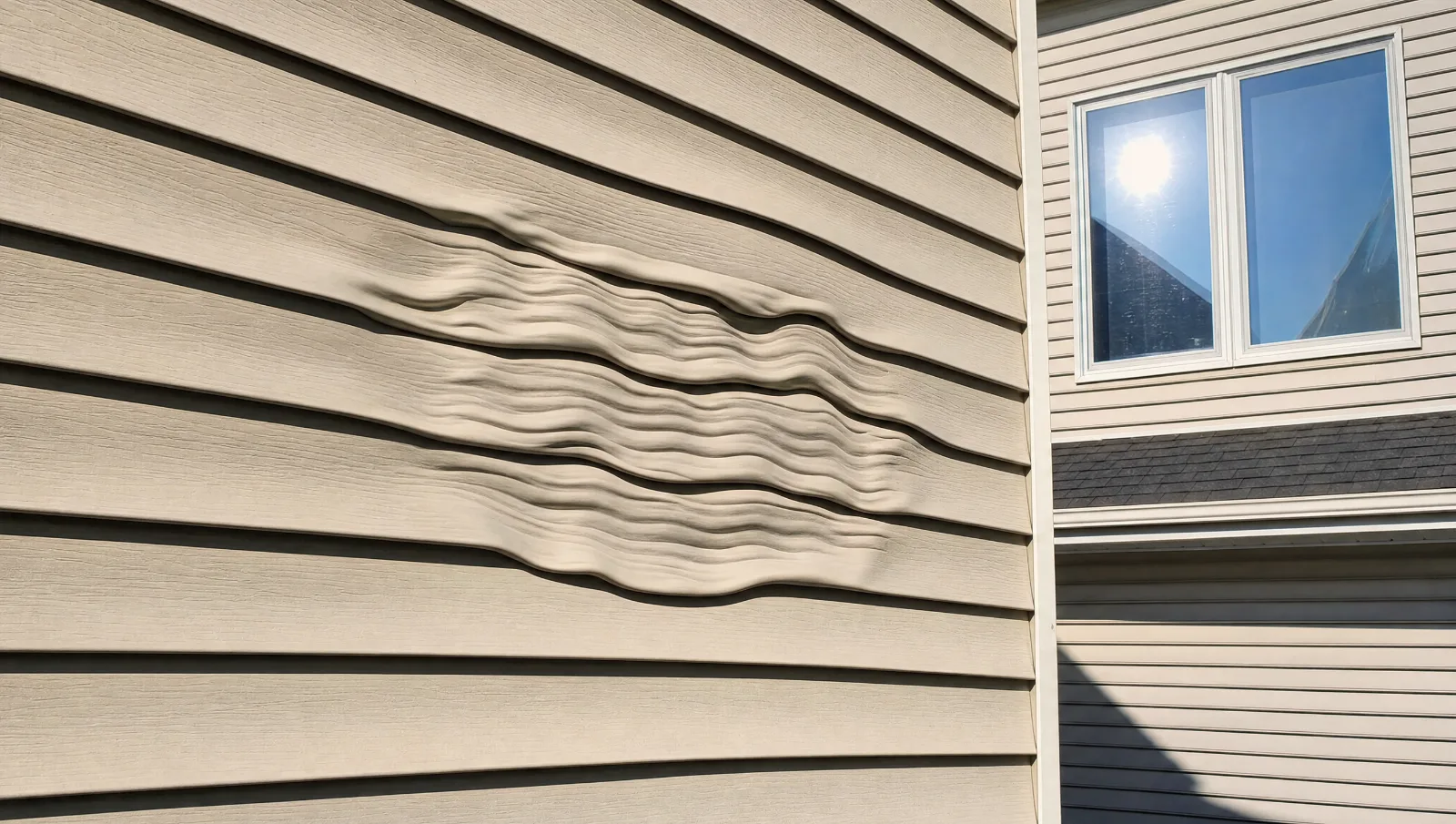
Energy-efficient low-E windows reflect far more of the sun than old clear glass. On double-pane units, the glass can also bow slightly inward in cold weather and act like a shallow mirror, concentrating that reflection. Measurements cited by home inspectors have found reflected spots above 200°F, hot enough to warp vinyl of any color in a wavy oval patch, often on the side wall of the house next door.
It happens most where houses sit close together, in the subdivisions and townhome rows around Stroudsburg and East Stroudsburg rather than on a wooded acre. Before you choose a dark color, look at which of your walls face a neighbor’s windows to the south or west. The fixes the Vinyl Siding Institute suggests are simple: a screen on the offending window, an awning, or a shrub or tree that blocks the beam. But it’s easier to avoid the problem with a lighter color on that one wall than to argue with a neighbor about their windows.
Choosing a siding color for a house in the woods
Most Poconos homes don’t sit in open sun. They sit under oaks, hemlocks and white pines, and that changes the decision in ways a color brochure photographed in Arizona won’t show you.
- Shade means mildew and algae. North walls and anything under heavy canopy stay damp. Green-black growth shows clearly on bright white and barely at all on greige, clay or mid gray.
- Spring pollen is yellow. For a few weeks every May, pine pollen coats everything. It washes off, but it’s far more noticeable on white and on very dark colors than on mid tones.
- Greens and browns disappear into a forest lot. That’s exactly what many cabin owners want. If you want the house to stand out from the road, go lighter, or keep a darker body and use bright white or cream trim.
- Snow is the backdrop for four months. Deep colors look striking against snow. Whites can look slightly dingy next to fresh snow, a reason some owners choose cream or linen over pure white.
- Check your association first. Many Poconos lake and gated communities have an architectural review committee that must approve exterior colors before work starts. Get the approval in writing before the siding is ordered.
Matching siding color to your roof, trim and stone
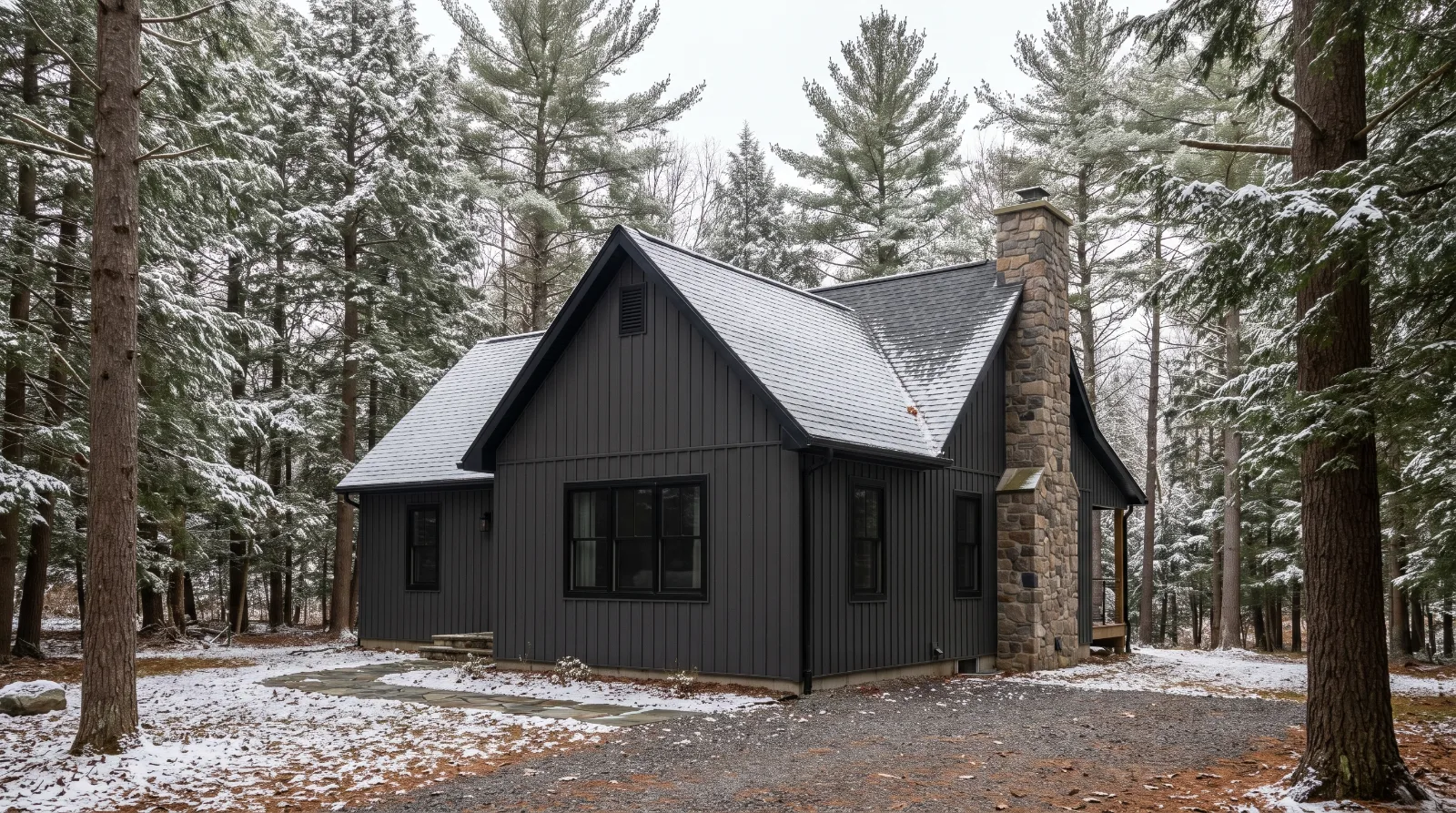
The roof is the one thing on the house you’re not changing anytime soon, so start there. A charcoal or black architectural shingle works with almost any siding color. Brown-toned and “weathered wood” shingles are pickier: they pair well with creams, clays, greens and warm grays, and fight with cool blue-grays. If a roof replacement is coming in the next few years, choose the siding and the shingle together; our roof replacement team can bring both sample sets to the same appointment.
A few rules that save regret:
- Pick three colors, not one: siding body, trim, and an accent for the door or shutters. Trim usually sits a few shades lighter or darker than the body; low contrast reads modern, high contrast reads traditional.
- Look at full-size panels outside, on the actual wall, in the morning and late afternoon. Color looks lighter and less saturated across 2,000 square feet of wall than on a chip held indoors. If you’re torn between two, the darker one is usually closer to what you pictured.
- Respect the stone. Fieldstone and brick have undertones, warm or cool. Hold the sample right against them.
- Remember the soffits, fascia and gutters. They’re part of the color scheme, and white gutters on a charcoal house are the most common afterthought we see.
What color does to the price of vinyl siding
Vinyl siding in 2026 runs roughly $4 to $12 per square foot installed, and most full-house projects land between $8,500 and $20,000, with wall area, stories and trim complexity moving the number far more than color does. We break down what drives a quote on our siding service page and in our guide to the cost to install vinyl siding in the Poconos.
| Choice | Effect on price | Worth it when |
|---|---|---|
| Standard light colors (white, cream, light gray) | Base price | Budget matters most, or the house is for sale soon |
| Deep and dark colors (charcoal, navy, deep green) | Higher material cost per square, from more expensive pigments and dark-rated formulations | You want the look and choose a color-certified dark line |
| Insulated vinyl in any color | Higher than standard panels | Windy, high-elevation lots; quieter, stiffer walls |
| Mixed profiles (lap body, board-and-batten or shake accents) | More labor and trim | Gables and entries, to add depth without a darker color |
One cost people forget: repairs years later. When a storm cracks a few panels, matching a color that’s faded slightly, or been discontinued, is the hardest part of the repair. Ask your installer to leave a box of spare panels from the job, and keep it in the garage. It turns a frustrating hunt into a one-hour vinyl siding repair.
Siding color mistakes we’d steer you away from
- Choosing from a chip under kitchen lights. Always decide outside, on the wall.
- Putting a dark color on thin, uncertified vinyl to save money. It’s the most likely combination to wave, fade unevenly or void the color warranty.
- Ignoring the roof, then living with a cool gray house under a warm brown roof for 20 years.
- Painting vinyl siding to change the color. It can be done with vinyl-safe paint in approved shades, but it usually voids the manufacturer’s warranty and turns maintenance-free siding into a house you repaint every few years.
- Following a trend on a house you’ll sell soon. If you’re listing in the next two or three years, a neutral appeals to the widest pool of buyers.
For a wider look at materials, from fiber cement to insulated vinyl, see our guide to the best siding for PA homes.
Frequently asked questions
What is the most popular vinyl siding color?
Whites and light-to-mid grays remain the most ordered vinyl siding colors, followed by warm greige and clay tones. Charcoal and navy are the fastest-growing choices in 2026, especially on modern farmhouses and cabins.
Does dark vinyl siding fade?
All siding changes slightly over decades, and dark colors used to fade quickly. Today’s dark lines with acrylic or ASA capstock and VSI color retention certification hold their color well. Uncertified dark vinyl is still a gamble.
What siding color hides dirt best?
Mid-tone neutrals: greige, clay, sandstone and medium gray. They hide pollen, dust and mildew better than white, and don’t show chalky residue or water spots the way very dark colors can.
Can vinyl siding be painted a new color?
Yes, with a paint formulated for vinyl and a color no darker than the manufacturer allows, so the panels don’t overheat. Expect it to void the siding warranty and to need repainting, which defeats the point of vinyl.
Do I need approval to change my siding color?
Not from the township for a like-for-like residing job, in most cases, but many Poconos community associations require architectural approval for any exterior color change. Ask before you order.
See the colors on your own house
We’ve been installing roofs and siding across the Poconos for more than a decade. We’ll bring full-size sample panels to your house, hold them against your roof, stone and trim in daylight, check which walls are exposed to reflected sun, and give you a written quote for each option you’re considering. The estimate is free.
Call (570) 426-3505 or see our siding services in Stroudsburg, PA. We cover Stroudsburg, East Stroudsburg, Mount Pocono, Bushkill, Delaware Water Gap, Milford and the rest of the Poconos.
One Comment