How Old Can a Roof Be Before Insurance Drops You in PA?
Most Pennsylvania carriers start asking questions at 15 years, tighten roof coverage around 20, and stop renewing somewhere between 20 and 25 years — even on a roof that has never leaked. Roof age is an underwriting number, not a condition report. That’s what makes the letter so frustrating: it shows up because of a birthday, not a problem.
So here’s the useful part. What that letter can and can’t do in Pennsylvania, what actually triggers it, and the three moves that keep your coverage in place. One of them costs nothing.
We walk these roofs every week. In our inspections around East Stroudsburg and Mount Pocono, plenty of 20-year-old roofs still have real life left — and a few of the 12-year-old ones don’t. An underwriter sitting at a desk can’t see the difference. Your job is to show them.
What roof age actually triggers on a Pennsylvania policy
Every carrier writes its own guidelines, but the pattern across the market is consistent enough to plan around:
| Roof age | What carriers typically do |
|---|---|
| Under 10 years | Full replacement cost coverage on the roof. No questions at renewal. |
| 10–15 years | Renewal is routine, but some carriers quietly move the roof to actual cash value or attach a roof payment schedule. |
| 15–20 years | Inspection or photo review at renewal. Specific repairs may be required to stay on the policy. |
| 20–25 years | The common cut-off. Non-renewal notices, or renewal only with an ACV roof and a higher wind/hail deductible. |
| 25+ years | Most standard carriers decline. You’re shopping surplus lines or the state’s last-resort plan. |
One phone call is worth making before anything else: ask your agent for the carrier’s written roof-age guideline and the date they have on file for your roof. We’ve seen files listing a roof five years older than it actually is, usually because a previous owner’s replacement was never recorded.
Why 2026 has been a rougher year for old roofs
Three things shifted at once, and they compound.
First, the mortgage backstop went away. On March 18, 2026, Fannie Mae and Freddie Mac began accepting actual cash value coverage on roofs for single-family homes. For years, a mortgage was the reason many carriers had to write your roof at replacement cost. That requirement is retired, so ACV roof endorsements are showing up on renewals that used to be full replacement cost.
Second, roof payment schedules keep spreading. Instead of paying to replace your roof, the policy pays a percentage that drops each year the roof ages. The difference between replacement cost and actual cash value is the single most expensive line item most homeowners never read on their declarations page.
Third, replacement got more expensive. Shingle manufacturers raised prices in early 2026, and industry pricing surveys put a typical asphalt replacement 15–25% above 2024 levels. Put those together and the math on an old roof gets ugly fast: on an $18,000 replacement, a heavily depreciated ACV settlement minus a $2,500 deductible can leave you covering most of the job yourself.
That’s the honest reason roof age matters more than it used to. Not because roofs got worse — because the check got smaller.
What Pennsylvania law requires that letter to say
This is where most homeowners give up too early, and it’s the part almost no national article covers.
Once a homeowners policy on an owner-occupied home has been in force 60 days, Pennsylvania doesn’t let a carrier walk away for any reason it likes. Under 31 Pa. Code Chapter 59, which implements the Unfair Insurance Practices Act, the insurer has to:
- Put the cancellation or refusal to renew in writing, at least 30 days before it takes effect.
- State both the legal and the factual reason — not “underwriting guidelines,” but the actual condition they’re relying on.
- Tell you about the appeal, which goes to the Insurance Commissioner.
There’s a second document worth knowing about. In May 2024 the Pennsylvania Insurance Department issued Notice 2024-06 on insurers’ use of aerial imagery. The Department’s position: carriers shouldn’t terminate a policy based only on an aerial photo showing discoloration, streaking or other cosmetic damage, and they should validate with a physical inspection when real degradation isn’t clearly evident. You’re entitled to a chance to challenge the finding or correct the deficiency.
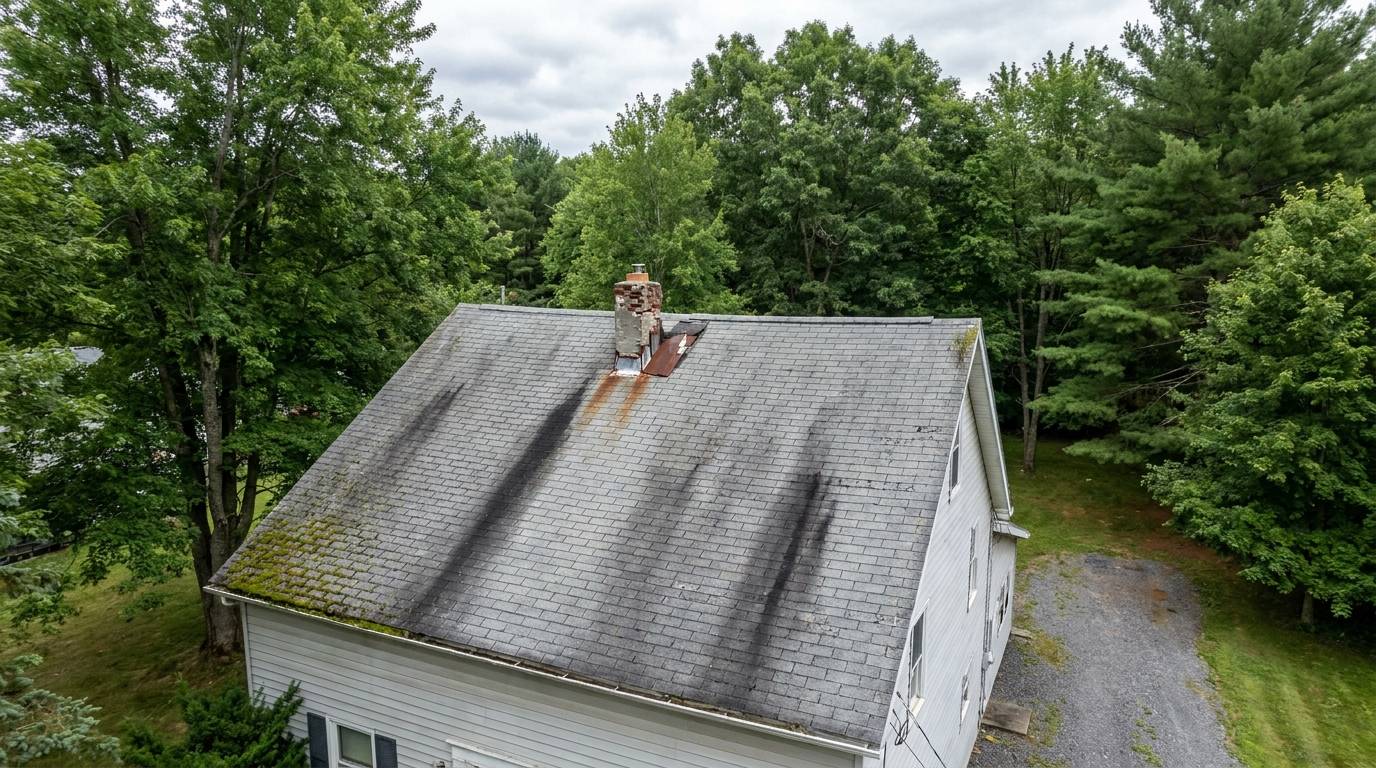
Read that again if your letter arrived with a satellite photo attached. Those dark stains almost always turn out to be algae rather than a failing roof — cosmetic, cleanable, and a weak basis for dropping a policy. Say so in writing, with photos and a dated inspection report, and ask them to reconsider before the effective date.
The three moves that keep your coverage
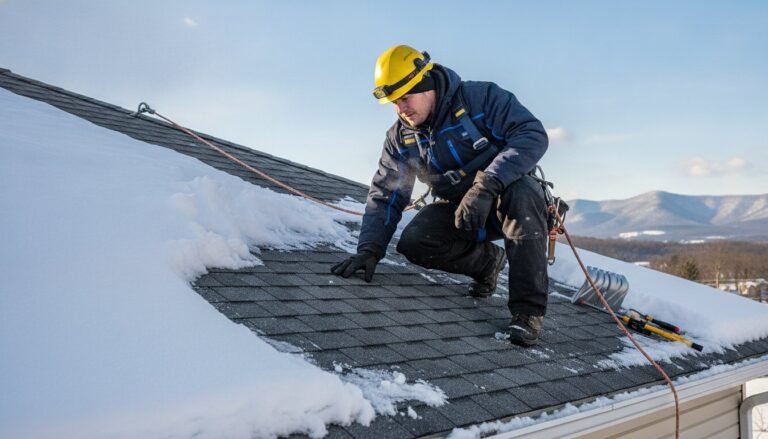
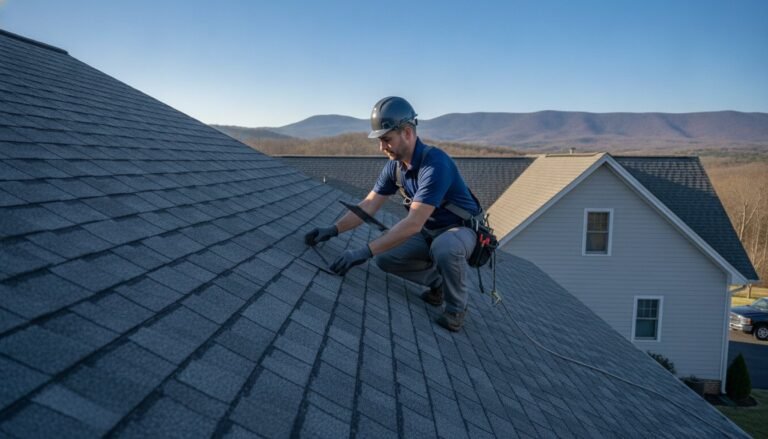
1. Get a dated inspection report with photos. Not a sales quote — a report. It should document deck condition, fastener and flashing condition, the state of the eaves, valleys and penetrations, and an honest estimate of remaining service life. An annual roof inspection on file also answers the “when was this last looked at” question that underwriters like to ask.
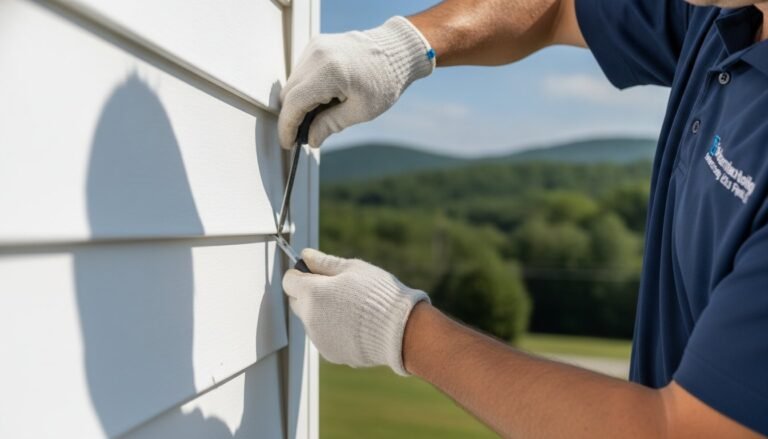
2. Do the small repairs first. Nine times out of ten the underwriter is reacting to flashing, a few missing tabs, exposed nail heads, or debris-packed gutters — not the field of the shingle. A round of targeted roof repairs in Stroudsburg often costs a few hundred dollars and closes the file. Here’s the part that doesn’t help our invoice: if the fix lands under your deductible, don’t file a claim for it. A claim on your record is worth less than the repair costs you.
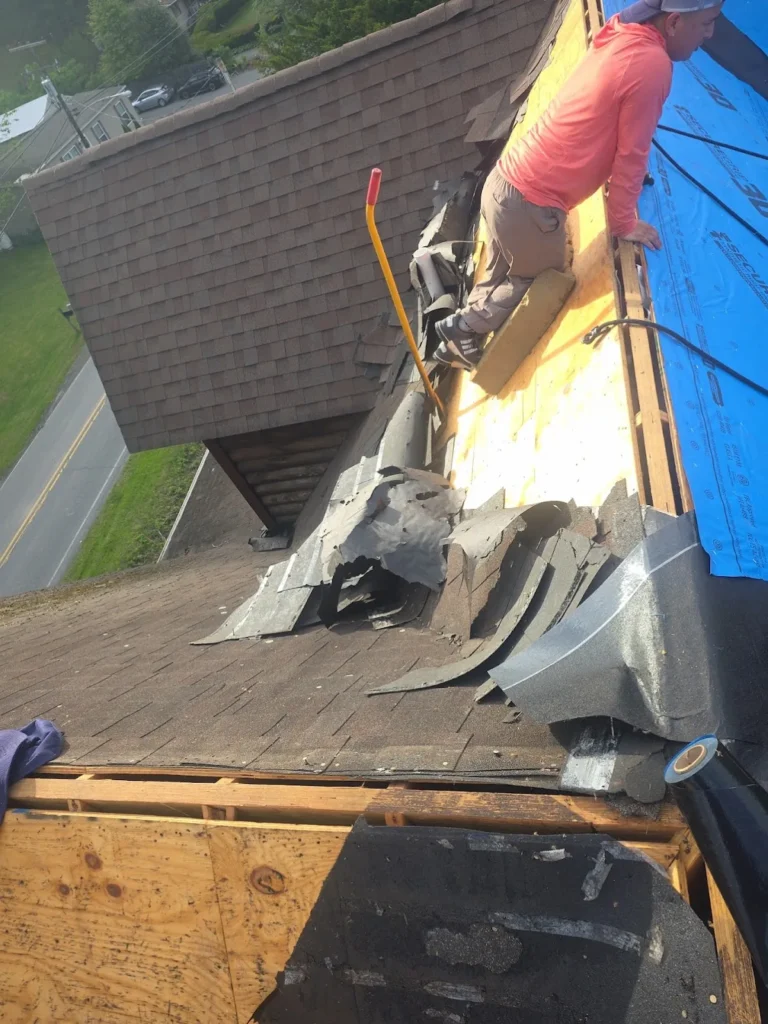
3. If it really is time, replace on your schedule and document it. Certificate of completion, material specs, workmanship warranty, dated photos. Send the packet to your agent, because a new roof usually earns a premium reduction, and Class 4 impact-resistant shingles (UL 2218 rated) typically earn an additional credit on the wind and hail portion of the policy. Confirm the credit with your carrier before you pay to upgrade — the discount varies a lot by insurer and ZIP code, and it isn’t automatic.
Up here, timing matters more than most places. A full roof replacement in the Poconos booked in September goes on in shirt-sleeve weather; the same job in January means cold-weather sealing, hand-sealed tabs and a slower crew. If your non-renewal date is in the spring, start the conversation in the fall.
Can my insurer really drop me just because my roof is old?
Not in the way most people assume. On a policy in force more than 60 days, Pennsylvania requires the carrier to point at a permitted reason — most roof cases fall under a substantial change in the condition or hazard of the property. Age by itself isn’t a magic word; a documented, deteriorated roof is.
What they can do freely is decide the price. A carrier that doesn’t want an old roof can renew you with an ACV roof endorsement and a 2% wind/hail deductible, and that’s legal. It also means your “coverage” on a $20,000 roof may be worth a few thousand dollars after depreciation. Read the endorsement, not the premium.
Will insurance pay for the roof they’re demanding?
No, and this trips up a lot of homeowners. A non-renewal is not a claim. Homeowners insurance covers sudden, accidental damage — wind, hail, a tree through the deck. It does not pay for a roof that wore out on schedule, no matter how firmly the carrier insists you replace it.
The exception worth chasing: if a real storm event damaged the roof and that’s what put it on the underwriter’s radar, that’s a claim, and it’s a separate fight. We’ve written before about what to do when a roof claim gets denied in PA.
And when it is a legitimate storm claim, the number on the check depends on which kind of policy you hold. A replacement cost policy pays what a new roof costs today; an actual cash value policy subtracts depreciation first, which on a twenty-year-old roof can be most of the money. We explain the difference, and how to tell which one you have, in actual cash value vs. replacement cost on a PA roof.
My roof is 22 years old and doesn’t leak. Do I have to replace it?
Maybe not this year. We’ve walked 22-year-old architectural shingle roofs in Saylorsburg with tight seals and full granule coverage, and 14-year-old roofs in Mount Pocono where freeze-thaw at the eaves had already cooked the bottom three courses. Elevation and ice do more damage here than the calendar does.
What decides it isn’t age — it’s what’s happening at the edges and the flashings, whether the deck is sound underfoot, and how much granule you’re finding in the gutters. If the roof passes, you want that in writing and dated, because it’s your appeal document. If it doesn’t pass, replacing before the non-renewal takes effect keeps you from having to disclose a coverage gap to the next carrier.
What if I already lost the policy?
Shop before the effective date — a lapse makes you harder to insure than an old roof does. Independent agents who write with several carriers are worth the call, because roof-age guidelines vary widely between companies. If nobody in the standard market will take the house, the Pennsylvania FAIR Plan exists as a last resort; it’s basic property coverage, usually narrower than what you had, and it’s a bridge, not a destination.
If you think the termination was improper — no factual reason stated, or based on an aerial photo of cosmetic staining — you can file a complaint with the Pennsylvania Insurance Department. It’s free, and carriers respond differently once the Department is on the thread.
Where to start this week
Three takeaways worth acting on. Find out what roof age your carrier has on file, because it may be wrong. Get a dated inspection with photos before the deadline on the letter, not after. And separate the two questions homeowners keep collapsing into one — “does my roof need work” and “does my insurer want a new roof” often have different answers, and only the first one should decide how you spend $20,000.
We inspect roofs across Stroudsburg, East Stroudsburg, Mount Pocono and Monroe County, and the report you get is the one you can hand to an underwriter: photos, findings, remaining life, and what we’d fix versus what we’d replace. If a repair keeps you insured for another five years, we’ll tell you that.
Free roof inspection, no pressure: call (570) 426-3505 or request a visit through our site. Bring the letter — the deadline on it usually decides how fast we need to move.