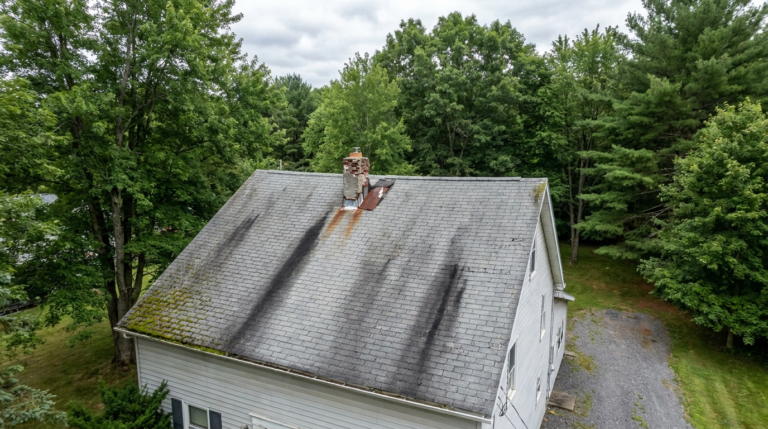
Roof Repair from Heavy Snow in the Poconos: Your 2026 Winter Guide
Did you know that the snow sitting on your roof right now could weigh as much as a mid-sized SUV? In Pocono Township, where the minimum ground snow load requirement is 50 pounds per square foot, that pressure isn’t just a number; it’s a constant strain on your home’s structure. If you’re hearing strange creaks or spotting new ceiling spots, you’re likely worrying about the need for roof repair from heavy snow Poconos winters often demand. It’s completely natural to feel anxious when the weather turns harsh and you aren’t sure if your roof can handle the weight.
You don’t have to wait until the spring thaw to find peace of mind. This 2026 winter guide will help you determine if that leak is a simple fix or a sign of something more serious. We’ll walk through the specific signs of snow-related damage, explain why winter repairs are often safer than you think, and help you navigate the updated 2021 building codes. You’ll learn exactly how to protect your home and how to find a local expert who understands our unique mountain climate.
Learn why the 50 psf ground snow load requirement in Pocono Township is a critical benchmark for your home’s structural integrity. You’ll understand the difference between light, fluffy snow and the heavy, wet accumulation that puts your asphalt shingles at risk during peak winter months.
Identify the mechanics of ice dams and how heat loss from your home creates a dangerous cycle of melting and freezing. This process often bypasses your shingles’ natural defenses, leading to the need for professional roof repair from heavy snow Poconos residents frequently encounter.
Master a safe inspection strategy using binoculars to spot damage from the safety of the ground. We’ll also show you how to link interior warning signs, like new ceiling water stains, to specific exterior issues that require expert attention before the next big storm hits.
Discover why winter is actually a practical time for necessary repairs. We’ll debunk common myths about cold-weather roofing and explain the specialized hand-sealing techniques used to ensure a watertight seal even when temperatures drop well below freezing.
Understanding Poconos Snow Loads and Your Roof’s Structural Limits
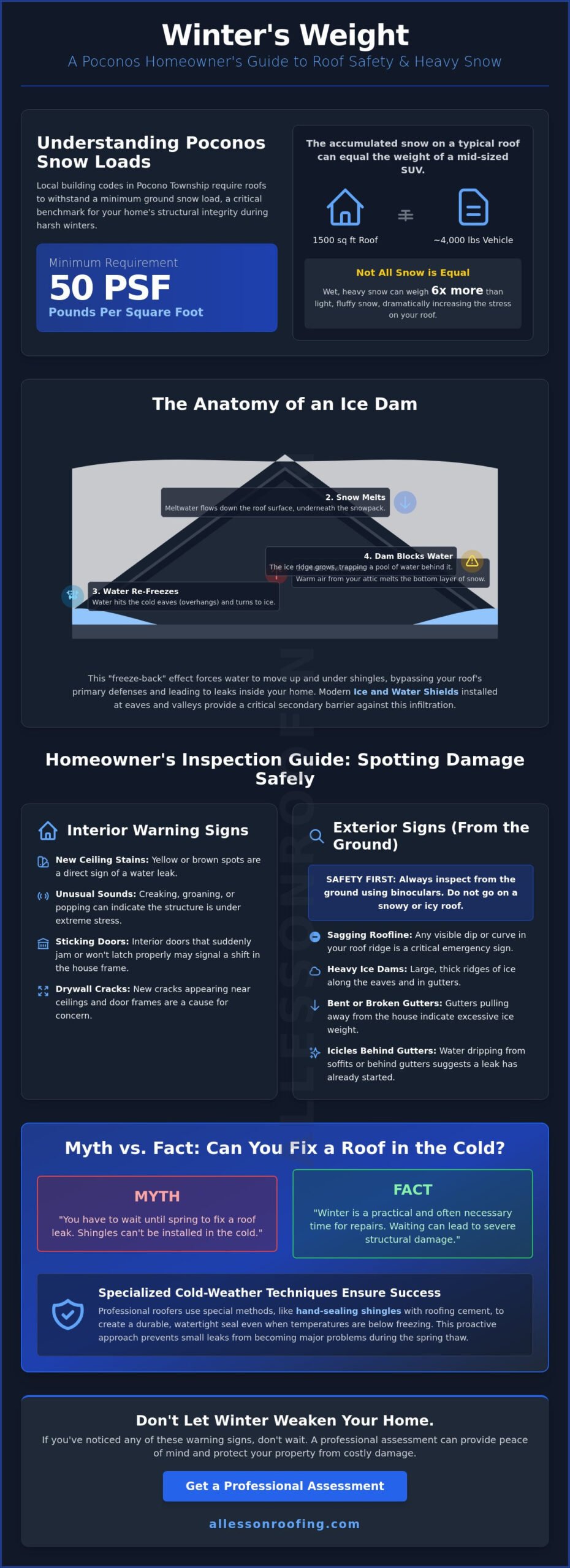
Living in the Poconos means appreciating the beauty of a winter wonderland while respecting the weight it puts on your home. When we talk about structural loads on a roof, we are measuring the pressure from accumulated snow and ice. In Pocono Township, local standards require roofs to handle a minimum ground snow load of 50 pounds per square foot (psf). Local East Stroudsburg building codes, which now follow the 2021 International Residential Code, dictate specific roof pitch and load-bearing requirements to keep residents safe. These benchmarks are designed to prevent collapses during our heaviest storms.
The type of snow matters just as much as the depth. Light, fluffy snow is easy to move, but wet, heavy snow can weigh six times as much. While asphalt shingles are designed to shed moisture, heavy accumulation can trap water against the surface. Repeated freeze-thaw cycles create more stress than a single blizzard. This constant expansion and contraction is a primary reason homeowners eventually need roof repair from heavy snow Poconos seasons deliver. Understanding these limits helps you decide when it’s time to call for a professional inspection.
Calculating the Weight: When Does Snow Become Dangerous?
A helpful rule of thumb is that one inch of solid ice carries the same weight as about one foot of fresh, dry snow. You should watch for structural warning signs if you suspect your roof is reaching its limit. Listen for unusual creaking or popping sounds coming from the attic. Check if interior doors are sticking or if new cracks have appeared in your drywall. Drifting snow is another concern. Wind often pushes snow into roof valleys, creating uneven weight distribution that can strain specific rafters more than others.
Why Poconos Microclimates Require Specialized Roofing Standards
Weather in the Poconos varies wildly depending on your elevation. A quiet snowfall in the East Stroudsburg valley might be a full-blown ice storm at the top of Mount Pocono. These microclimates mean your roof needs to be prepared for wind-driven snow that can force moisture under shingle laps. Proper attic insulation plays a silent but vital role here. It keeps the roof deck cool, which prevents the rapid melting that leads to ice dams and structural fatigue. If you want to learn more about maintaining your home, our roofing blog offers deep dives into local maintenance tips.
How Heavy Snow and Ice Dams Cause Roof Leaks in PA
Poconos winters create a perfect storm for ice dam formation. It starts when heat escapes from your living space into the attic, warming the roof deck. This causes the bottom layer of snow to melt and run down toward your gutters. Once that water reaches the cold eaves, it freezes again, creating a ridge of ice. This “freeze-back” effect is the primary driver for roof repair from heavy snow Poconos homeowners face each year. When the weight of that ice builds up, it can even damage your siding or gutters.
Gravity is usually your roof’s best friend, but ice dams turn that relationship upside down. When water pools behind an ice ridge, it has nowhere to go but up. It seeps under your shingles, bypassing the overlapping layers meant to shed rain. There is also the “snow-back” effect to consider. Accumulated snow acts like a giant sponge during a winter rainstorm, holding massive amounts of water against your roof surface for days. This often leads to failures around chimney flashing, where snow piles up and melts slowly against the sealant. If you suspect your flashing is leaking, it’s wise to reach out for a professional assessment before the next freeze.
The Role of Ice and Water Shields in Winter Protection
Modern Pennsylvania building codes, specifically the 2021 updates, now emphasize the use of ice and water shields for a reason. These self-adhering membranes create a watertight seal around your roof’s most vulnerable points, such as eaves, valleys, and chimney bases. They are designed to prevent the very leaks that preventing ice dams usually targets. If you see water dripping behind your gutters or staining your exterior soffits, your existing underlayment might have failed under the intense pressure of a Poconos winter.
Shingle Damage: Lifting, Cracking, and Granule Loss
Snow doesn’t just cause leaks; it physically wears down your materials. As ice expands and contracts within the gaps of your roof, it can pry shingles away from the deck. This is especially common with older, brittle shingles that suffer from thermal shock. You might also notice a “sandpaper effect.” As heavy sheets of snow slide off your roof, they strip away the protective granules from your asphalt shingles. This leaves the underlying mat exposed to UV rays and future moisture. Checking your gutters for excessive granule buildup is a great way to gauge the health of your roof after a heavy storm.
Spotting Snow-Related Roof Damage: A Homeowner’s Inspection Guide
Keep your feet on the ground when assessing your home after a storm. The safest way to identify a need for roof repair from heavy snow Poconos weather causes is the “Binocular Inspection.” From the street or your yard, use a pair of binoculars to scan for missing shingles, bent flashing, or massive icicles forming behind the gutters. These icicles are a classic indicator that an ice dam is already active. Look for areas where snow has melted unevenly, as this often points to heat loss and potential structural stress points.
Inside your home, the signs are often more subtle. You might notice a small, brownish water stain on ceiling from roof leak activity. Don’t ignore these spots just because they are dry to the touch; they indicate that moisture has already breached your shingles. Check your attic for frost on the rafters or damp insulation. Finding a roof leak in attic spaces early can save you from extensive mold remediation later in the season. If you spot any of these warning signs, schedule a professional inspection to prevent the damage from spreading.
Safe Ways to Monitor Your Roof During Winter
Never use a ladder on an icy or snow-covered roof. It is incredibly dangerous and can lead to serious injury. Instead, consider these safer alternatives:
- Use a roof rake carefully: Pull snow from the eaves only if you can do so from the ground. Avoid scraping the shingles, as this can strip granules.
- Avoid the ridge: Never use a rake on the ridge of the roof, as you might snag and tear the ridge vent.
- Document everything: Take photos of visible damage from the ground. This documentation is vital for insurance claims if the storm was severe.
When a “Small Leak” Becomes an Emergency Repair
It’s important to differentiate between minor attic condensation and a true structural breach. While condensation happens in poorly ventilated spaces, a steady drip usually means your shingles or flashing have failed. If left alone, mid-winter moisture trapped in your insulation can lead to rapid mold growth. Beyond leaks, be mindful of “roof avalanches.” When heavy snow suddenly slides off a steep roof, it can rip gutters away or crush the siding on lower levels. Addressing these issues immediately is the best way to maintain the integrity of your home throughout the freezing months.
For those outside the immediate area who need expert assistance with winter-related damage, finding a dedicated roofing contractor Medway MA can ensure that your roofing system is properly reinforced against the elements.
Winter Roof Repair Strategies: Can You Fix a Roof in the Cold?
Many homeowners believe they must wait for the first crocus to bloom before addressing a leak. This is a dangerous myth that often leads to avoidable interior damage. Professional winter roof repair PA is not only possible; it’s often a necessity to preserve your home’s structural integrity. When you’re dealing with roof repair from heavy snow Poconos weather has forced upon you, waiting months for warmer temperatures isn’t a viable option.
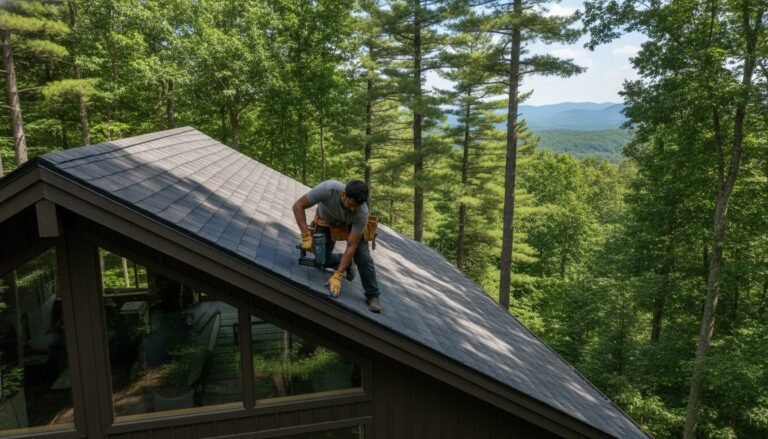
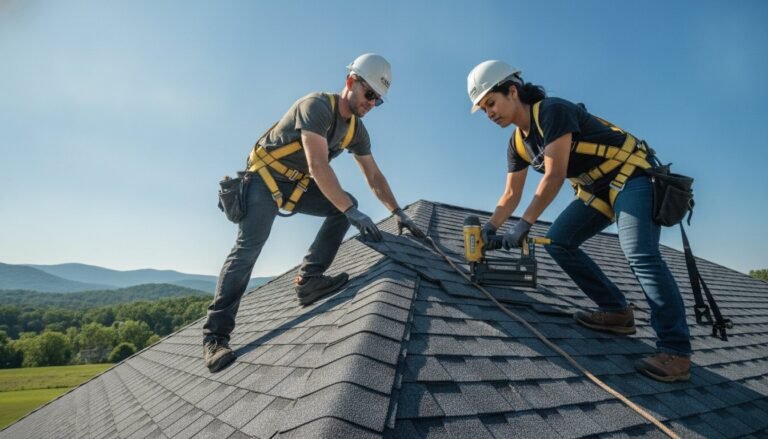
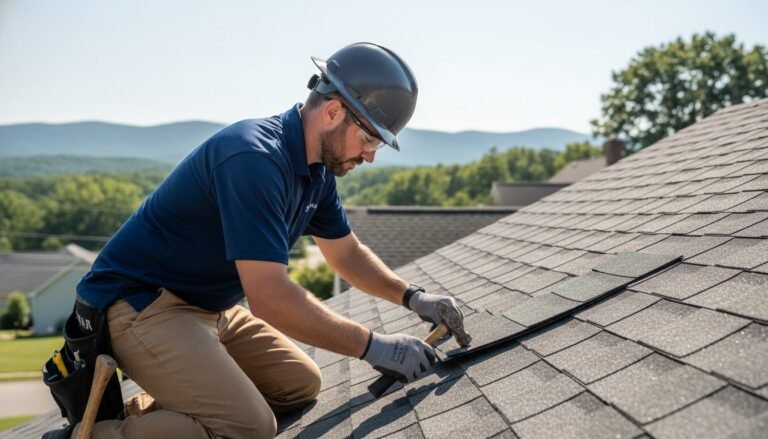
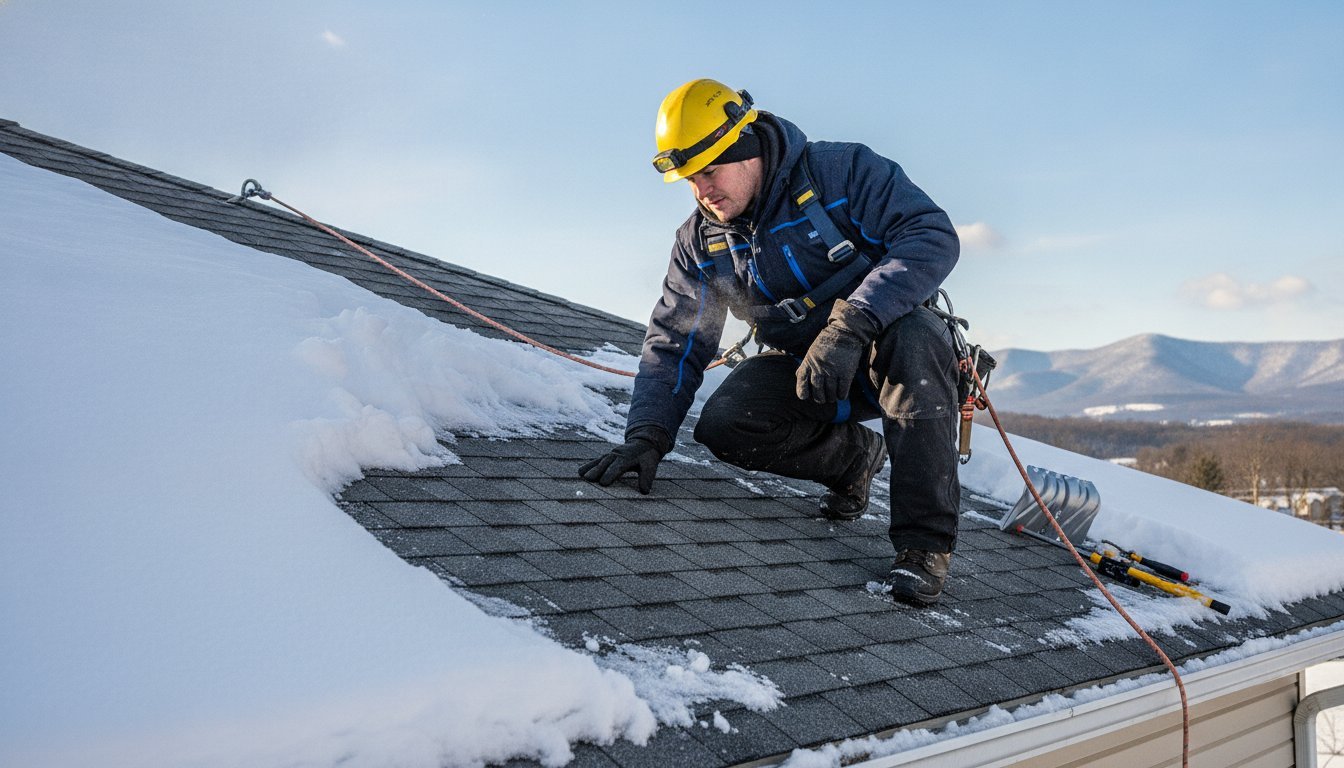
Cold-weather roofing requires specialized technical knowledge. For instance, standard asphalt shingles feature a thermal-sealing strip that activates in the sun’s heat. When temperatures drop below 40°F, we use a technique called hand-sealing. This involves applying specific amounts of asphalt roofing cement to each shingle to ensure a wind-resistant bond immediately. If the weather is too severe for a permanent fix, we utilize emergency tarping. This creates a temporary, watertight shield that protects your attic until a break in the weather allows for a full restoration.
The Allesson Roofing Approach to Cold-Weather Repairs
We take specific precautions to ensure quality results during the Monroe County winter. Our crews keep roofing materials in heated environments until the moment they are ready for installation. This prevents the shingles from becoming brittle and cracking during the nailing process. Safety remains our top priority. We follow strict protocols for working on sloped surfaces in freezing conditions, ensuring our teams can focus on the craftsmanship of your roof repair from heavy snow Poconos calls for. Our goal is always to provide a reliable stop-gap or permanent repair that halts water intrusion instantly.
Planning for Spring: When to Transition from Repair to Replacement
Sometimes, a winter leak is a signal that your roof has reached the end of its lifespan. A mid-winter inspection is the perfect diagnostic tool to determine if you need a full asphalt shingle installation PA once the ground thaws. Planning your project now is a smart move. Winter is an excellent time to consult with us and secure a spot on the spring schedule before the seasonal rush begins. Once the final snow melts, we recommend a professional post-winter inspection to check for any hidden stress points or granule loss that occurred during the season. Our team at Allesson Roofing is ready to help you navigate these winter challenges with confidence. Don’t let a small leak turn into a major renovation; reach out for emergency roof repair Poconos assistance today.
Take Control of Your Home’s Winter Safety
Your roof is the first line of defense against the unique challenges of a Pennsylvania winter. By keeping a close eye on your attic for frost and understanding how ice dams bypass standard shingle protection, you can prevent minor drips from becoming structural emergencies. You don’t have to wait for the spring thaw to address these concerns. Modern hand-sealing techniques and emergency tarping make roof repair from heavy snow Poconos homeowners face a practical reality even in the middle of January.
As your local East Stroudsburg experts, we understand exactly how mountain snow loads impact your specific roofing materials. Allesson Roofing is a fully licensed and insured PA contractor ready to provide steady, calm assurance during any storm. We offer 24/7 emergency storm response to ensure your family stays dry and protected throughout the season. Request an Emergency Winter Roof Inspection from Allesson Roofing today to secure your peace of mind. Your home is a significant investment; let’s work together to keep it safe and sound until the spring flowers bloom.
Frequently Asked Questions
How much snow can a Poconos roof actually hold before collapsing?
Most modern homes in our area are engineered to meet the Pocono Township requirement of 50 pounds per square foot (psf). This capacity generally handles about 20 to 25 inches of fresh, dry snow or about 5 inches of packed, wet snow. If you notice interior doors sticking or see new cracks in your drywall, the weight has likely reached a critical point. Older structures may have lower limits, so it’s best to monitor accumulation closely during back-to-back storms.
Is it safe to use a roof rake to remove heavy snow from my shingles?
It’s safe to use a roof rake as long as you remain firmly on the ground and only clear the eaves. You should never use a ladder on an icy surface to reach higher sections of the roof. Be gentle with the rake to avoid stripping the protective granules off your asphalt shingles. Removing the first three feet of snow helps prevent the ice damming that often leads to the need for roof repair from heavy snow Poconos winters are known for.
Can roofers actually install new shingles during a Pennsylvania winter?
Yes, professionals can install shingles in freezing temperatures by using a process called hand-sealing. Since the sun isn’t warm enough to activate the shingle’s built-in adhesive, we manually apply roofing cement to each piece to ensure a wind-resistant bond. While full replacements are more common in spring, roof repair from heavy snow Poconos damage is a standard winter service. This prevents moisture from reaching your plywood deck and causing rot during the spring thaw.
Will my homeowners insurance cover roof damage caused by heavy snow weight?
Most Pennsylvania policies cover damage resulting from the “weight of ice, snow, or sleet” as a standard peril. This typically includes structural repairs if the roof sags or collapses under a heavy load. However, insurance companies often distinguish between sudden storm damage and long-term leaks caused by poor maintenance. You should take photos of the snow accumulation and any interior leaks immediately. Contact your agent to verify your specific deductible and coverage limits before starting major work.
How do I know if the icicles on my gutters are a sign of an ice dam?
Icicles are a sign of an ice dam if they are forming behind the gutters or dripping from the soffit vents. While icicles on the outer edge of a gutter are common, ice that builds up into a thick ridge along the roof’s edge indicates a problem. This ridge traps melting snow, forcing water to pool and eventually seep under your shingles. If you see ice “back-feeding” onto the roof surface, your home’s insulation and ventilation likely need an upgrade.
What should I do immediately if I notice a leak during a heavy snow thaw?
You should first place a container under the drip to protect your flooring and move any furniture out of the way. If you can safely access your attic, check the underside of the roof deck to find the entry point. Don’t try to climb onto the roof to clear the snow yourself, as the surface is incredibly slick. Instead, call a professional for emergency tarping. This temporary measure stops the water flow until the weather clears enough for a permanent repair.