How to Get Insurance to Pay for a New Roof in PA: A Homeowner’s Guide
With homeowners insurance rates in Pennsylvania jumping 34% over the last five years, you’ve likely noticed your annual premiums climbing. It’s a significant investment in your home’s safety, yet it feels incredibly frustrating when an insurer offers a minor patch for a roof that clearly needs a full replacement. Many of our neighbors across the state are living in sturdy homes built before 1970, which often means dealing with stricter underwriting and closer scrutiny during the claims process. You pay for protection, and you should be able to use it when a storm hits your neighborhood.
We understand the stress of facing a difficult adjuster or worrying about a claim denial. This guide will show you exactly how to get insurance to pay for a new roof PA homeowners can feel confident in by leveraging specific state standards and policy rights. We’ll walk you through the critical differences between Replacement Cost Value and Actual Cash Value, explain why the common 25% rule is often misunderstood, and show you how to find a registered contractor who understands the local landscape. By the end of this article, you’ll have a clear path toward a fully funded roof replacement and the peace of mind that comes with a job well done.
Key Takeaways
- Learn the critical difference between Replacement Cost Value (RCV) and Actual Cash Value (ACV) to ensure your payout covers the full cost of a new roof.
- Identify subtle signs of storm damage, like shingle bruising and matting compromises, that often go unnoticed during a casual DIY inspection.
- Follow a proven step-by-step process on how to get insurance to pay for a new roof PA by prioritizing professional documentation before you call your carrier.
- Leverage Pennsylvania’s specific “like construction” standards to ensure your replacement materials match the quality and appearance of your original roof.
- Understand why working with a local contractor who can verify specific storm dates is essential for overcoming common insurance claim denials.
Understanding Roof Insurance Coverage in Pennsylvania
Owning a home in Pennsylvania means preparing for everything from heavy winter snows to summer hail storms. When your roof sustains damage, your first instinct is likely to check your policy. Understanding Homeowners Insurance is the first step in learning how to get insurance to pay for a new roof PA residents can rely on for years to come. Most policies are designed to cover “sudden and accidental” damage. This means the event must be a specific, identifiable incident like a fallen tree or a windstorm. It does not include general wear and tear or maintenance issues that have built up over a decade. If your roof is simply old and leaking because the shingles have reached the end of their life, insurance likely won’t cover the replacement.
Your primary out-of-pocket cost in a valid claim is your deductible. This is the fixed amount you agreed to pay before your insurance coverage kicks in. Once that deductible is met, the insurance company handles the remaining costs based on your specific policy type. It is a straightforward system, but the details in your paperwork determine whether you receive a check for a patch job or a full replacement.
RCV vs. ACV: How PA Policies Differ
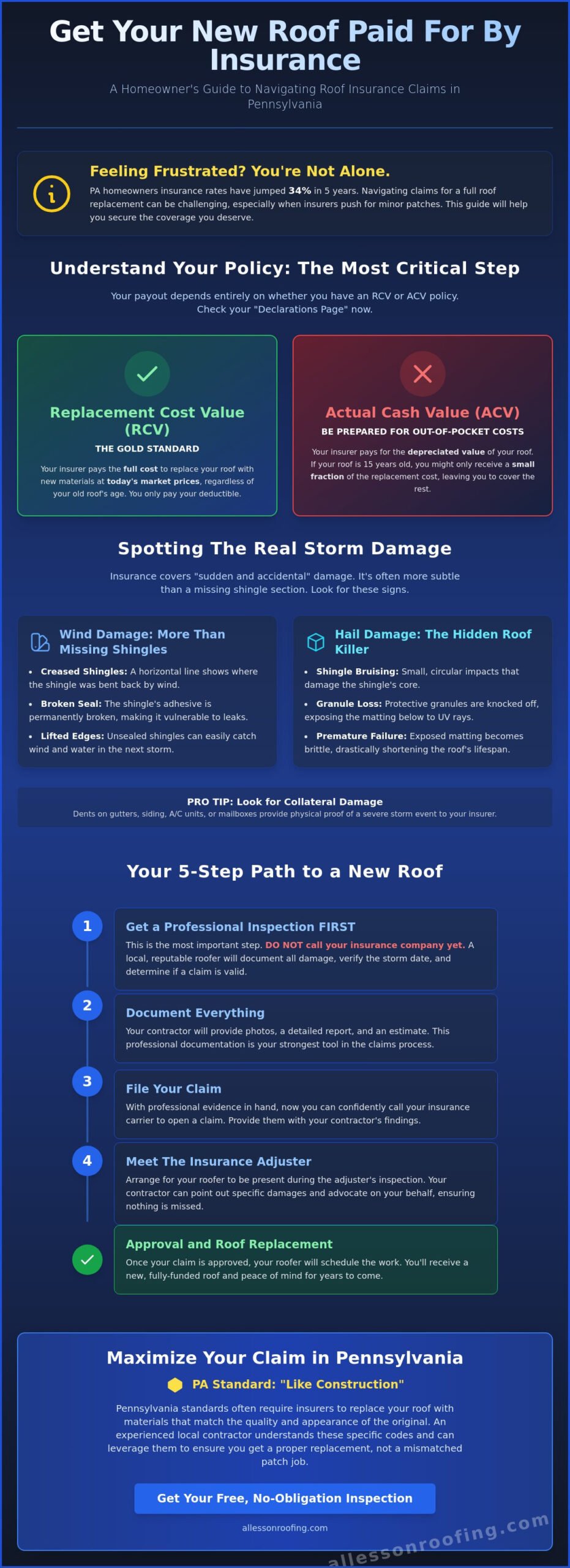
Replacement Cost Value (RCV) is the gold standard for homeowners. If you have an RCV policy, the insurer pays to replace your roof at today’s market prices, regardless of how old the roof was. In contrast, Actual Cash Value (ACV) policies only pay the depreciated value. If your 20-year-old roof is damaged, an ACV policy might only pay a small fraction of the replacement cost because of the roof’s age. Check your “Declarations Page” in your policy documents today to see which coverage you have. Knowing this now helps you set realistic expectations for your claim.
Covered Perils: What Qualifies in the Poconos?
In East Stroudsburg and the surrounding Poconos, our weather creates very specific “covered perils.” These are the events your insurance company agrees to pay for. Common examples include:
- High Winds: Gusts that lift or tear shingles away.
- Hail: Stones that bruise the shingle matting, leading to premature failure.
- Weight of Snow or Ice: Structural damage caused by heavy winter accumulation.
- Falling Objects: Trees or large branches brought down during a storm.
Timing is everything. A leak from a storm five years ago that you just noticed today is difficult to claim. Insurers want to see that the damage was reported shortly after the event occurred. For more tips on maintaining your home between storms, feel free to browse our roofing blog for local advice.
Identifying Storm Damage: Common Perils in East Stroudsburg
In the Poconos and Lehigh Valley, our homes face unique weather challenges that can quietly compromise a roof’s integrity. Identifying the right kind of damage is a major part of learning how to get insurance to pay for a new roof PA residents can trust to last. It isn’t always as obvious as a giant hole or a missing section of shingles. Often, the most significant damage is subtle and requires a trained eye to spot before a leak begins inside your living room. Beyond the roof itself, we always look for collateral damage on gutters, siding, and even metal mailboxes. These dents and dings serve as physical proof that a storm was severe enough to cause functional damage to your shingles.
Wind Damage: Creased and Lifted Shingles
Wind doesn’t always blow shingles completely off the roof. High gusts often lift the shingle just enough to break the manufacturer’s adhesive seal. Once this seal is broken, the shingle is “unsealed” and will never properly bond again. You can often spot this damage by looking for a horizontal “crease line” near the top of the shingle where it folded back in the wind. Even if the shingle looks flat now, the loss of that seal means your roof is vulnerable to the next rainstorm. In many Pennsylvania insurance scenarios, if a significant percentage of shingles are unsealed, a full replacement may be triggered because the roof can no longer be repaired to its original wind-resistant state.
Hail and Ice: The Hidden Roof Killers
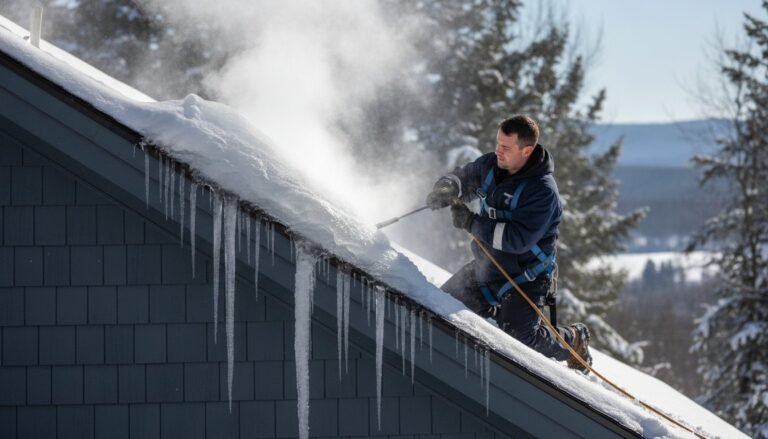
Hail damage is particularly tricky because it rarely causes an immediate leak. Instead, hail creates small “bruises” or dimples that knock the protective granules off the asphalt. This exposes the underlying matting to UV rays, which causes the material to become brittle and fail prematurely. You can find more official details on how these perils are classified in the PA Insurance Department Guide. Our local winters also bring the threat of ice dams. Ice damming occurs when melted snow refreezes at the roof’s edge, forcing water back up under the shingles and into your soffits. Ice damming is considered a covered peril under most standard PA HO-3 policies. If you suspect your home has been hit by recent weather, having a professional check your roof for storm damage can provide the evidence you need for a successful claim.
Step-by-Step: How to File Your Roof Claim in PA
Filing a claim can feel like a daunting task, but following a specific order of operations is how to get insurance to pay for a new roof PA homeowners deserve. Don’t start by calling your insurance agent. Instead, start with your own camera. Take clear photos of any debris in your yard, dented downspouts, or missing shingles from the ground. This initial evidence is the foundation of your claim and proves the state of your property immediately after the storm. Once you have your own records, call a local roofing expert for a professional inspection. We can identify the technical damage that an untrained eye might miss, providing you with a detailed report to submit to your carrier.
After the inspection confirms storm damage, it is time to officially file the claim through your insurance company’s claims department. They will assign a claim number and an adjuster to your case. This is a standard part of the process, and having your documentation ready will help things move much faster. You can find more about your consumer rights and the claims process in the Pennsylvania Insurance Department’s Homeowners Insurance Guide. Being prepared with local facts and professional evidence puts you in the best position for a fair outcome.
Documenting Damage and Temporary Repairs
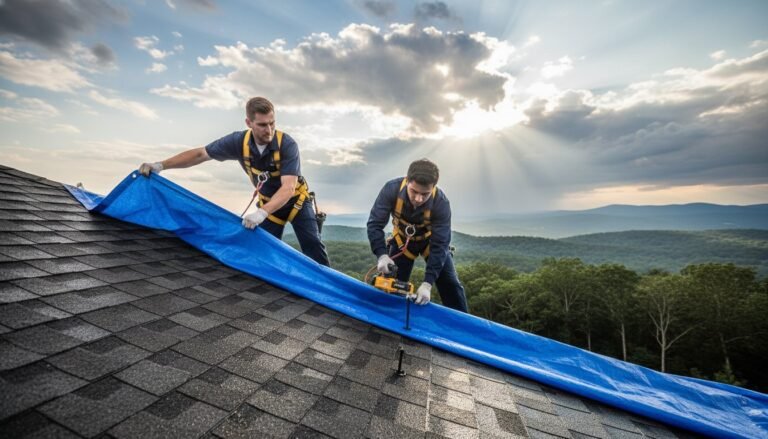
Your policy likely includes a clause requiring you to prevent further damage to your home. If a storm leaves your roof vulnerable, you must act quickly to protect your interior. We often provide emergency roof tarping to stop active leaks while the claim is being processed. Keep every receipt for these temporary measures. Your insurance company should reimburse you for these costs as part of the mitigation process. Just remember to avoid making any permanent repairs until the adjuster has completed their official inspection.
The Adjuster Meeting: Tips for Success
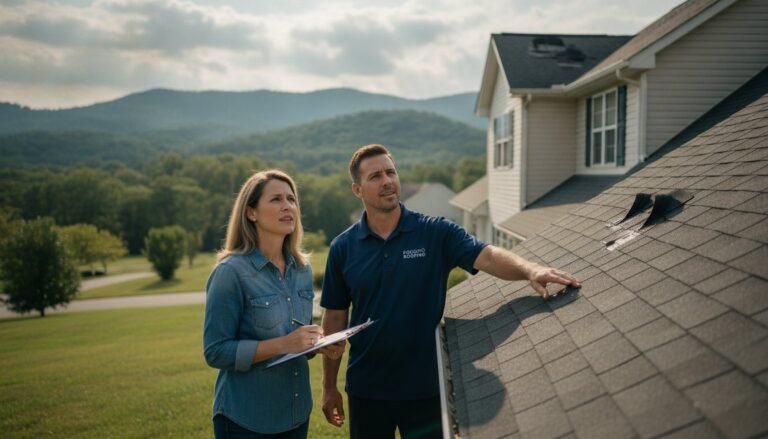
The meeting with the insurance adjuster is the most critical moment in the process. You should always schedule this visit for a time when your roofing contractor can be present. A professional roofer speaks the adjuster’s language and can point out subtle damage while they are documenting the “Scope of Work.” This document lists every repair the insurance company agrees to cover. In Pennsylvania, legal contexts like Greene v. USAA are important. If your shingles are discontinued and cannot be matched, you may have a strong case for a full roof replacement to ensure your home remains uniform and protected. If you’re ready to move forward, we can assist with your roof inspection and adjuster meeting to ensure your claim is handled correctly from the start.
Maximizing Your Claim with a Local PA Roofing Expert
Local knowledge is often the deciding factor between a denied claim and a successful replacement. In East Stroudsburg, we know the specific weather events that have rolled through our neighborhoods over the years. When you’re figuring out how to get insurance to pay for a new roof PA carriers often require precise data to validate a claim. We don’t just guess about the damage. We use advanced weather tracking software to pinpoint the exact date of the hail or wind event that affected your property. This level of detail provides the solid evidence necessary to challenge a low adjuster quote and ensure your estimate reflects the actual cost of professional work.
Our team acts as your advocate throughout the entire process. We understand that insurance adjusters are often handling dozens of claims at once and might miss the subtle indicators of long-term failure. By providing a detailed, professional estimate that mirrors the adjuster’s “Scope of Work” format, we make it easier for the insurance company to see the necessity of a full replacement. We take pride in our craftsmanship and want to ensure every homeowner in the Poconos receives the coverage they’ve paid for through their premiums.
The Advantage of an Allesson Roofing Inspection
Our team looks for more than just obvious leaks. We focus on identifying subtle signs you need a new roof that an adjuster might overlook during a quick walkthrough. By documenting granular loss, shingle bruising, and unsealed shingle tabs with high-resolution photos, we build a case based on physical facts. We also use historical weather data to confirm storm dates, which is a common sticking point for many claims. You can also check out our guide on filing a roof claim for wind damage in PA to see how we handle these specific wind-related issues.
Navigating the ‘Matching’ Dispute in PA
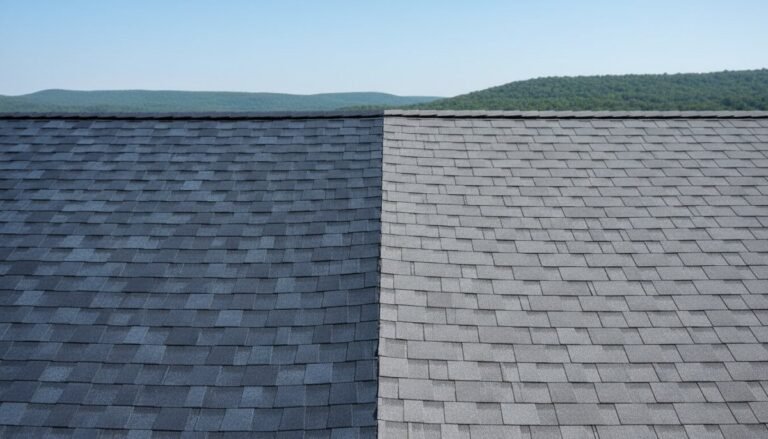
One of the biggest hurdles for homeowners is the “matching” dispute. If only one slope of your roof is damaged, an insurer might try to pay for a partial repair. However, if your existing shingles are discontinued or significantly faded, a patch will look like a sore thumb and lower your home’s resale value. We leverage standards like the “Greene v. USAA” ruling to argue that homeowners are entitled to “like construction.” This means if we can’t find a reasonable match for your existing material, we push for a full replacement to maintain the aesthetic and functional integrity of your home. Understanding these legal standards is a key part of how to get insurance to pay for a new roof PA homeowners can take pride in. Contact Allesson Roofing for a professional storm damage inspection today and let us help you secure your home’s future.
Secure Your Home’s Future with Confidence
Navigating the complexities of a property claim doesn’t have to be a solo journey. You now understand the essential steps of how to get insurance to pay for a new roof PA homeowners need, from identifying hidden hail bruises to leveraging state matching standards. By documenting damage early and understanding whether your policy provides RCV or ACV coverage, you’ve already taken the most important steps toward a successful replacement. Knowledge of your rights is your best tool when speaking with an adjuster, and being prepared with local facts makes the process much smoother.
As a locally owned and operated business in East Stroudsburg, we take pride in being a dependable partner for our neighbors. We are specialists in asphalt shingle insurance claims and have deep expertise in Poconos storm damage restoration. Our team is ready to stand by your side during the adjuster meeting to ensure every detail of the damage is professionally documented and accounted for. Schedule your free storm damage inspection with Allesson Roofing today to get started on your claim. You deserve a roof that keeps your family safe for years to come, and we’re here to help you secure it with steady, calm assurance.
Frequently Asked Questions
Does Pennsylvania law require insurance to replace the whole roof if shingles don’t match?
No, there isn’t a specific statewide law that mandates a full replacement for a mismatch. However, legal precedents and “like construction” standards often support a full replacement if a reasonable aesthetic match isn’t available. If your current shingles are discontinued, we help you argue that a partial patch would significantly lower your home’s resale value and structural integrity. This approach often leads to a full replacement approval.
How long do I have to file a roof insurance claim in PA after a storm?
You should notify your insurer as soon as you discover any damage. While many policies offer a wider window, some insurance contracts in Pennsylvania can shorten the statute of limitations for filing a claim to just one year from the date the damage occurred. Acting quickly is the best way to ensure your claim is accepted without disputes over the timeline or the cause of the damage.
Will my insurance rates go up if I file a claim for storm damage in PA?
It’s a possibility you should consider. Filing a single claim can increase a homeowner’s annual insurance premium by an average of 24% in Pennsylvania. However, ignoring storm damage leads to much higher out-of-pocket costs when leaks eventually cause interior damage. Since your rates may rise anyway after a major storm hits your neighborhood, it’s usually better to get the roof protection you need now.
Can I choose my own roofing contractor, or does insurance pick one?
You have the absolute right to choose your own contractor for any residential roofing work. While some insurance companies might suggest a “preferred” vendor, you aren’t required to use them. Working with a local expert who is registered under the Home Improvement Contractor Protection Act (HICPA) ensures you have an advocate who understands how to get insurance to pay for a new roof PA homeowners can rely on.
What happens if the insurance estimate is lower than the contractor’s quote?
This is a common part of the process. If the insurance estimate is low, your contractor can submit a “supplement” with evidence showing the actual costs of materials and labor in East Stroudsburg. We provide the technical documentation and photos needed to show the insurer why additional funds are necessary to complete the job to local building codes and safety standards. Most carriers will adjust the payout once they see the proof.
Does insurance cover a roof that is 20 years old in Pennsylvania?
Coverage depends entirely on your specific policy type and the cause of the damage. If you have an RCV policy, the age matters less as long as there is clear storm damage. However, a growing trend in Pennsylvania is for insurance carriers to move older roofs to an Actual Cash Value (ACV) basis. This means the payout is for the depreciated value of the roof, not the full replacement cost today.