Roof Prices Rose Again in 2026: Replace Now or Wait?
If your roof still has eight or ten good years in it, replacing it early to beat price increases is a losing trade. If it has two or three, waiting will almost certainly cost you more than it saves. Roofing materials in 2026 are running 15-25% above 2024 levels, and tariff-driven increases historically do not come back down. The decision is arithmetic, not a gut feeling.
We get this question weekly now, usually from homeowners in East Stroudsburg and Mount Pocono who read a headline about tariffs and started worrying about a roof they were not worried about last spring. Here is how we walk them through it.
The short answer
Replace now if your roof has fewer than five years of usable life left, because five years of price increases will outrun the value of the life you are giving up. Wait if it has more than eight. Between five and eight, the deciding factor is not price at all – it is whether water is already getting into the deck.
What actually happened to roofing prices in 2026
This was not ordinary inflation. Two things stacked on top of each other.
The first is tariffs on the raw inputs. Section 232 duties on imported steel and aluminum doubled from 25% to 50% in June 2025, and roofing uses far more metal than homeowners realize – drip edge, valley flashing, step flashing, ridge vent, fasteners, gutter stock. According to RoofVista’s 2026 roofing tariff guide, those accessory categories are up 15-25%.
The second is the shingle itself. The same report tracks two rounds of increases this year: manufacturers raised prices 5-8% early in 2026, and distributors passed through another 6-10% on June 1.
| Material | Reported 2026 change | Why it moved |
|---|---|---|
| Asphalt shingles | Two increases, roughly 5-8% then 6-10% | Manufacturer pricing plus distributor pass-through |
| Flashing, fasteners, metal accessories | Up 15-25% | Section 232 steel and aluminum duties at 50% |
| Metal roofing panels | Up sharply – the largest jump of any category | Steel and aluminum input costs |
| Full replacement, all in | 15-25% above 2024 | Materials plus labor |
Figures reported by RoofVista, 2026. What any individual roof costs depends on pitch, access, layers to tear off, deck condition and the material you choose. We put our number in writing after we have been on the roof, not before.
Will prices come back down?
Probably not, and that is the part homeowners tend to get wrong. They treat a tariff like a storm – something that passes.
The 2018-2019 steel and aluminum tariffs are the closest precedent we have. Roofing material prices rose, and when exemptions were granted afterward, they did not return to where they started. Manufacturers rarely un-raise a price once the market has absorbed it. Planning around a future price drop is planning around something that has not happened before.
That does not mean rush. It means stop treating “wait for prices to fall” as a strategy. It is not one.
The math that actually decides it
Here is the calculation we walk homeowners through at the kitchen table.
A roof replacement buys you a fixed number of years – call it 25 for architectural asphalt in our climate. If you replace a roof that still had 10 good years left, you paid full price and threw away 10 years you had already bought. At a rough figure of $600 per remaining year on a mid-sized Poconos home, that is real money gone, and no price increase between now and then is going to be that large.
Flip it. If your roof has three years left and prices climb even 6% a year, waiting those three years means paying close to a fifth more for the same job – plus whatever the delay let the weather do to your deck in the meantime.
The crossover sits somewhere around five to eight years of remaining life. Above it, wait. Below it, moving sooner usually wins.
How to estimate the years you have left
- Age. Architectural shingles in the Poconos generally give 22-28 years. Three-tab, closer to 18-22. Snow load and freeze-thaw cycling here are harder on a roof than the manufacturer’s brochure assumes.
- Granule loss. Grit in the gutters every spring is normal in year 5 and a warning in year 18.
- Curling and cupping at the edges. Once shingles lift, wind gets underneath them, and one January storm can take a section.
- Nail pops and dark patches on the sheathing, visible from the attic on a bright day.
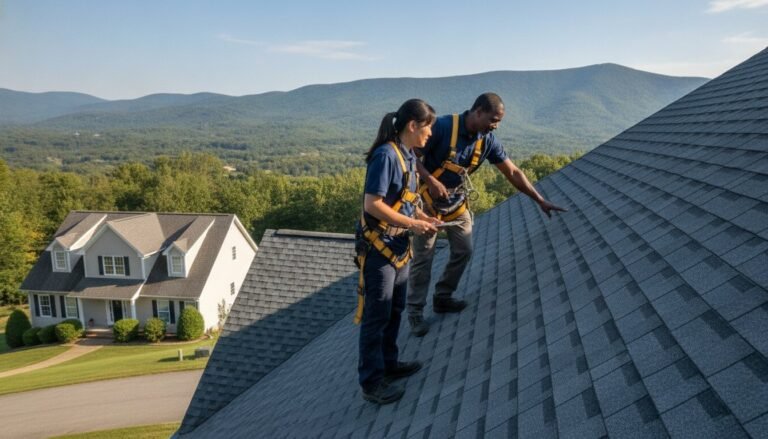
If you are guessing, a proper inspection settles it in about forty minutes. We do those free, and we will tell you to wait if waiting is right – that answer costs us a sale and saves you one.
When waiting is genuinely the right call
Some of the most useful advice we give ends with us driving away without a contract.
If your roof is 12 years old, sheds water, and the only reason you are considering replacement is a news story about tariffs – wait. Spend a fraction of the money on the things that actually extend a roof’s life: keep the gutters clear so meltwater leaves instead of backing up under the shingles, replace failed pipe boots, and fix flashing before it becomes a leak. A targeted roof repair in Stroudsburg for a few hundred dollars can buy several more years out of a roof that is otherwise sound.
The same goes for a roof with one bad slope. A south-facing slope takes more sun and often fails first. Replacing one slope is not ideal for appearance, but it is honest work and it is a fraction of the cost.
When waiting costs more than the price increase
The expensive version of this mistake is not paying 8% more for shingles. It is what happens underneath while you decide.
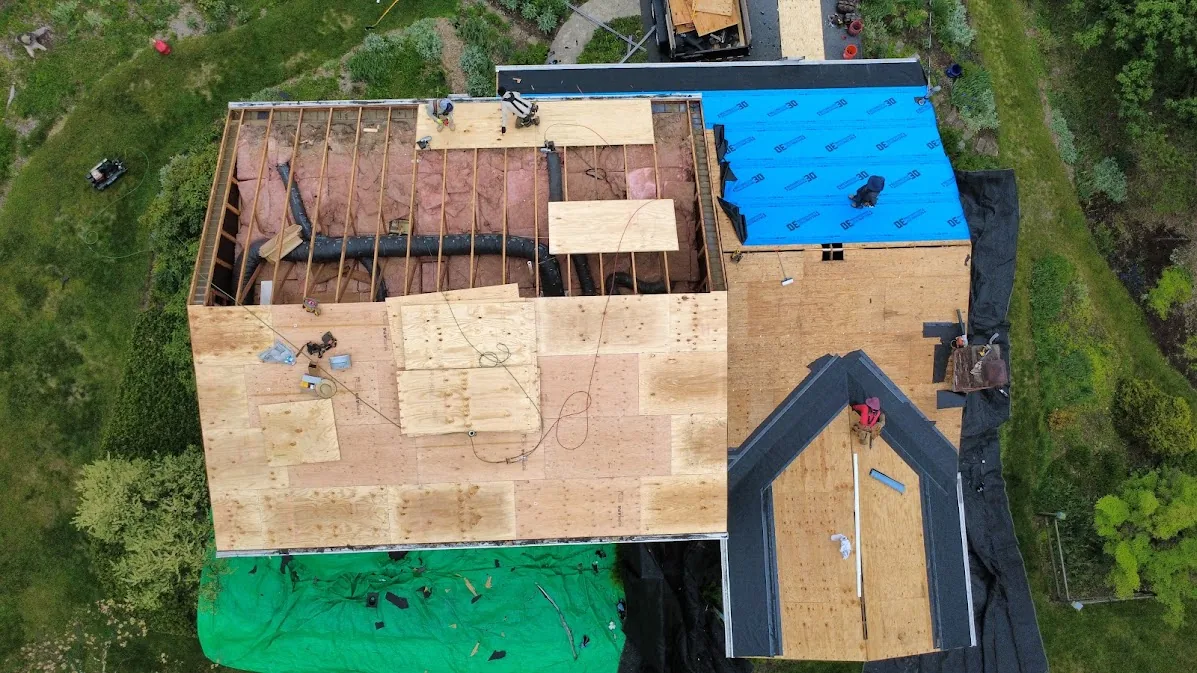
Once water gets past the shingles and into the plywood, the job changes. Wet decking has to come off and go back on before anything else happens, and that is material and labor that was not in the original number. We routinely open up roofs in Monroe County where the homeowner waited one more winter and turned a straightforward tear-off into a tear-off plus a dozen sheets of new deck.
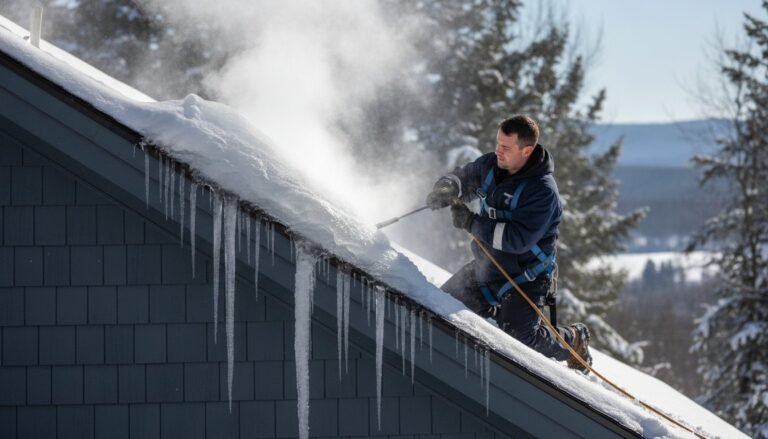
The Poconos winter is the specific risk. Fifty to a hundred inches of snow, and a freeze-thaw cycle that runs all season. Meltwater refreezes at the cold eave, backs up under the courses, and finds any gap that already existed. A roof that is merely tired in October can be actively leaking by March. If yours is at that stage, this is not a pricing decision anymore – see emergency roof repair before the first hard freeze rather than after.
What we tell homeowners who ask us this
Three things, in this order.
First, find out what you actually have. Most people asking whether to replace now do not know their roof’s age within five years. Get that pinned down before you make a five-figure decision.
Second, if you are replacing within two years anyway, do it in the shoulder season rather than the emergency season. Scheduling is easier and you are not competing with everyone whose roof failed in the same storm. Our guide to the best time of year to replace a roof in Pennsylvania covers how that plays out here.
Third, get the number in writing before you assume you cannot afford it. Homeowners consistently guess high on repairs and low on replacements. Our 2026 price guide for the Poconos lays out what moves the figure, and if you are weighing materials, metal roofing costs in Pennsylvania have moved the most of any category this year – worth knowing before you commit to it.
Frequently asked questions
Are roofing prices going to keep rising in 2027?
Nobody can promise a direction. What the 2018-2019 tariff cycle showed is that roofing prices tend not to fall back once they rise, even when the tariffs that caused the increase are eased. Plan around prices holding, not dropping.
Should I replace my roof early just to lock in today’s price?
Only if the roof is near the end of its life anyway. Replacing a roof with a decade left throws away more value in unused life than any realistic price increase will cost you over that decade.
Does a new roof pay for itself when I sell?
Not in full, but a roof at the end of its life is one of the first things a buyer’s inspector flags, and it becomes a negotiating lever against you. A roof with documented remaining life removes that argument.
Can I put new shingles over the old ones to save money?
Sometimes, and it is cheaper up front, but it hides the deck and shortens the life of the new layer. We wrote about when a layover is defensible and when it is a false economy in our guide to roofing over existing shingles in PA.
How long does a full replacement take?
Most single-family homes here are a one to three day job depending on size, pitch and weather. Our replacement timeline guide breaks it down day by day.
Get a straight answer about your own roof
The only way to know which side of this decision you are on is to have someone competent look at the roof and tell you how many years are left in it. We do that inspection free across Stroudsburg, East Stroudsburg, Mount Pocono and the rest of Monroe County, and you get photos of whatever we find plus a written estimate – and an honest recommendation to wait if that is the right answer.
Call (570) 426-3505 or ask us about roof replacement in the Poconos.