Commercial Roofing Inspection: The Ultimate 2026 Business Owner’s Checklist
What if a single afternoon spent on your roof could prevent a five figure repair bill later this winter? Many Pennsylvania business owners treat maintenance as an optional task, but waiting for a leak to appear often means you are already too late. Between the heavy snow loads and the constant freeze-thaw cycles in our region, a regular commercial roofing inspection is your best defense against unexpected disruptions and insurance claim denials.
It’s stressful to worry about whether your facility is truly protected, especially with the new 2021 ICC building codes that took full effect across the state this year. We understand that you need clear answers and a reliable plan to keep your operations running smoothly. This article provides a professional inspection framework designed for our local climate to help you extend your roof’s lifespan and secure your warranty standing. You will learn exactly what to look for in 2026, including the updated R-30 insulation requirements and the specific signs of wear that often lead to costly emergency repairs.
Key Takeaways
- Understand why the extreme temperature swings in the Poconos and East Stroudsburg require a specialized approach to maintain your roof’s structural integrity.
- Master the “Envelope Integrity” framework to identify hidden vulnerabilities in your building’s exterior before they turn into internal leaks.
- Discover the “Bi-Annual Rule” for scheduling a commercial roofing inspection to catch winter ice damage and prepare your facility for the summer heat.
- Learn the life cycle costing strategy that shows how small investments in proactive maintenance can prevent the high cost of premature roof replacement.
Why Commercial Roofing Inspections are Vital in Pennsylvania
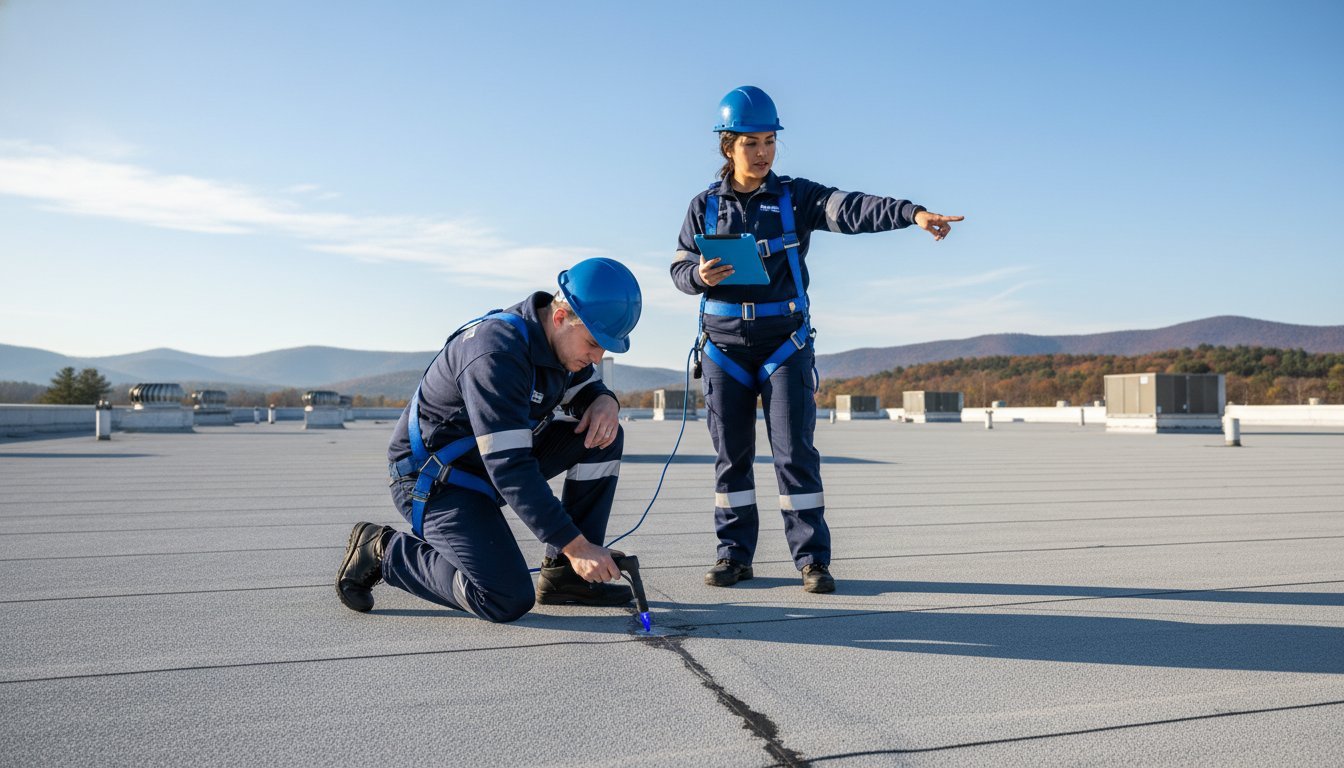
A commercial roofing inspection is far more than a quick climb up a ladder to see if things look okay. It’s a technical, professional assessment of your building’s structural integrity and weatherproofing systems. Think of it as a comprehensive physical exam for your facility’s most expensive asset. In Pennsylvania, this process is essential because our weather doesn’t play by the rules. While a “quick look” might spot a large hole, a professional forensic audit identifies the microscopic failures that lead to catastrophic leaks before they happen.
We often talk about the “Poconos Factor” when discussing local properties. In towns like East Stroudsburg, the temperature can swing 40 degrees in a single day. These rapid changes cause flat roof membranes to expand and contract violently. Over time, this thermal shock pulls at seams and flashings, creating entry points for water that a casual observer would never notice. Understanding the common maintenance needs for flat roofs is the first step in staying ahead of these environmental stressors and protecting your bottom line.
The Impact of PA Weather on Commercial Systems
Heavy snow loads in the Lehigh Valley represent a major risk for aging commercial roof decks. When inches of wet snow sit on a flat surface, they put thousands of pounds of pressure on the underlying structure. This weight can cause subtle bowing or drainage issues that lead to ponding water. Additionally, the freeze-thaw cycles common in Pennsylvania expand micro-cracks in EPDM and TPO membranes. What starts as a tiny hairline fracture in January becomes a wide gap by March. Don’t forget about wind uplift; our open landscapes allow high-velocity gusts to catch loose membrane edges, potentially peeling back large sections of the roof in minutes.
Insurance and Warranty Requirements
As of 2026, the landscape for commercial insurance has shifted toward “preventative maintenance” requirements. Most major insurers now expect documented proof of care to honor high-value claims. If you don’t have a record of a recent commercial roofing inspection, you might find your claim denied after a major storm. Manufacturers also tie their long-term warranties to these regular check-ups. Keeping a detailed file of inspection reports simplifies the process if you ever need to file for emergency roof repair Poconos services. It proves you’ve done your part to protect the investment, making the claims process much smoother.
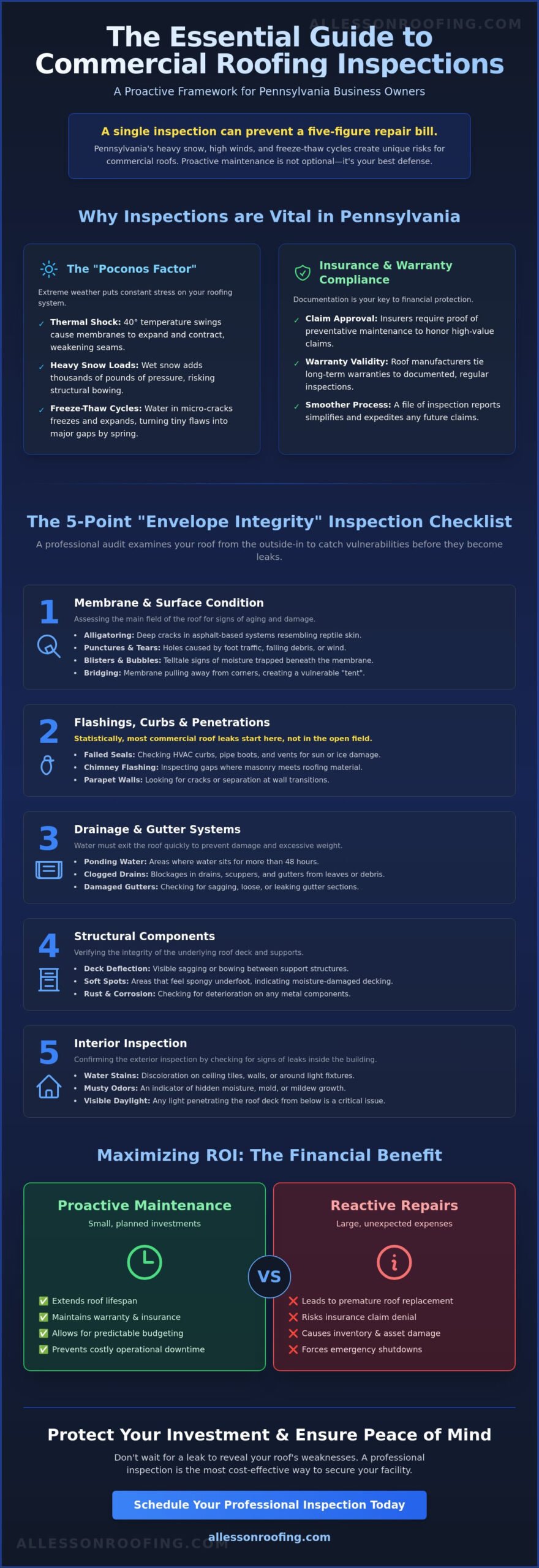
The 5-Point Commercial Roof Inspection Checklist
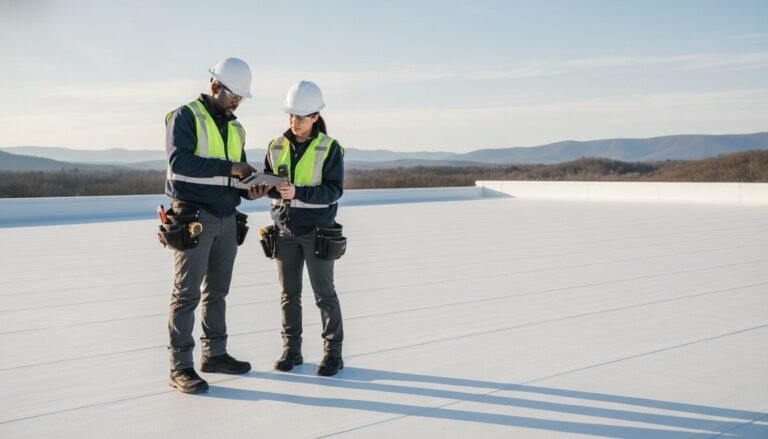
Professional roofing contractors follow a rigorous framework to ensure no stone is left unturned during a survey. At the heart of a high-quality commercial roofing inspection is the “Envelope Integrity” approach. This method involves examining the roof from the outside in, starting at the perimeter and working toward the center. It’s designed to catch small vulnerabilities before they compromise the building’s interior. Every professional audit should result in a detailed, photo-documented report. This documentation is vital for your records, as it ensures compliance with key regulations and standards that protect your business and your investment.
1. Membrane and Surface Condition
We start by looking at the actual field of the roof. For asphalt-based systems, we search for “alligatoring,” which is a pattern of deep cracks that resemble reptile skin. If you have a TPO or PVC roof, we look for punctures or tears caused by debris or heavy foot traffic. Another common issue is “bridging.” This happens when the membrane pulls away from a wall or corner, creating a tent-like gap that is prone to tearing. We also keep a sharp eye out for blisters or bubbles. These are telltale signs that moisture is trapped under the surface and needs immediate attention. Because water can travel far from its entry point through the insulation layer, understanding proper flat roof leak detection techniques is essential for accurately pinpointing the true source of any moisture intrusion.
2. Flashings, Curbs, and Penetrations
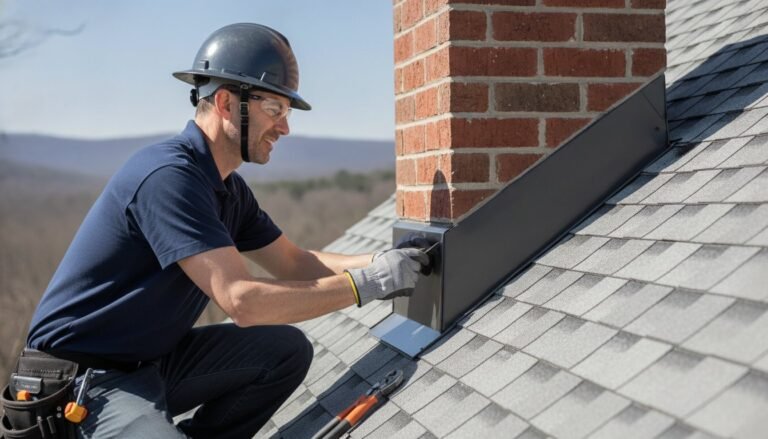
Statistically, most commercial leaks occur at the edges and penetrations rather than the flat field. We meticulously inspect HVAC curbs and pipe boots to ensure the seals haven’t failed due to Pennsylvania’s intense sun or winter ice. For mixed-use commercial buildings in our local downtown areas, our chimney flashing repair service often identifies gaps where masonry meets the roofing material. We also examine parapet wall transitions. These areas are frequent sites for cracks or gaps that allow water to seep into the building’s structural bones.
3. Drainage and Gutter Systems
Water must move off your roof quickly to prevent “ponding.” If water sits for more than 48 hours, it adds significant weight that can exceed your roof deck’s design limits. We clear and inspect internal drains, scuppers, and collector heads to ensure they aren’t clogged with debris. It’s also vital to check that downspouts are properly directing water away from your building’s foundation. If you’re concerned about how your drainage system handled the last storm, you can reach out to our team for a professional assessment of your system’s efficiency.
Timing and Frequency: When to Schedule Your Inspection
Timing is everything when it involves protecting your facility. We recommend the “Bi-Annual Rule” for all local properties. This means scheduling a commercial roofing inspection twice a year; once in the spring and once in the fall. A spring visit is your first line of defense against winter’s aftermath. Ice dams and heavy snow loads often leave behind hidden damage that only a trained eye can spot. By catching these issues early, you prevent small leaks from becoming major operational disruptions during the rainy season.
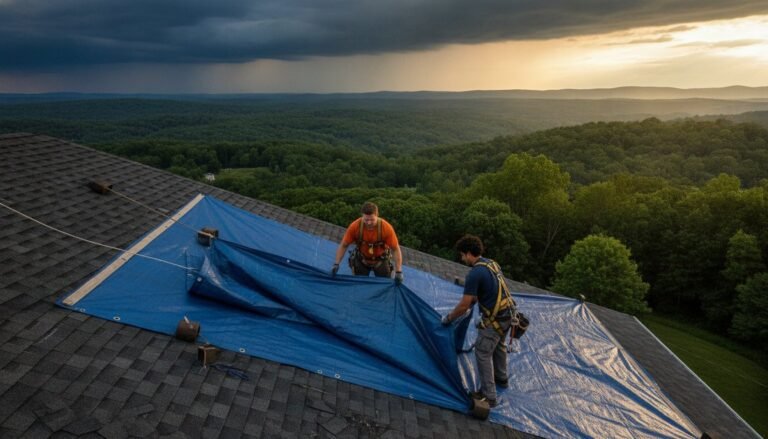
The fall inspection serves a different purpose. We view this as a “winterization” process for your building envelope. Our goal is to ensure your roof is ready to handle the upcoming freeze-thaw cycles and weight of the snow. Beyond these scheduled visits, always call for an assessment after major Poconos weather events. High winds and hail can compromise a roof in minutes; documented post-storm reports are essential for insurance claims.
Preparing for the Inspector’s Visit
Help your contractor provide the most accurate commercial roofing inspection by preparing ahead of time. First, ensure safe roof access via an internal hatch or secured ladder. Next, gather your paperwork. Having previous repair records on hand allows the inspector to track the roof’s history and performance. Finally, clear any debris or tenant equipment that might block the view of the membrane. A clean surface ensures every square inch gets the attention it deserves.
Post-Inspection: Understanding the Report
Once the survey is complete, you will receive a detailed report. Focus first on “Immediate Repairs” to prevent active leaks. “Budgetary Items” are less urgent but necessary for future planning. This report is a powerful tool for deciding between flat roof repair vs replacement. Ask your inspector for a “remaining service life” estimate. This data helps you avoid financial surprises down the road.
If you haven’t had your roof checked this season, schedule your bi-annual inspection today to keep your facility protected.
Maximizing ROI: The Financial Benefits of Proactive Audits
Viewing a commercial roofing inspection as just another bill is a mistake. It is actually a strategic financial tool designed to protect your cash flow. When you identify a small seam failure early, you prevent the catastrophic business downtime that follows a major leak. Beyond just avoiding a mess, proactive care follows the principle of “Life Cycle Costing.” Industry experts often find that every dollar invested in regular maintenance can save ten dollars in emergency repairs or premature replacement costs later on.
There are also immediate tax and real estate advantages to consider. Routine maintenance is typically a fully deductible business expense in the year it is performed. Additionally, if you ever decide to sell your facility, a clean, multi-year history of professional inspection reports serves as a powerful validation of the property’s value. It gives buyers confidence that they aren’t inheriting a hidden structural liability.
Extending Roof Life by 25% or More
One of the biggest financial drains in commercial roofing is the saturation of insulation. As of January 1, 2026, Pennsylvania’s adoption of the 2021 ICC codes mandates higher R-30 insulation values for many buildings. If a leak goes undetected, it destroys this expensive insulation, forcing a total “tear-off” instead of a simple “restoration” or coating. We have seen local Stroudsburg warehouses avoid a $100,000 replacement project simply because they spent a fraction of that on annual audits to keep their insulation dry. Catching a puncture today could easily add five to ten years to your roof’s functional life.
Choosing a Local Poconos Commercial Expert
Local knowledge is your best asset when it involves the building envelope. A contractor who understands East Stroudsburg’s specific building codes and the unique wind uplift risks of our Pennsylvania landscapes provides a much higher level of security than a generalist. You need a partner who is deeply rooted in the community and ready to provide a steady hand when the weather turns. We take pride in being a dependable authority that business owners can trust for transparency and craftsmanship.
Ready to protect your facility and secure your investment for the long term? Contact Allesson Roofing for a professional commercial inspection today to get a clear roadmap for your roof’s future.
Secure Your Facility’s Future Today
Your commercial roof is more than just a cover; it’s a vital asset that keeps your business running smoothly. By following a consistent bi-annual schedule and using a professional 5-point checklist, you’re doing more than just fixing leaks. You’re actually securing your warranty, satisfying 2026 insurance requirements, and adding significant years to your roof’s lifespan. Don’t let the next major Poconos storm be the one that catches your operations off guard.
As locally owned East Stroudsburg experts, we specialize in EPDM, TPO, and flat roof systems. We provide the thorough commercial roofing inspection and comprehensive photo-documented reporting you need for long-term capital planning and insurance compliance. We believe in transparency and craftsmanship that stands up to Pennsylvania’s toughest seasons.
Schedule Your 2026 Commercial Roof Inspection with Allesson Roofing and get the peace of mind you deserve. We’re ready to help you protect your investment with the steady, expert care your building needs.
Frequently Asked Questions
How much does a commercial roof inspection typically cost in Pennsylvania?
The cost for a professional survey in Pennsylvania typically depends on the total square footage and the complexity of the roofing system. Larger facilities with numerous HVAC penetrations or multiple roof levels will require more time and specialized equipment. While some contractors offer basic visual checks, a comprehensive audit that includes moisture detection or drone mapping will naturally involve a higher investment than a simple walk-through.
How long does a professional commercial roofing inspection take?
A standard inspection usually takes between one and three hours to complete. A small retail building might only take 45 minutes; however, a large industrial warehouse or school can require a full afternoon. The duration depends on how many penetrations, drains, and parapet walls the inspector needs to check. We take the time needed to ensure every seam and flashing detail is properly documented.
Can I perform a commercial roof inspection myself to save money?
You can certainly look for obvious debris or large punctures, but a professional commercial roofing inspection requires specialized training and tools. Most business owners don’t have the moisture meters or thermal cameras needed to find hidden leaks under the membrane. Attempting a DIY inspection also risks personal injury and might not satisfy the documentation requirements for your insurance carrier or manufacturer warranty.
What is the most common issue found during commercial inspections in the Poconos?
Seam failure caused by thermal expansion is the most frequent issue we encounter in the Poconos. Because East Stroudsburg experiences such dramatic temperature swings, flat roof membranes are constantly pulling at their attachment points. This stress often leads to bridging or open laps at the seams. These small openings allow water to seep in, which then freezes and expands, causing even more structural damage.
Do I need a different type of inspection for a flat roof versus a sloped shingle roof?
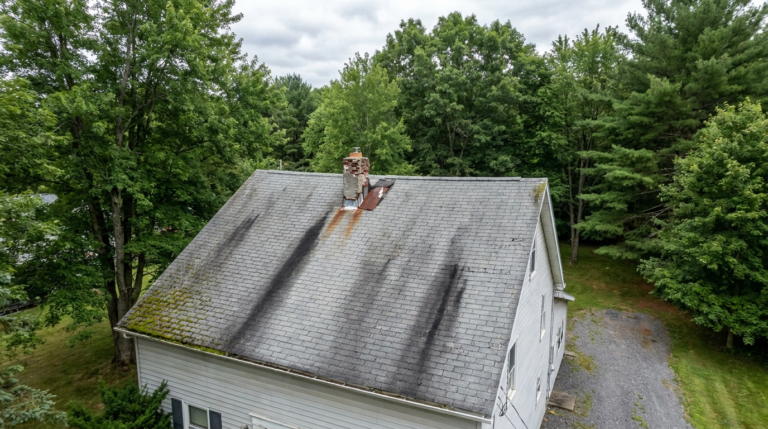
The inspection process is quite different because the failure points are unique to each system. On a flat roof, we’re primarily concerned with drainage, ponding water, and membrane seam integrity. For sloped shingle roofs, the focus shifts to shingle adhesion, granule loss, and the condition of the underlayment. Each type of roof requires a specific set of eyes to ensure no vulnerabilities are missed.
What happens if the inspector finds moisture trapped under the membrane?
Finding trapped moisture often means the insulation underneath has become saturated and lost its thermal R-value. During a commercial roofing inspection, we use tools to map out the extent of the wet area. If the damage is localized, we can often perform a targeted repair or restoration. However, widespread saturation usually requires a full tear-off to protect the building’s structural deck from long-term rot and mold. To understand the advanced methods professionals use to pinpoint these hidden wet areas, review our detailed guide on flat roof leak detection for Poconos property owners.