Ice and Water Shield: Where Your Roof Actually Needs It
Ice and water shield is a self-adhesive rubberized membrane that goes directly on your roof deck, under the shingles, wherever water is most likely to get in. On a Poconos roof, that usually means the eaves, valleys, and anything poking through the roof. Expect about $4 to $5.50 per square foot if it’s installed on its own.
It won’t stop an ice dam from forming. It’s what keeps the water behind that dam out of your house. Here’s where it belongs, what it costs, and where you can honestly skip it.
What Is Ice and Water Shield?
Regular underlayment is a covering. Water runs off it. Ice and water shield is sticky on one side, bonds to the wood, and seals around the nails driven through it. That seal is the whole point. Water can sit against it and still not find a way through.
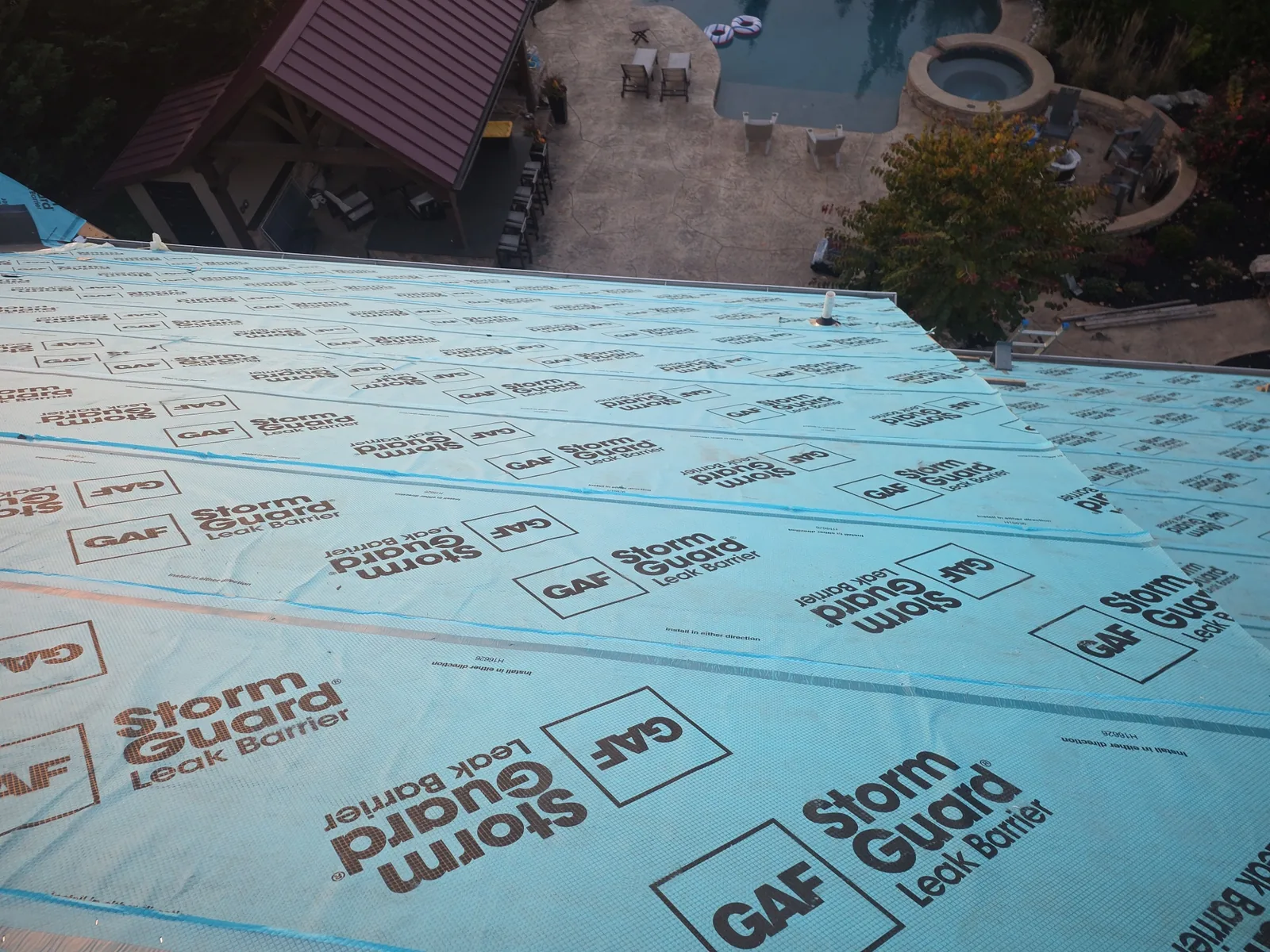
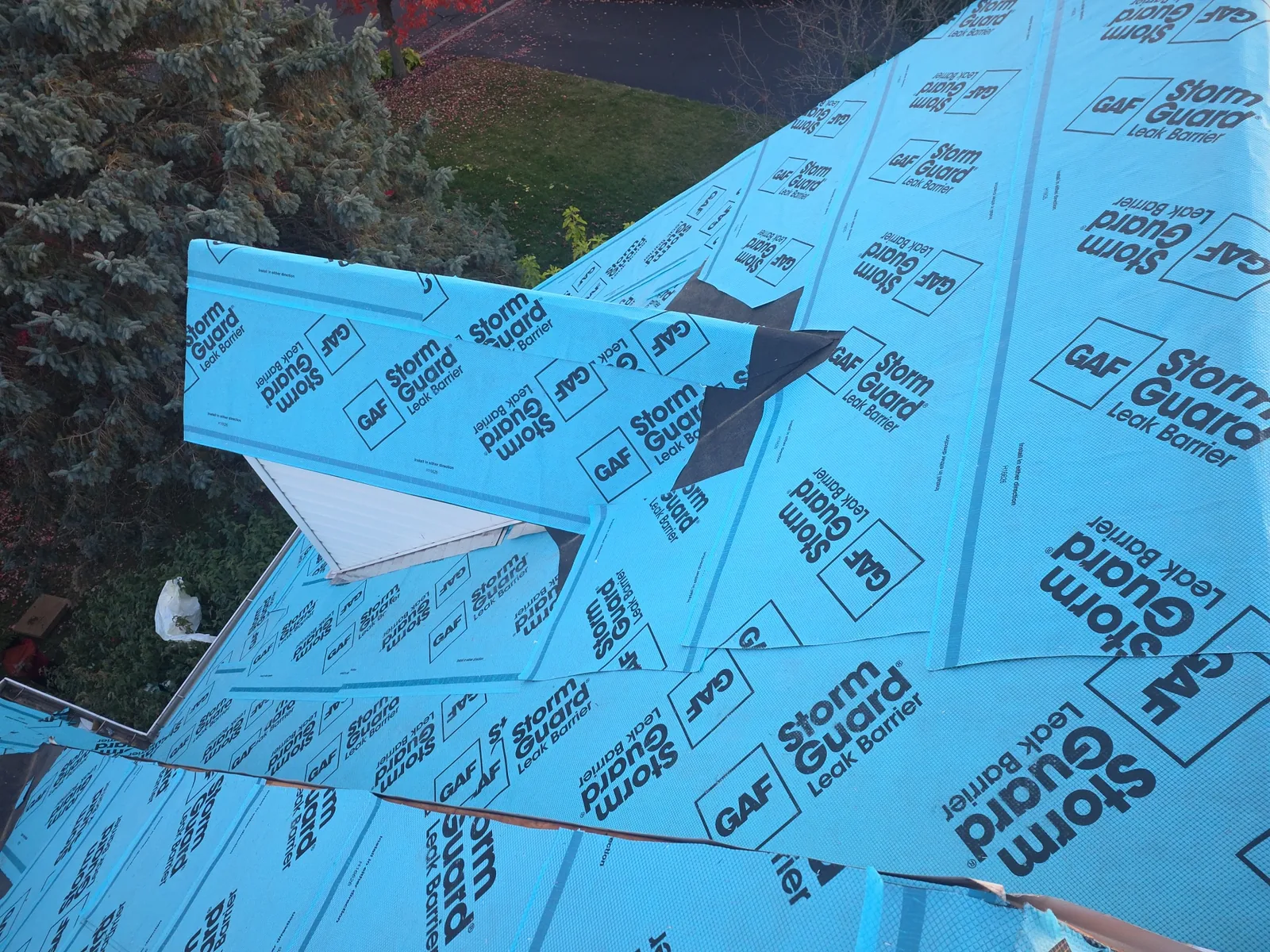
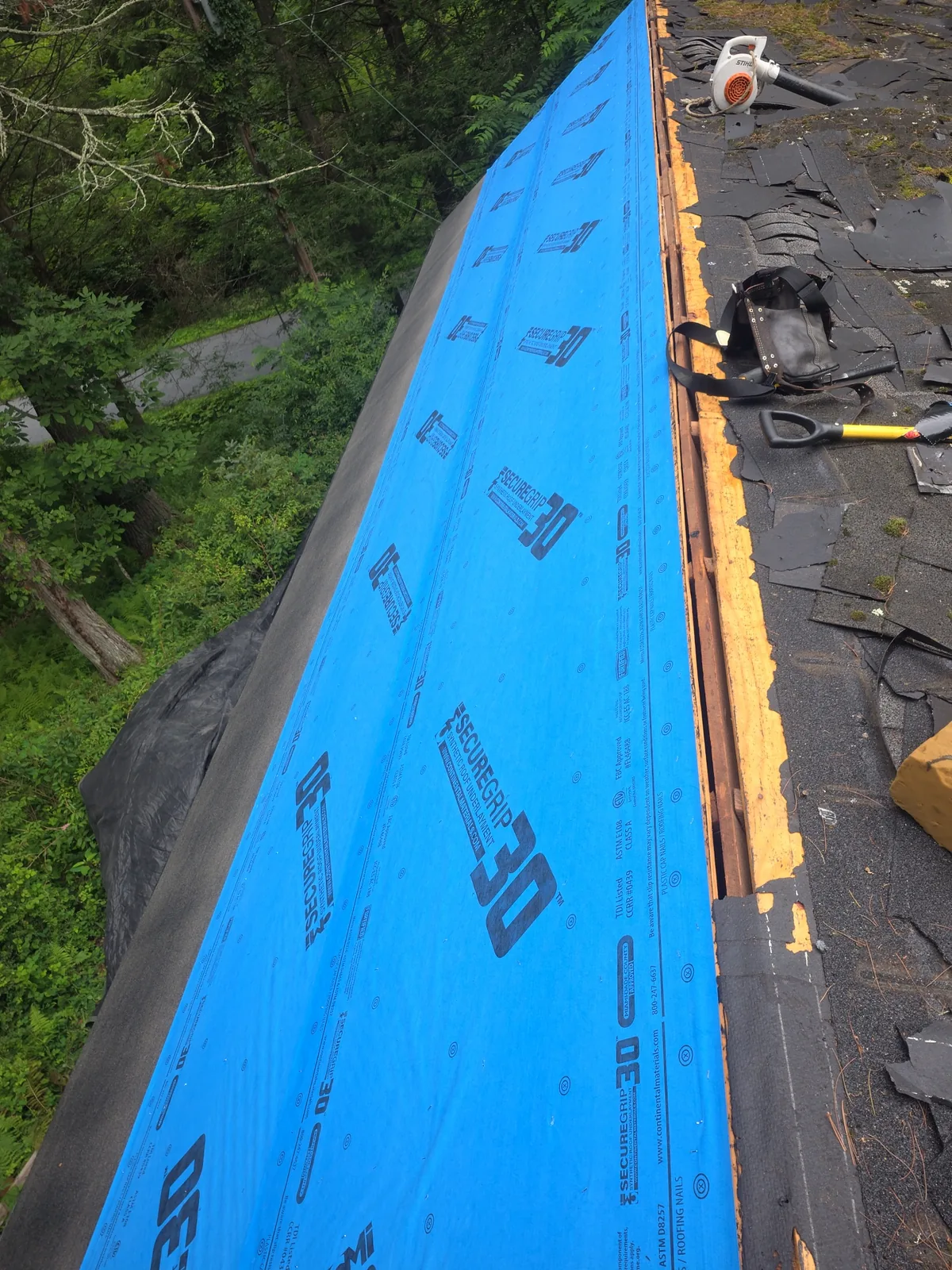
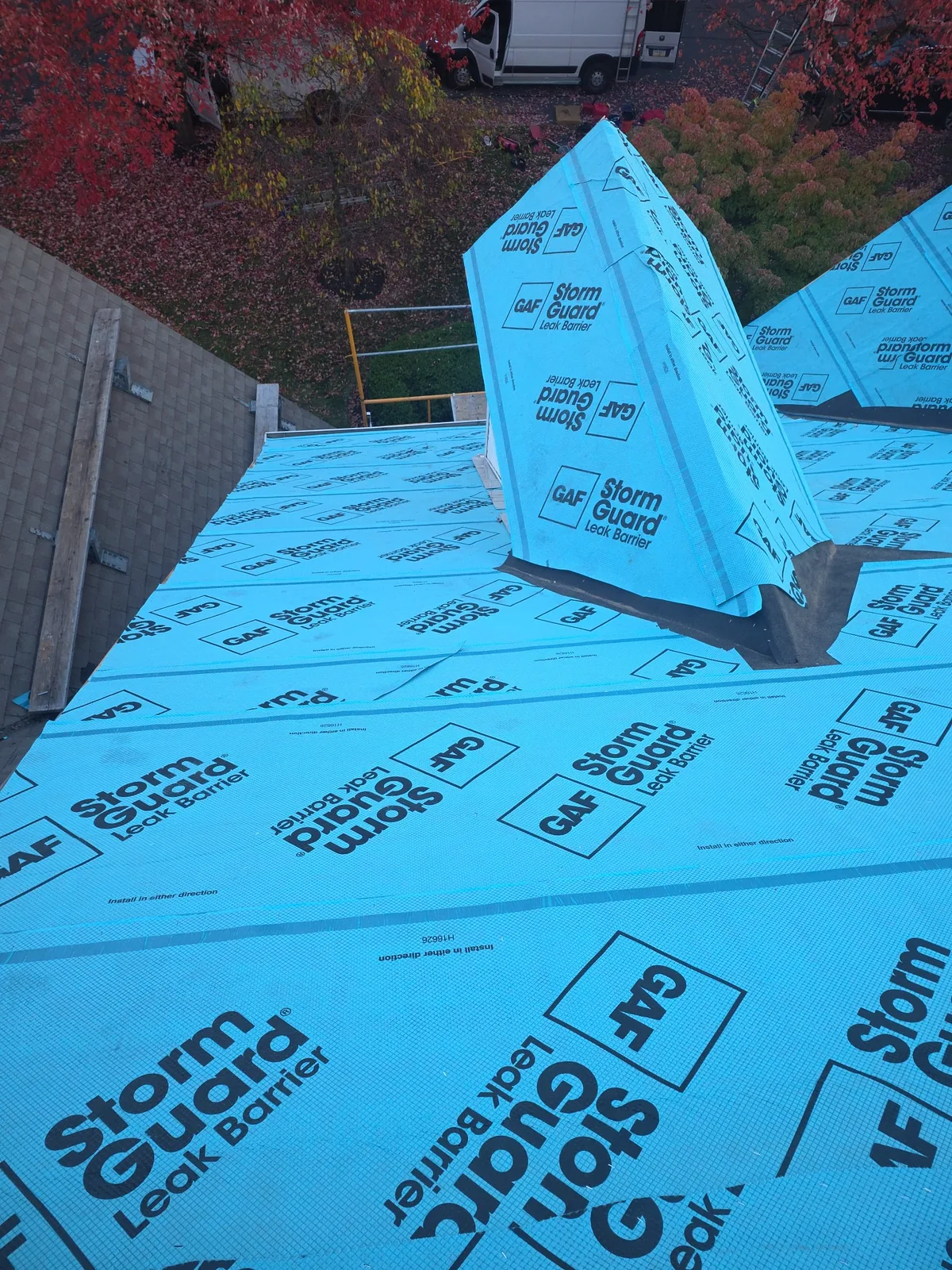
The name is actually a Grace brand that stuck, the way people say Kleenex. Other manufacturers sell the same type of product as a “leak barrier” or “ice barrier.” The one in these photos, from one of our recent jobs, is GAF StormGuard.
Why Roofs in the Poconos Need It
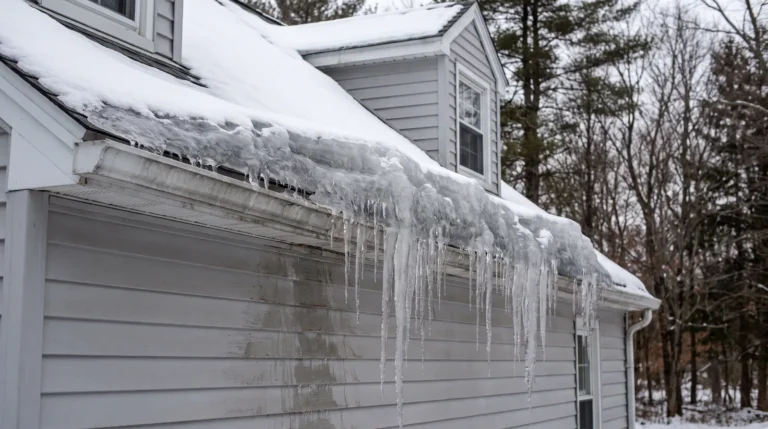
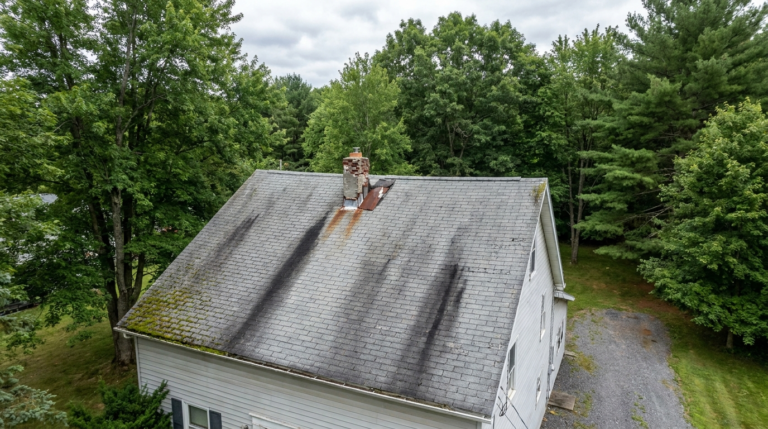
Shingles shed water as long as it’s moving downhill. Winter breaks that rule. Heat from the house melts snow on the upper roof, the water runs down to the cold overhang, and it refreezes into a ridge of ice. New meltwater pools behind that ridge, backs up under the shingles, and reaches the nail holes.
That’s how a ceiling stain shows up in February on a roof with no missing shingles. Our area’s long freeze-thaw season gives that cycle plenty of chances to repeat. Wind-driven rain can do something similar in summer, pushing water sideways under the shingle edges on an exposed slope.
If you’re already dealing with this, we’ve written about how to prevent ice dams and whether insurance covers an ice dam leak.
Where Ice and Water Shield Goes on a Roof
Not every square foot carries the same risk. These are the spots that matter, in the order we’d worry about them:
- Eaves. This is where ice dams form. The membrane should run from the roof edge to at least 24 inches past the inside of the exterior wall, so the seal extends over the heated part of the house. That’s the measurement in the GAF StormGuard instructions. On a deep overhang, one 36-inch roll often isn’t enough, so it takes a second course.
- Valleys. Two slopes dump their water into one channel, and snow loves to pile up there.
- Chimneys, skylights, and pipes. Every hole in a roof is a weak point. The membrane adds a second line of defense behind the metal flashing.
- Walls and dormers. Anywhere a roof slope meets a vertical wall, water and snow can collect.
- Low-slope sections. The flatter the roof, the slower water drains and the easier it backs up.
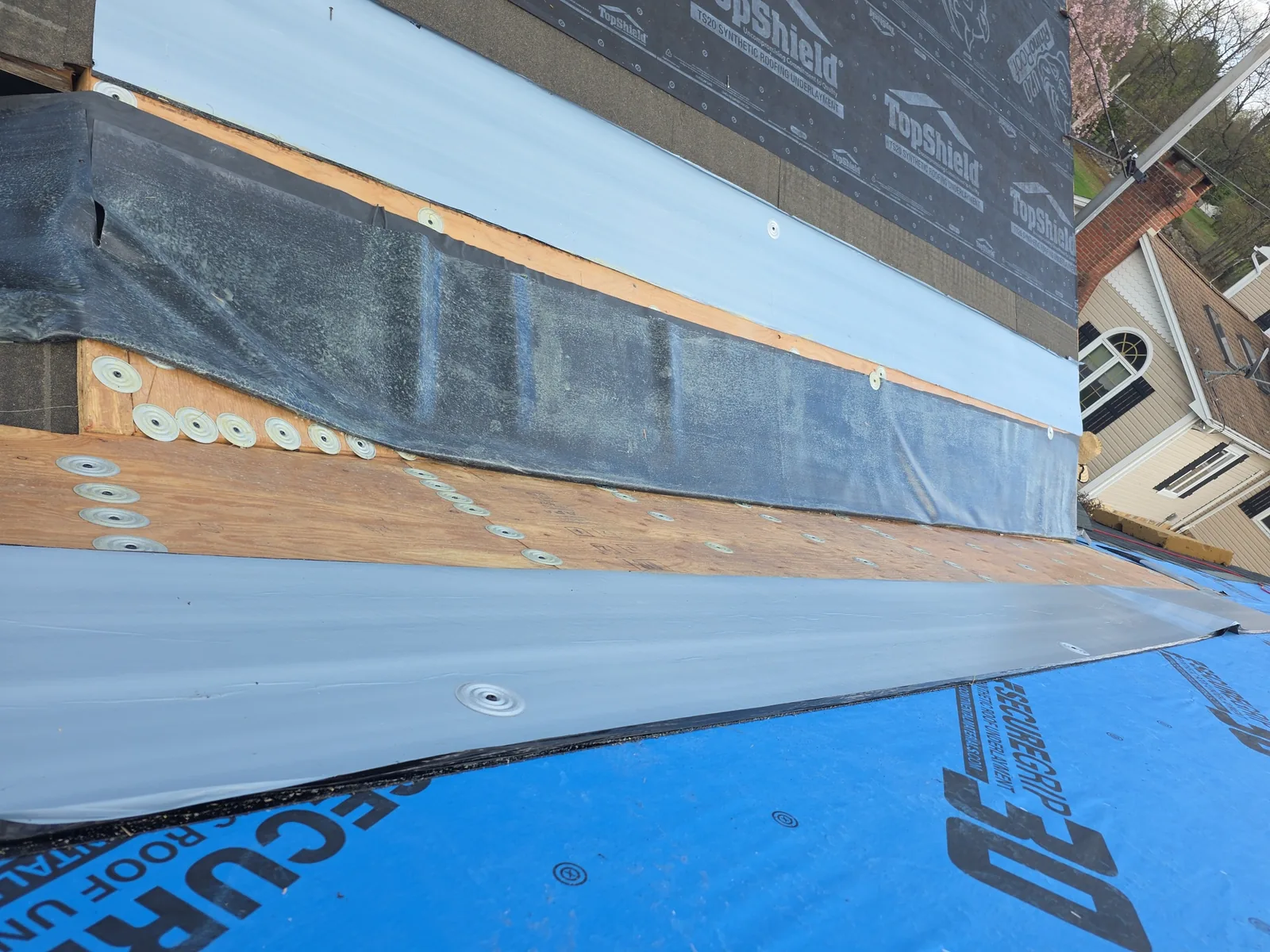
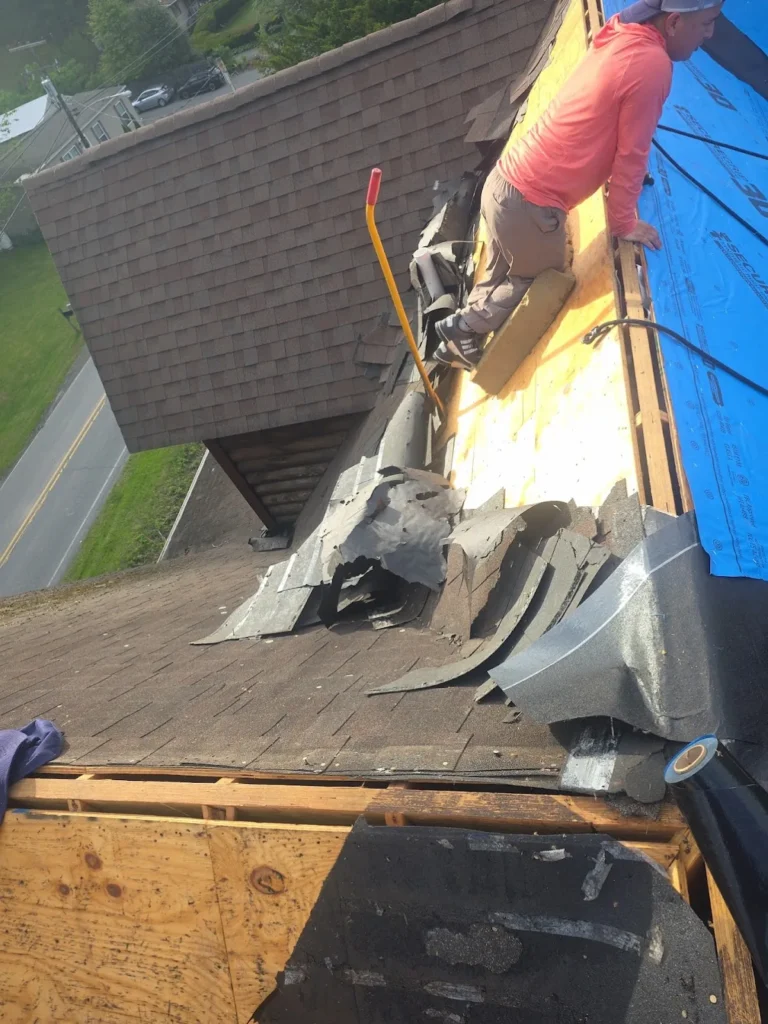
In the photo above, a dark membrane lines the valley before the metal goes on. Once the shingles are down, nobody will ever see that layer again. That’s why it’s worth asking about before the job starts.
Is Ice and Water Shield Required in Pennsylvania?
For most Poconos homes, you should plan on it. The International Residential Code, the model code behind Pennsylvania’s Uniform Construction Code, calls for an ice barrier on asphalt shingle roofs in areas with a history of ice forming along the eaves. Enforcement runs through your local municipality, so requirements can differ from one township to the next. A quick call to the local code office will settle it.
Shingle manufacturers often have their own installation requirements as well, and skipping them can give a warranty claim a problem later. Ask for the ice barrier coverage to be written into your estimate.
How Much Does Ice and Water Shield Cost?
Angi puts professional installation at $4 to $5.50 per square foot. Prices move around, and some guides list less, so use this table for a rough idea of scale. The areas are our own examples:
| Coverage | Example area | Rough range |
|---|---|---|
| One 40-foot valley | 120 sq ft | $480–$660 |
| 100 feet of eaves, two courses | 600 sq ft | $2,400–$3,300 |
| Eaves plus valley | 720 sq ft | $2,880–$3,960 |
| Entire 2,000 sq ft roof | 2,000 sq ft | $8,000–$11,000 |
Here’s the part that usually lowers those numbers: during a roof replacement, the membrane is one line in a bigger job. The deck is already open, the crew is already there, and the membrane takes the place of regular underlayment in those areas. So what you’re really comparing is the difference between the two materials, not the full price above. It’s one of many lines that explain why a new roof costs more than the shingles.
Prices here are for planning only. Get the real number from a written estimate for your own roof.
Ice and Water Shield vs. Synthetic Underlayment
They aren’t competitors. Most roofs need both, in different places.
| Ice and water shield | Synthetic underlayment | |
|---|---|---|
| How it attaches | Self-adhesive, bonds to the deck | Nailed or stapled |
| Seals around nails | Yes | No |
| Where it goes | Eaves, valleys, penetrations | The rest of the deck |
| Lets the deck release moisture | No | Depends on the product |
| Relative cost | Higher | Lower |
Should You Cover the Whole Roof?
Usually, no, and we’ll say so even though it would be a bigger invoice. Most roofs get what they need from membrane in the high-risk areas and quality underlayment everywhere else.
A full cover also has a catch: the membrane doesn’t breathe. If your attic is poorly ventilated, moisture from inside the house can get trapped against the wood. Full coverage makes more sense on low-slope roofs, complicated roofs with many valleys and dormers, or homes with a history of serious ice problems, and only if the attic ventilation is right.
What Ice and Water Shield Can’t Do
This is where homeowners get oversold:
- It won’t fix the cause of ice dams. Those come from heat escaping into the attic. Insulation and ventilation handle that part.
- It can’t be added under existing shingles. It has to go on the bare deck. If your roof is sound and leaking only at one spot, a targeted roof repair can open that one area and add membrane there.
- It won’t stick well to wet or dirty wood. The deck has to be clean and dry. If the wood is damaged, it gets replaced first, and that’s a job we covered in our roof decking story.
- Cold weather matters. Membranes need enough warmth to bond, and one GAF sheet lists 45°F as the lowest air temperature for application. Late-season jobs need a crew that’s watching the thermometer.
When to Call a Roofer
Call if you have a ceiling stain that shows up during a thaw, ice building along your gutters every winter, or a new roof quote that doesn’t mention ice barrier at all. Getting a look before the first big snow is cheaper than repairing a ceiling after it.
Frequently Asked Questions
How long does ice and water shield last?
It’s generally meant to last as long as the roof covering above it, since it’s protected from sun and weather. When a roof gets replaced, the old membrane is typically removed along with the shingles, or the deck is replaced where it won’t come off cleanly.
Can I install ice and water shield myself?
It’s possible on a simple roof, but the material grabs instantly and is hard to reposition. Wrinkles and bad overlaps create the same leaks you’re trying to prevent. And working on a roof carries real risk, so most homeowners leave this one to a crew.
Does ice and water shield go over or under drip edge?
At the eaves, it typically goes over the drip edge. At the rakes, it goes under. That’s how the GAF instructions lay it out, so water always laps over the layer below it.
Do I need it on a metal roof?
Often, yes, in the same high-risk areas, but metal can run hot, so the membrane has to be rated for high temperatures. Check what the panel manufacturer requires.
Want to Know What’s Under Your Shingles?
We’ll check your roof and tell you honestly what it needs and what it doesn’t. Inspections are free. Call Allesson Roofing & Siding at (570) 426-3505 or schedule a roof inspection.