Choosing the Best Asphalt Shingle Colors for Your Pennsylvania Home
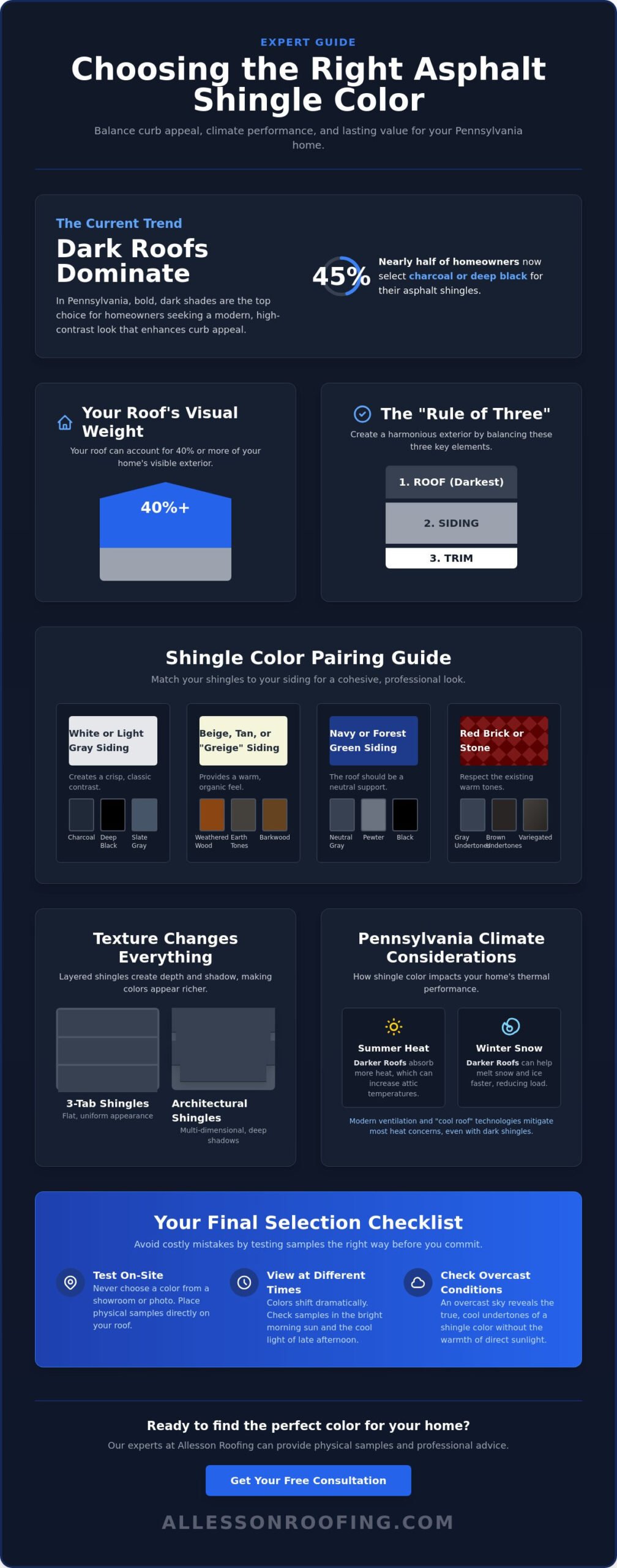
Did you know that nearly 45% of homeowners in our region now choose charcoal or deep black when selecting their asphalt shingle colors? While these bold shades are trending across the Keystone State, picking the wrong tone can lead to years of regret and a mismatched exterior. It’s completely normal to feel a bit overwhelmed when looking at a massive ring of manufacturer samples. You want a look that complements your siding and stays within neighborhood guidelines; however, you might also worry about whether a dark roof will turn your attic into an oven during a humid July.
You don’t have to guess which shades will work best for your property. We’ll show you how to choose a roof color that balances curb appeal with the specific performance needs of our Pennsylvania climate. This guide provides a straightforward framework for matching shingles to your siding or brick, explains how modern materials handle heat, and highlights the top color trends for 2026. By the time you finish reading, you’ll have the confidence to select a color that looks great and adds lasting value to your home.
Key Takeaways
- Learn how to apply the “Rule of Three” to balance your roof’s visual weight with your siding and masonry for a professional, cohesive look.
- Understand how specific asphalt shingle colors influence thermal performance, including attic temperature regulation and winter snow melt in Pennsylvania.
- Discover which regional color trends like Weathered Wood and Charcoal provide the best balance between modern style and long-term resale value.
- Follow a practical checklist for testing shingle samples in different lighting conditions to ensure your chosen shade looks perfect at any time of day.
Understanding the Role of Asphalt Shingle Colors in Home Design
Your roof is likely the most visible part of your property’s exterior. In many cases, it accounts for 40% or more of your home’s “visual weight.” This means the asphalt shingle colors you choose will dictate the first impression neighbors and visitors have of your home. If you pick a shade that is too light, the house might look top-heavy or disconnected from the landscape. If it’s too dark, the structure can feel smaller or more compressed than it actually is. In East Stroudsburg, where many homes feature traditional siding or stone accents, getting this balance right is the key to maximizing your curb appeal ROI during a replacement project.
The Science of Shingle Granules
An Asphalt shingle doesn’t get its color from paint or a simple dye. Instead, the process involves crushed stone or mineral granules that receive a specialized ceramic coating. These granules are fired at high temperatures to lock in the pigment for decades. This isn’t just a design choice; these granules act as a protective shield for your home. They protect the underlying asphalt layer from UV degradation, which can cause shingles to become brittle and crack. We often suggest “blended” colors to our customers. These shingles use several different granule shades in a single piece to create a varied, natural appearance. Solid, monolithic colors often look flat and can make even minor imperfections in the roof deck more obvious to the eye.
How Shingle Texture Changes Color Perception
Texture plays a massive role in how we see color on a roof. When you compare architectural shingles vs 3-tab, you’ll see that the physical structure changes the way light hits the surface. Architectural shingles are layered and multi-dimensional. They create distinct shadow patterns that make asphalt shingle colors appear deeper and more saturated than they would on a flat surface. Many manufacturers now offer high-definition (HD) options that use strategically placed dark granules to simulate the deep shadows of natural wood shakes. As the sun moves across the Pennsylvania sky, the angle of light will shift. This causes the colors on a textured roof to “move” and change throughout the day. It provides a much more dynamic look than the uniform, repetitive surface of traditional 3-tab shingles.
How to Match Shingle Colors to Your Home’s Exterior
Achieving a professional look starts with the “Rule of Three.” Think of your home’s exterior as a composition of three main elements: your siding, your trim, and your roof. If these three don’t work in harmony, even the most expensive materials can look out of place. Generally, your roof should be darker than your siding. This creates a grounded, stable appearance that feels balanced to the eye. If the roof is significantly lighter than the walls, the house can look unfinished or top-heavy.
Lighting changes everything. A sample that looks perfect in a showroom might look completely different under the shifting Pennsylvania sky. You should always view your asphalt shingle colors on-site during different times of day. A bright morning sun brings out warm undertones, while an overcast afternoon makes the same shingle look much cooler. According to the Asphalt Roofing Manufacturers Association, The Science of Color involves understanding how different light wavelengths interact with the granules. If you aren’t sure how a specific shade will look against your current walls, we can provide physical samples to help you decide.
Pairing with Common Siding Colors
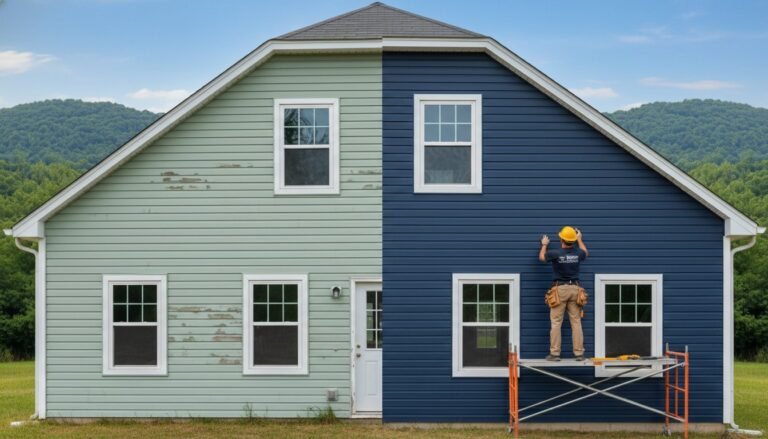
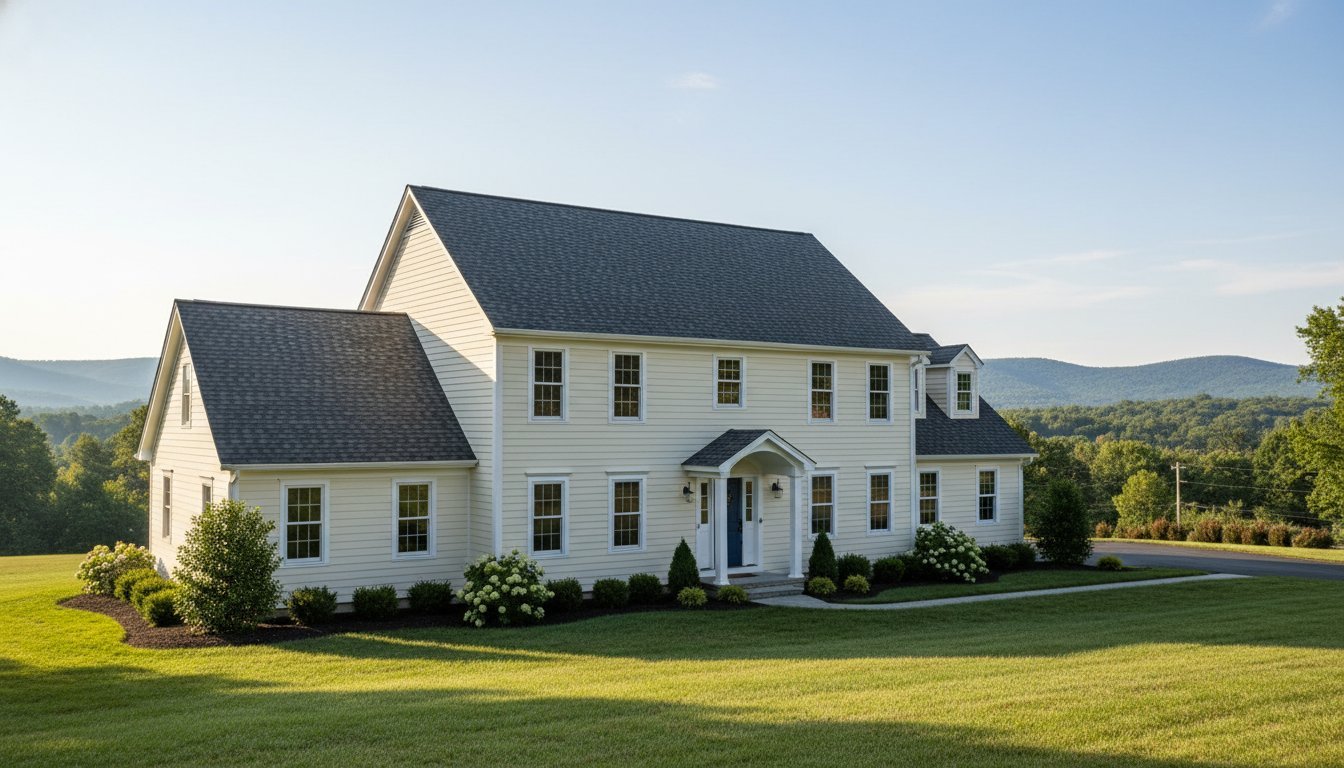
White or light gray siding offers the most flexibility. Deep blacks, charcoal grays, or slate-colored shingles create a crisp, classic contrast that never goes out of style. If your home features beige, tan, or “greige” siding, look toward earth tones. Weathered wood or barkwood shingles provide a warm, organic feel that ties the property to the surrounding landscape. For bold siding colors like navy blue or forest green, stick to neutral grays or blacks. You want the siding to be the star, so the roof should play a supporting role.
The Red Brick and Natural Stone Challenge
Masonry is permanent, so your roof must respect its existing tones. For classic red brick homes commonly found throughout the Lehigh Valley, we recommend shingles with gray or brown undertones that don’t compete with the brick’s intensity. If your home has natural stone, variegated shingles are almost always the best choice. These multi-color blends mimic the natural variations found in the stone itself. Always match the undertones. If your stone has cool blue hints, choose a gray shingle. If it has warm gold flecks, an earth-toned shingle will look much more natural. If you’re planning a full exterior refresh, coordinating your siding installation with your new roof can ensure a perfectly matched palette from top to bottom.
Climate Considerations: Choosing Roof Colors for Pennsylvania Weather
Pennsylvania weather is famously unpredictable. From humid summers in the Lehigh Valley to heavy snow in the Poconos, your roof has to handle it all. Many homeowners ask if their choice of asphalt shingle colors will affect their monthly utility bills. This involves the “Albedo Effect,” which is simply a measure of how much solar energy a surface reflects. While it’s true that darker shingles absorb more heat, the impact on your home is often misunderstood. Modern roofing systems are designed to manage this heat much better than the roofs of thirty years ago.
In places like Allentown or Bethlehem, the “Urban Heat Island” effect can make temperatures feel several degrees warmer than surrounding rural areas. You might think a white roof is the only solution to keep things cool. However, the U.S. Department of Energy notes that while Cool Roofs can reduce peak cooling demand, they aren’t always the best fit for northern climates. In Pennsylvania, we often spend more months heating our homes than cooling them. A dark roof can actually be a functional benefit during our long, gray winters by absorbing whatever sunlight is available.
Summer Heat vs. Winter Snow
Darker shingles help melt snow and ice more quickly when the sun comes out after a storm. This is particularly helpful in East Stroudsburg and higher elevations where ice dams are a constant threat. As of January 1, 2026, the updated Pennsylvania Uniform Construction Code requires an ice barrier extending 24 inches inside the exterior wall line for new projects. While this code change provides essential physical protection, choosing a darker shingle color provides a thermal advantage that helps clear your eaves faster. You might see a slight increase in cooling costs in July, but the trade-off is often worth it for winter safety. Don’t forget that proper attic ventilation does more to regulate your home’s temperature than shingle color alone.
Algae Resistance in Humid PA Climates
Our humid climate and wooded Poconos lots are the perfect breeding ground for Gloeocapsa magma. This is the bacteria responsible for those ugly black streaks you see on many older roofs. While lighter asphalt shingle colors might seem like they would stay cooler, they often show these streaks much more clearly, which can hurt your home’s curb appeal. To combat this, most modern shingles include copper-infused granules that kill algae on contact. If you live in a heavily shaded area, choosing a shingle with a high algae-resistance rating is just as important as picking the right shade. Lighter roofs in the woods often require more frequent professional cleaning to maintain their appearance compared to mid-tone grays or browns. Learning how to maintain an asphalt roof through a seasonal care routine can help you stay ahead of algae growth and extend the life of your investment regardless of the color you choose.
Popular Color Trends and Resale Value in the Poconos
Choosing a color isn’t just about personal taste; it’s also a significant financial decision. In the Northeast, three specific asphalt shingle colors dominate the market: Weathered Wood, Charcoal, and Barkwood. These shades are popular because they offer a “safe” aesthetic that appeals to the widest range of potential buyers. If you plan to sell your home within the next five to ten years, sticking to these neutrals is usually the smartest move. While manufacturers like Owens Corning have introduced unique shades like “Evergreen Mist” for 2026, bold greens or blues are often better suited for custom homes rather than properties in strict HOA communities.
Neighborhood context is vital. You don’t want your house to be the one that “sticks out” for the wrong reasons. Look at the homes immediately surrounding yours. If most neighbors have earth-toned roofs, a bright blue or red shingle might negatively impact your resale value. In the Poconos, we see a strong trend toward nature-inspired palettes that mimic the local environment. New 2026 collections from GAF, such as “Chestnut Valley” and “Sierra Sand,” are designed to blend seamlessly with the rocky, wooded terrain found throughout Monroe and Pike counties.
The Timeless Appeal of Weathered Wood
There is a reason why Weathered Wood remains the top choice for Pennsylvania homeowners year after year. It is a multi-tonal blend of grays, browns, and tans. This variety allows it to match almost any siding color, from traditional white to modern sage green. Because it isn’t a solid color, it is incredibly forgiving. It hides the small bits of tree debris, pollen, and general wear that are common in our wooded lots. It provides a soft, organic look that feels like it has always belonged in our local landscape.
Charcoal and Slate: The Modern Choice
If you prefer a sharper, more architectural look, charcoal and slate-colored shingles are the way to go. These colors have seen a massive surge in popularity due to the “Modern Farmhouse” trend hitting the Lehigh Valley. A dark roof creates a high-contrast look when paired with light siding, making the home’s lines appear crisp and clean. Industry data suggests that roughly 40% to 45% of new installations now feature some version of charcoal or black. These shades are considered a “new neutral” that offers a sophisticated edge without scaring off future buyers.
Ready to see how these trends look on your own home? We can help you navigate the latest manufacturer palettes and find the perfect match for your property. Contact us today to schedule a professional asphalt shingle installation and start your home’s transformation.
The Selection Process: From Samples to Professional Installation
Narrowing down your choices is the first step, but the final decision requires seeing materials in your specific environment. While digital mockups are helpful for visualizing broad changes, they often struggle to replicate the way Pennsylvania sunlight interacts with ceramic-coated granules. A screen cannot show you how a deep charcoal might shift to a soft gray at dusk. This is why the physical testing phase is so important. You want to be certain that the asphalt shingle colors you like on a website actually look right on your home’s unique architecture.
To get an accurate preview, place your samples on both the north and south sides of your house. The north side usually remains in shadow, which can make colors look darker and cooler. The south side receives direct sunlight, which might wash out lighter shades or highlight warm undertones you didn’t notice indoors. Always look at the samples at several different times of day. A shade that looks perfect at noon might feel too heavy when the sun starts to set over the Poconos.
Professional craftsmanship is the final piece of the puzzle. Even the most beautiful shingles won’t look right if the installation is uneven. A high-quality asphalt shingle installation in PA ensures that the color patterns are blended correctly across the entire roof deck. This prevents “blotching” where too many dark or light shingles end up in one spot. Before you sign a contract, check your local HOA regulations and ensure the contractor is familiar with the 2021 IRC updates for ice barriers mentioned earlier. To protect your investment, it’s also worth learning how to identify the best roofing company East Stroudsburg has to offer before committing to any installer.
The “Large Sample” Rule
Don’t make a major investment based on a two-inch swatch from a brochure. These tiny samples can’t show the full range of a multi-tonal blend. We always recommend requesting a full shingle board. This allows you to see how the different asphalt shingle colors within the blend work together. When you test it, prop the board up at the same pitch as your roof. Looking at a shingle lying flat on the ground is deceptive because sunlight hits a sloped roof at a completely different angle.
Working with a Local Stroudsburg Expert
One of the best ways to gain confidence in your choice is to see the material on a real house. We’ve completed projects throughout the Stroudsburg area and can often point you toward a local home that features the specific shingle you’re considering. This gives you a true sense of the “visual weight” and texture in a real-world setting. At Allesson Roofing, we take pride in being a dependable partner throughout this journey. If you’re ready to see these options for yourself, Get a free estimate and we’ll bring the samples directly to your door.
Protect and Beautify Your Pennsylvania Home
Choosing a new roof is one of the most significant investments you’ll make for your property. By balancing design rules with the practical needs of our local climate, you can ensure your home remains both efficient and visually striking. Remember that the right asphalt shingle colors do more than just look good; they help manage attic temperatures and handle the heavy snow cycles we see in the Poconos. Taking the time to test large samples on-site is the only way to be certain of your choice before the first shingle is nailed down.
As locally owned East Stroudsburg experts, we understand the specific challenges of our region. We are certified asphalt shingle installers who also specialize in Poconos storm damage restoration. Our team is ready to provide the steady hand and professional guidance you need to move forward with confidence. Get Your Free Roof Color Consultation and Estimate to see our full range of samples in person. We look forward to helping you build a roof that adds lasting value to your home.
Frequently Asked Questions
Do dark shingle colors make my house hotter in the summer?
Dark shingles do absorb more solar heat than lighter ones. However, a properly ventilated attic allows that heat to escape before it significantly impacts your indoor living space. In Pennsylvania, the winter benefit of helping snow melt more quickly often outweighs the slight increase in summer cooling loads. Ensuring your ventilation meets current building codes is more important for energy efficiency than the color you choose.
What is the most popular asphalt shingle color for resale value?
Neutral shades like Weathered Wood, Charcoal, and Barkwood are the most reliable choices for resale value. Approximately 40% to 45% of homeowners currently choose a version of charcoal or black. These asphalt shingle colors provide a clean, modern look that appeals to the majority of potential buyers and works well with almost any siding color.
Will my roof color fade over time in the Pennsylvania sun?
Modern shingles are designed to maintain their color for decades thanks to advanced ceramic-coated granules. These granules are fired at extremely high temperatures to lock in the pigment and protect the underlying asphalt from UV rays. While very minor weathering is natural over 20 or 30 years, you won’t see the dramatic fading or “bleaching” that was common with older roofing materials.
How do I choose a roof color if I have a red brick house?
For red brick homes, neutral grays or browns with muted undertones usually work best. You should avoid shingles with red or orange flecks, as they can compete with the brick and look too busy. A solid charcoal or a variegated gray shingle provides a classic contrast that lets the masonry stand out while giving the house a balanced, grounded appearance.
Can I change my shingle color if I live in a neighborhood with an HOA?
You can usually change your color, but you must get approval from your Homeowners Association board first. Many communities in the Poconos and Lehigh Valley have specific lists of approved asphalt shingle colors to maintain a cohesive neighborhood look. It’s best to submit a physical sample of your chosen shingle for written approval before you sign your installation contract.
Do certain shingle colors hide dirt or algae better than others?
Variegated, multi-tonal shingles hide dirt, pollen, and minor debris much better than solid, monolithic colors. If you live in a heavily wooded area, mid-tone grays and browns are excellent at masking environmental wear. Most modern shingles also feature copper-infused granules that kill algae on contact, which prevents the black streaks common in our humid climate.
Should my roof color match my shutters or my siding?
Your roof should generally be darker than your siding to provide a stable, balanced look. While it doesn’t need to match your shutters exactly, it should stay within the same color family or provide a complementary contrast. For example, if you have black or navy shutters, a gray or charcoal roof creates a coordinated and professional appearance.
Does the color of the shingles affect the price of the roof installation?
Most standard colors within the same manufacturer’s product line are priced identically. However, “premium” or “designer” color collections often use more complex granule blends and may have a higher material cost. We can show you which options fall within the standard palette versus the premium collections during your site visit.