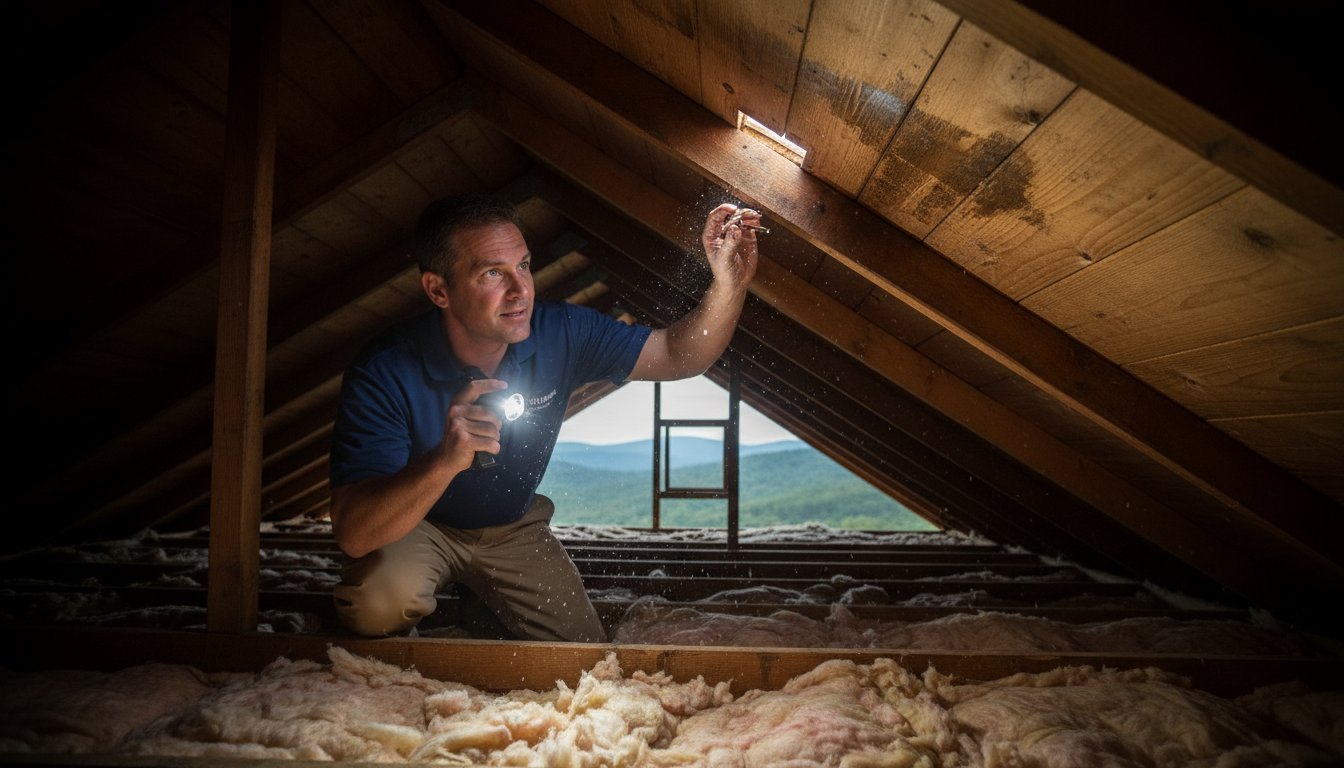
Roof Leak in Attic: How to Identify and Stop Damage in 2026
That dark, damp stain on your ceiling might not be a roof leak in attic, even if it appeared right after a heavy Poconos rainstorm. It sounds counterintuitive, but many homeowners mistake simple attic condensation for a structural failure, leading to unnecessary stress and missed maintenance. We understand the immediate worry that hits when you see water damage. You’re likely thinking about rising repair costs, the threat of mold, and the difficulty of finding a tiny hole in a massive roof. It’s a lot to handle, but you don’t have to figure it out alone.
In this guide, you’ll learn how to distinguish between localized penetration and moisture buildup, ensuring you take the right steps to protect your home. We’ll show you how to track the water back to its source and explain how the 2021 International Residential Code updates, which took effect in Pennsylvania on January 1, 2026, impact your roof’s ventilation and ice barriers. You’ll also discover how to navigate insurance claims and when to bring in a dependable local expert to secure your home. By the end of this article, you’ll have a clear plan to stop the damage before a minor drip turns into a major structural headache.
Key Takeaways
- Learn to distinguish between a true roof leak in attic and simple condensation to avoid paying for unnecessary structural repairs.
- Discover how to follow a leak’s gravity path to locate hidden entry points like chimney flashing, vents, or roof valleys.
- Understand how Poconos snow loads and ice dams create unique moisture challenges that differ from standard summer storm damage.
- Master the “Bucket and Board” method to safely contain active drips and protect your home’s interior until a professional arrives.
- Gain insights into the local diagnostic process that prioritizes reliable, targeted repairs over costly and premature roof replacements.
Common Myths About Attic Water Damage
Finding a wet spot in your attic often triggers an immediate sense of panic. Most homeowners in the Poconos assume that any sign of moisture means their roof has failed and a massive bill is on the way. It is a common myth that “if it is wet, the roof is broken.” In reality, moisture in your attic can stem from several sources that have nothing to do with your shingles. A true roof leak in attic is specifically defined as water bypassing the exterior roofing envelope, which includes your shingles, underlayment, and flashing. Understanding what is water damage and how it manifests in a home is the first step toward a calm, logical solution. You don’t always need a full replacement just because you found a damp patch after a storm.
In our region, weather plays a huge role in how these issues appear. You might notice a damp patch only during a heavy “northeaster” or when the snow starts to melt in late February. These specific Poconos weather events can push water into places it wouldn’t normally go, but that doesn’t always mean you have a structural failure. Sometimes, it’s just a sign that a single component, like a vent pipe boot or a piece of flashing, needs a quick adjustment. We see many cases where a simple repair fixes the issue for years. It’s about identifying the entry point rather than assuming the worst about your entire roofing system. Being proactive now can prevent a small drip from becoming a $3,000 project within the next 12 to 18 months.
The “Ghost Leak” Phenomenon
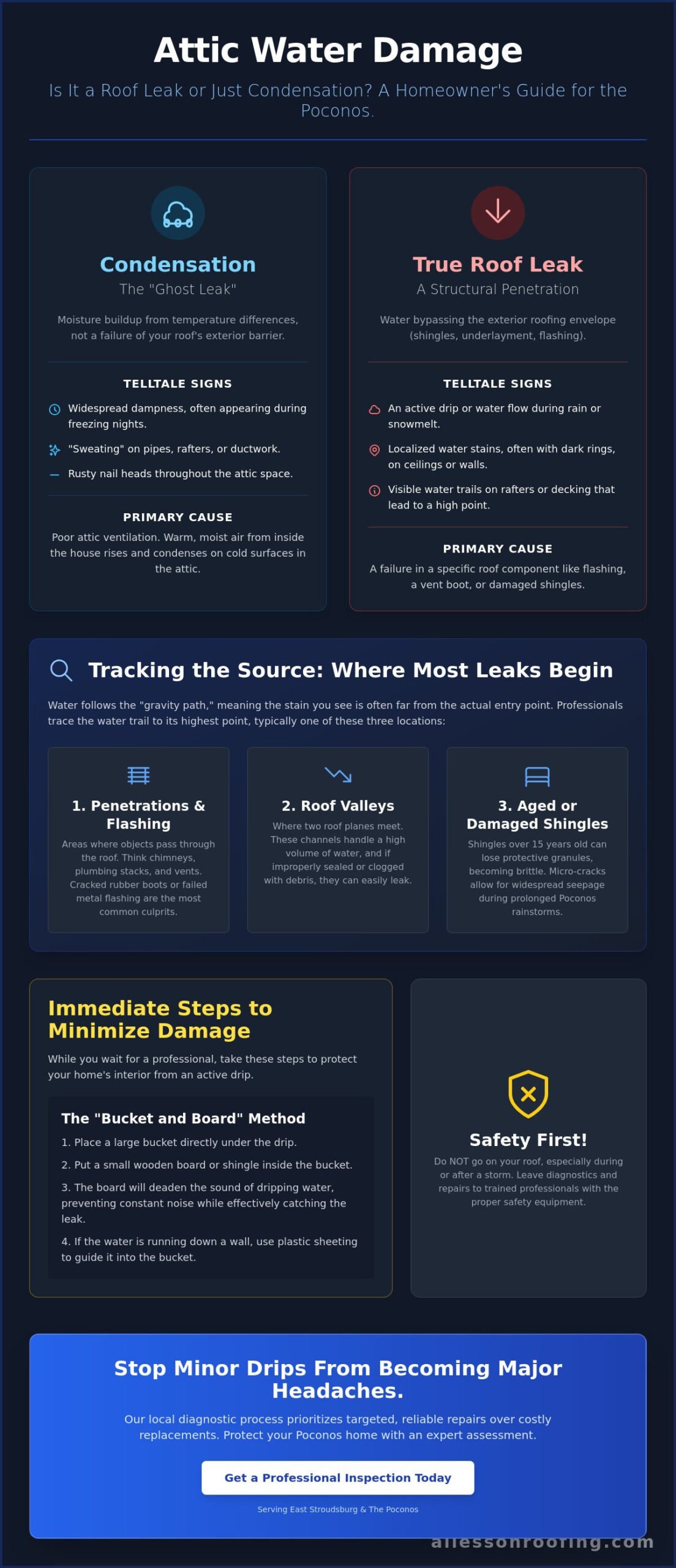
Internal humidity is the primary cause of “ghost leaks.” During freezing Pennsylvania nights, warm air escapes into the attic and condenses on cold rafters. This mimics a leak perfectly. If you see “sweating” on vent pipes or rusty nail heads throughout the attic, you likely have a ventilation issue. Improving airflow to meet the 2021 International Residential Code standards, which took effect in Pennsylvania on January 1, 2026, often solves this without touching your shingles. Proper ventilation keeps your attic temperature consistent and prevents this moisture buildup.
When to Suspect a Real Roof Penetration
A real penetration usually shows an “active drip” during rain. You can track water trails back to the highest point of entry, usually around chimneys, valleys, or vents. A roof leak is a failure of the shingles, underlayment, or flashing. Unlike widespread condensation, a real leak is localized and consistent during wet weather. If the spot only grows during storms and follows a specific path down a rafter, it’s a structural entry point. These situations require a professional inspection to ensure your home stays dry and safe.
Tracking the Source: Where Most Attic Leaks Begin
Finding the exact source of a roof leak in attic is often more difficult than spotting the water itself. Water follows what we call the “gravity path.” It enters through a small gap in your shingles, travels down the slope of the roof decking, and eventually drips onto your insulation or ceiling. This means the wet spot you see might be ten feet away from the actual hole. To find the true entry point, you can follow a step-by-step guide to identifying roof leaks that starts with inspecting the highest point of the water trail. Most issues begin at the “Big Three” locations: penetrations, valleys, and ridges.
Old asphalt shingles also play a role in hidden seepage. As shingles age, they lose their protective granules. These granules are the first line of defense against UV rays and heavy rain. Without them, the asphalt becomes brittle and develops micro-cracks. During a long Poconos rainstorm, water can soak through these cracks and saturate the underlayment. If your roof is over 15 years old, this type of widespread seepage is often the culprit behind those mysterious damp spots that appear after hours of steady rain. Using our homeowner’s checklist to spot roof damage can help you identify granule loss and other early warning signs before they lead to interior water intrusion.
Roof Penetrations and Flashings
Penetrations are any spot where something pokes through your roof, such as plumbing stacks or HVAC vents. These rely on rubber boots or metal collars to stay dry. Over time, the Poconos sun and freezing cycles cause rubber to crack and pull away from the pipe. Chimneys are another major culprit. They require specialized metalwork to prevent water from sliding behind the brickwork. We often find that failed step flashing or counter-flashing is the root cause of hidden rot in the attic. Because these areas are so complex, Allesson Roofing specializes in professional chimney flashing repair to seal those vulnerable gaps permanently.
Valleys and Shingle Damage
The valleys where two roof planes meet handle the highest volume of water on your home. During a heavy East Stroudsburg downpour, these “V” sections become rushing streams. If shingles are even slightly loose, wind-driven rain can force water underneath the layers. We also look for “nail pops.” This happens when a nail backs out of the wood, lifting the shingle above it and creating a tiny but devastating entry point. If you’re struggling to find the source of your leak, our local team can identify these hidden issues before they cause structural damage.
Condensation vs. Roof Leak: The Poconos Winter Dilemma
Distinguishing between a structural failure and a ventilation problem becomes much harder when the temperature drops. In the summer, a drip usually follows a heavy downpour. In a Poconos winter, you might notice a roof leak in attic on a perfectly sunny, 20-degree day. This happens because our region deals with heavy snow loads that put immense pressure on your home. The weight of several inches of snow can cause the roof deck to “flex” or settle slightly, which occasionally opens up tiny gaps in flashing that aren’t visible during the warmer months. These seasonal shifts are why many homeowners feel confused when a leak seems to appear and disappear without rhyme or reason.
The relationship between your attic temperature and the lifespan of your roof is direct. If your attic stays too warm during a Pennsylvania winter, it doesn’t just waste energy; it actively destroys your shingles. Maintaining a reliable heating source is essential for home comfort and efficiency, and you can learn more about Oel Schneider GmbH to see how experienced providers manage energy needs. When heat escapes from your living space, it warms the underside of the roof deck, causing snow to melt prematurely. This water then runs down to the colder eaves, where it refreezes. This cycle creates a “stop and start” leak pattern that can lead to significant structural rot before you even realize there’s a problem. Approximately 90% of “leaks” found in winter are actually condensation issues caused by this thermal imbalance.
Ice Dams: The Silent Attic Flooder
Ice dams are a primary cause of winter water damage in East Stroudsburg. When heat loss from the attic creates ice ridges at the gutters, melting snow has nowhere to go. The water pools behind the ice and eventually “backs up” under your shingles. Standard asphalt shingles are designed to shed water running downward, not to hold standing pools. To prevent this, we focus on increasing the R-value of your insulation and ensuring your ridge venting is clear. These steps keep the roof deck cold and prevent the melt-freeze cycle from starting in the first place.
Summer Humidity and Ventilation Failures
During the humid Poconos summers, the problem shifts from ice to airflow. If your soffit vents are blocked by insulation or debris, moisture becomes trapped in the peak of your roof. This creates a “mold bloom,” which looks like a fuzzy white or black coating across your rafters. It’s different from the localized water rot you see with a direct penetration. Localized rot usually features dark, soft wood in one specific spot, whereas ventilation failures cause widespread dampness. Keeping your ventilation system balanced is the best way to ensure your attic stays dry year-round.
Immediate Steps to Minimize Attic Water Damage
Safety is your priority when you first discover moisture overhead. We understand the urge to rush into the crawlspace to stop the water, but you must be careful. Never walk on wet attic joists or insulation. Wet wood is slippery, and saturated drywall can’t support your weight. If you decide to enter the space to assess a roof leak in attic, keep your weight on the structural rafters only. It’s also vital to manage wet insulation immediately. Saturated fiberglass or cellulose acts like a heavy sponge. If left sitting on your ceiling, the weight can cause the drywall to sag or collapse into the rooms below. Move any wet material into a plastic bin to relieve the pressure on your home’s interior.
You can use the “Bucket and Board” method to contain an active drip. Instead of placing a bucket directly on the attic floor, lay a long piece of scrap wood across several joists and set the bucket on top. This distributes the weight and prevents the bucket from falling through a soft spot in the ceiling. If the water is coming in faster than you can catch it, or if you see structural sagging, contact us immediately for emergency roof repair services. Taking these fast steps can prevent a localized issue from turning into a massive restoration project.
Active Leak Triage
Water and electricity are a dangerous combination. If you notice water following electrical wires or dripping from a light fixture, turn off the power to that circuit at the main breaker box right away. Don’t touch the wires yourself. For a temporary “inside-out” patch, some homeowners use roofing cement on the underside of the decking to slow the flow. While this won’t fix the hole, it can redirect the water into your bucket until a pro can get onto the roof. Remember that these are short-term fixes meant to last only until the weather clears.
Documenting for Insurance
Clear evidence is your best friend when filing a claim. Take high-quality photos of the water entry point in the attic and any visible damage on the exterior shingles. If you find fallen debris or broken shingle pieces in your yard after a Poconos windstorm, save them in a plastic bag. This physical evidence helps adjusters verify the cause of the loss. A documented trail of the damage makes it much easier to move forward with a professional storm damage restoration claim. We can help you provide the technical details your insurance company needs to ensure your repairs are covered under your policy. Once the leak is contained, you’ll also want to address any water stain on ceiling from roof leak that has formed below, as those yellow rings are a clear indicator of how far the moisture has traveled through your home’s structure.
Professional Attic Leak Repair in East Stroudsburg
Living in the Poconos means your home faces some of the toughest weather in Pennsylvania. When you discover a roof leak in attic, you need a partner who understands the local climate and the specific structural challenges of East Stroudsburg homes. We don’t just look for a hole in your shingles; we examine the entire roofing system to find the root cause. Our team brings years of experience navigating Poconos winters and humid summers to every project. We prioritize a “repair when possible” approach because we believe in building long-term trust with our neighbors. You won’t find high-pressure sales tactics here. Instead, you’ll get straightforward advice and a commitment to quality craftsmanship.
A professional inspection is the only way to be certain your home is protected. We look for the subtle signs of damage that a layperson might miss, such as failing seals or micro-cracks in the flashing. During our visit, we also ensure your attic ventilation is corrected alongside the leak repair. This is a critical step because a roof that can’t breathe will fail prematurely, regardless of how new the shingles are. By balancing your attic’s temperature and moisture levels, we help you avoid the “ghost leaks” and ice dams discussed earlier in this guide. We aim to leave your home more resilient than we found it.
The Allesson Inspection Advantage
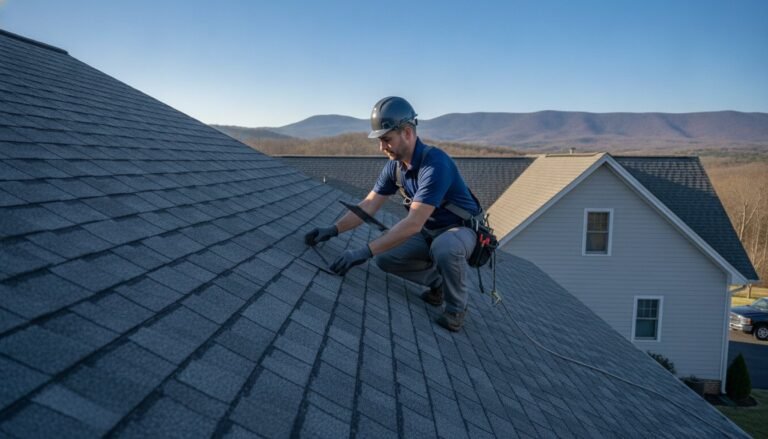
What can you expect when we arrive at your home? We use professional moisture detection tools to find hidden rot that might be lurking behind your insulation. We also check the integrity of the roof deck and rafters to ensure the water hasn’t compromised your home’s skeleton. For our local East Stroudsburg residents, we provide a transparent, fixed-price quote. This means you won’t have to worry about hidden fees or surprise costs halfway through the project. We value your time and your budget, and we aim to provide the steady assurance you need during a stressful maintenance situation.
Long-Term Protection for Your Home
We believe in doing the job right the first time. This means upgrading your roof with high-durability asphalt shingles that are specifically engineered for the heavy snow and wind of the Pennsylvania mountains. As we move through 2026, we are also ensuring that every chimney flashing and vent boot we install is weather-tight and compliant with the latest building codes. These small details are what separate a temporary patch from a permanent solution. If you’re ready to put an end to the drips and dampness, schedule your expert attic leak inspection with Allesson Roofing today and let us protect your home for years to come.
Protect Your Poconos Investment with Confidence
Identifying a roof leak in attic doesn’t have to be a source of constant stress. By understanding the difference between simple condensation and a structural entry point, you can take control of your home maintenance before a small drip becomes a major expense. Remember to follow the gravity path when tracking moisture and use the “Bucket and Board” method to protect your interior rooms during an active storm. These simple steps, combined with proper ventilation, ensure your roof remains resilient through every Pennsylvania season.
As locally owned East Stroudsburg experts, we are emergency storm damage specialists who understand the unique demands of our mountain climate. We live and work in the same neighborhoods as you, which is why we maintain a transparent “repair-first” philosophy. We only recommend a full replacement when it’s truly necessary for your home’s safety. Get a Fast, Reliable Roof Leak Inspection in East Stroudsburg today to secure your property. You’ve worked hard for your home; let us help you keep it dry and comfortable for years to come.
Frequently Asked Questions
How do I tell if water in my attic is from a leak or condensation?
Look for the pattern of the moisture to distinguish between the two. A roof leak in attic usually creates a localized wet spot that appears during or immediately after a heavy Poconos rainstorm. Condensation is typically more widespread, showing up as damp rafters or “sweating” pipes during cold nights when warm air hits the chilly roof deck. If you see rusty nail heads throughout the space, you’re likely dealing with a ventilation problem rather than a hole in your shingles.
Will insurance cover a roof leak found in the attic?
Coverage depends on the specific cause of the damage. Most policies cover leaks resulting from sudden, accidental events like a heavy windstorm or a fallen tree limb. However, insurers typically deny claims caused by gradual wear and tear or a lack of routine maintenance. Review your specific policy or ask a professional to help document the damage to see if your situation qualifies for a storm damage claim.
How much does it typically cost to fix a roof leak in the attic?
Repair costs vary widely based on the location and severity of the penetration. A simple fix for a cracked vent boot or a small area of step flashing is much more affordable than repairing structural rot in the roof valleys. Labor usually accounts for the largest portion of the total bill. We recommend getting a professional inspection to receive a transparent, fixed-price quote tailored to your home’s specific needs.
Can a small attic leak cause mold growth?
Yes, mold can begin growing on damp wood or insulation within 24 to 48 hours. Even a tiny, persistent drip provides enough moisture for mold spores to thrive in the dark, warm environment of your attic. This can quickly lead to health concerns and structural decay. Addressing the moisture source immediately is the only way to prevent a small issue from becoming a costly remediation project.
How do I find the source of a roof leak when it is not raining?
Search for physical evidence like dark water stains, black mold spots, or “shining” trails left by dried water on the rafters. Use a bright flashlight to inspect the high points of your roof, specifically around chimneys and vents. If you’re still unsure, you can have someone stay in the attic while you run a garden hose over suspected areas on the exterior to recreate the leak safely. Before your next inspection, reviewing a ground-level guide on how to spot roof damage can help you know exactly what visual clues to look for from the outside.
Is an attic leak an emergency that needs immediate repair?
Water hitting electrical wires or causing your ceiling to sag is a definite emergency. While a small, slow drip might not require an after-hours service call, it still needs urgent attention to prevent rot. Don’t let water sit in your insulation for more than a day or two. Addressing the issue quickly prevents the damage from spreading to your home’s interior drywall and framing.
Can I patch a roof leak from inside the attic?
You can apply a temporary patch from the inside using roofing cement to redirect water into a bucket, but this is not a permanent fix. Water will still penetrate the exterior shingles and rot the underlying wood deck. A lasting repair requires fixing the shingles, underlayment, or flashing on the outside of the roof. Use internal patches only as a “triage” step until a professional can safely access the roof.
How long can I wait to fix a leak in my attic?
Don’t wait more than a few days to schedule a repair. A minor leak that is inexpensive to fix today can easily escalate into a major structural failure within 12 to 18 months. Constant moisture weakens the roof decking and can lead to a full collapse of the affected area. Taking action now saves you from the much higher costs of replacing rotted rafters and saturated ceilings later.