Hail Damage Roof Repair: A Homeowner’s Guide to Storm Recovery in 2026
What if the small dents on your shingles are actually a structural ticking clock rather than just a cosmetic blemish? It’s a question many of our neighbors ask after a storm, especially when high-pressure sales teams start knocking on doors before the clouds have even cleared. You likely worry that filing a claim for hail damage roof repair will send your premiums skyrocketing, or perhaps you’re just unsure if the damage is functional enough to justify the hassle. It’s completely normal to feel hesitant when you’re caught between the threat of a future leak and the fear of a complicated insurance process.
We believe you deserve a stress-free restoration and a roof that stands up to the next season. This guide will help you identify the hidden signs of shingle failure, navigate the 2026 insurance landscape, and choose the right repair strategy for your home. We’ll also cover how the recent Pennsylvania building code updates affect your project and why the industry shift toward Actual Cash Value policies makes a professional local inspection more critical than ever. By the end of this article, you’ll have a clear roadmap to move from storm damage to total peace of mind.
Key Takeaways
- Spot the subtle signs of shingle failure, like granule displacement, that are often impossible to see from your driveway.
- Learn how the “square” rule helps determine if your home qualifies for a full hail damage roof repair or a targeted restoration.
- Navigate the 2026 insurance claim process with a clear understanding of deadlines and the role of professional damage documentation.
- Protect your home from future leaks by identifying the difference between simple cosmetic dents and deep structural fractures.
- Follow an “inspection-first” strategy to avoid filing unnecessary claims and stay ahead of high-pressure storm chasers.
Identifying Hail Damage on Your Asphalt Shingle Roof
When a storm passes through the Poconos, it leaves behind more than just puddles; it often leaves a quiet threat on your roof. Many homeowners assume their roof is fine if the shingles are still attached. In reality, true hail damage is defined by the displacement of protective granules or the physical fracturing of the shingle mat. To understand the risk, it helps to consider what is hail and how its velocity creates structural rather than just cosmetic issues. These impacts can compromise your home’s first line of defense long before you see a leak in the attic.
Why is this damage so difficult to spot? From the driveway, your roof might look untouched. However, the most critical signs are often invisible without a close-up, roof-level inspection. You can’t rely on a ground-level glance to determine if you need a hail damage roof repair. Professionals look for specific indicators that tell the story of the storm’s impact:
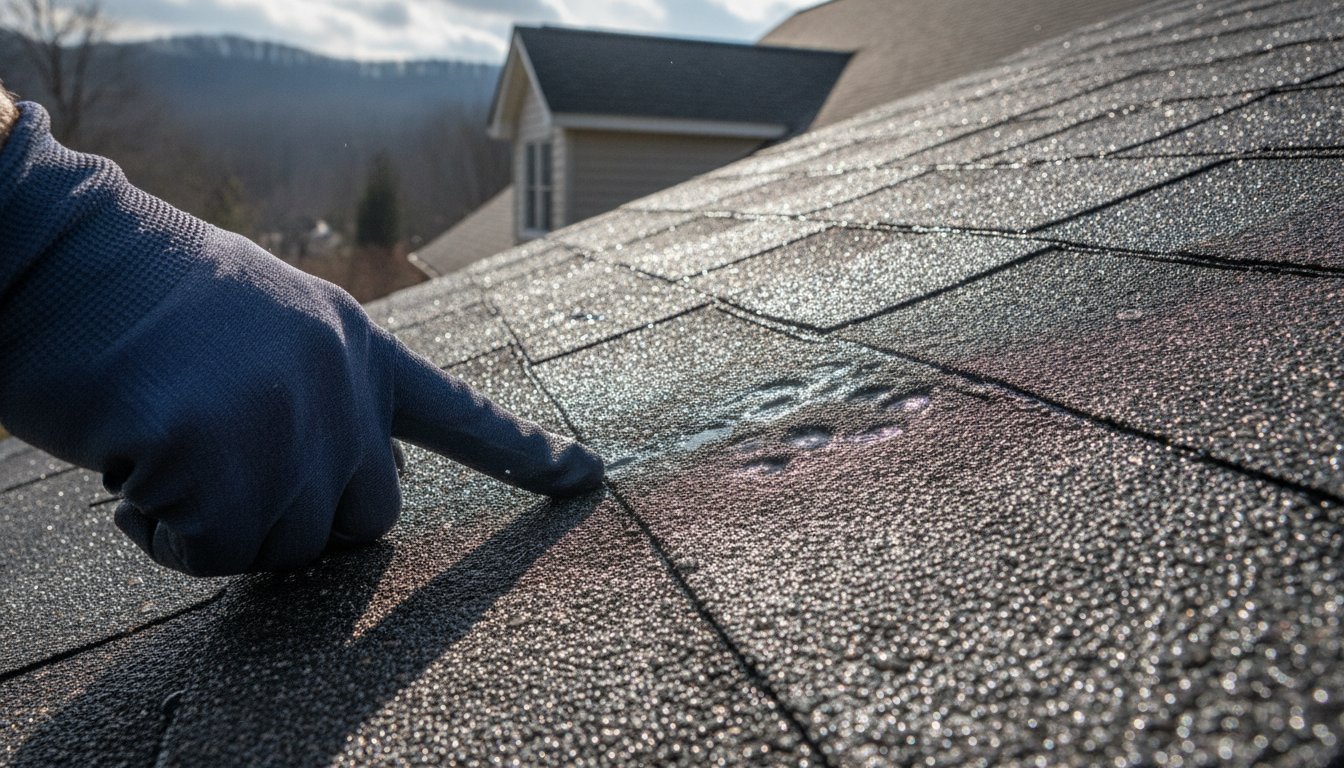
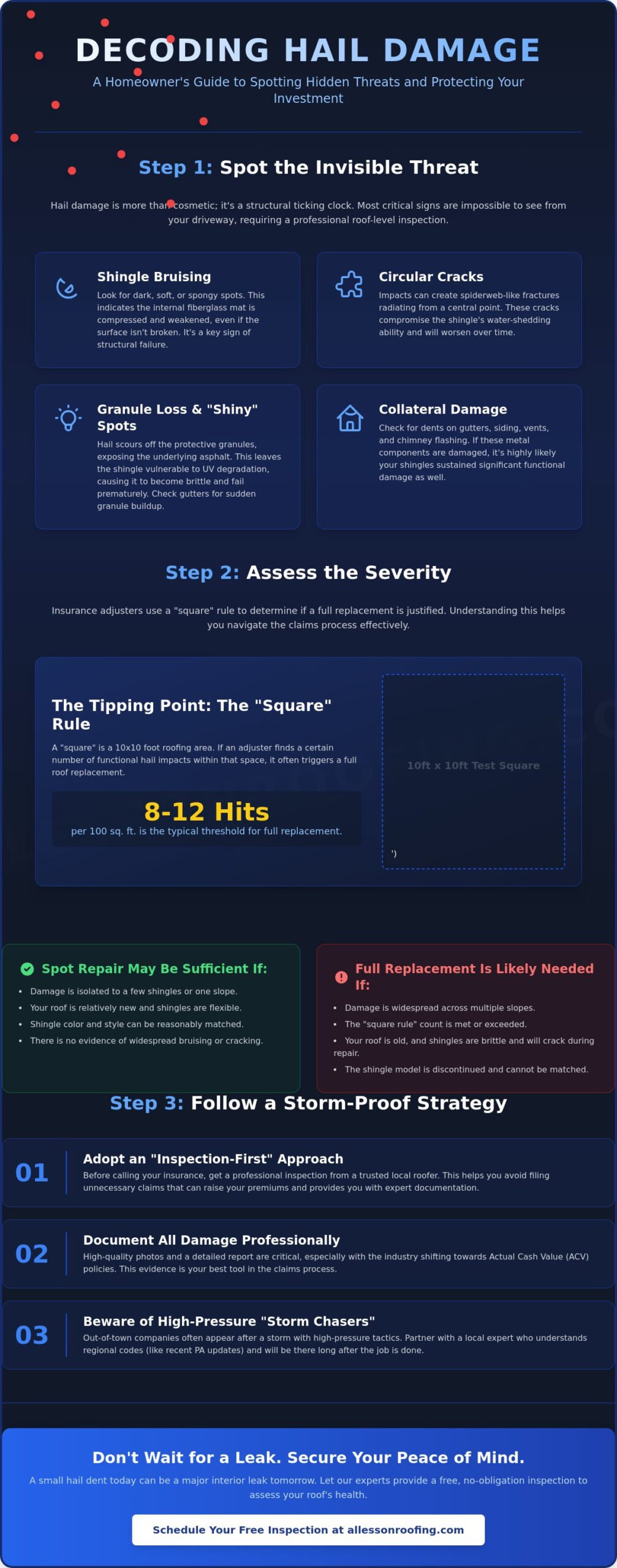
- Bruising: Dark, soft spots that indicate internal damage.
- Circular Cracks: Fractures that radiate from the point of impact like a spiderweb.
- Shiny Spots: Areas where the asphalt has been exposed and “polished” by the ice.
- Collateral Damage: Dents in your siding or chimney flashing that suggest the roof took a similar beating.
The Science of Shingle Bruising
When a large hailstone hits an asphalt shingle, the force compresses the internal fiberglass matting. This doesn’t always break the surface immediately, but it creates a “bruise” that weakens the shingle’s structure. If you press on these spots, they feel soft and spongy compared to the firm, undamaged areas around them. Shingle bruising is a structural failure that leads to premature leaks and compromises the long-term integrity of your roof.
Granule Loss and UV Exposure
Think of the granules on your shingles as a shield against the sun. These small, ceramic-coated rocks protect the underlying asphalt from UV rays that would otherwise make the material brittle and prone to cracking. Hail “scours” these granules off, often washing them into your gutters in large quantities. You can distinguish hail damage from natural aging by looking for “pitting” patterns. While aging shows general thinning, hail leaves distinct, concentrated impact marks that leave the asphalt vulnerable. If you’ve noticed sudden granule piles in your downspouts, check our roofing blog for more tips on documenting storm evidence for your records.
Repair vs. Replacement: Assessing Damage Severity
Now that you’ve identified the signs of trouble, the next step is deciding the scope of the project. Is a simple patch enough, or do you need a full hail damage roof repair? It’s a common dilemma for Poconos homeowners. Insurance adjusters often draw a hard line between functional and cosmetic damage. Functional damage includes fractured shingle mats or displaced granules that lead to leaks. Cosmetic damage might just be a small dent in a metal attic vent that doesn’t impact the roof’s lifespan. Understanding how hail forms and its impact velocity helps explain why some hits are deeper than others.
Age also plays a massive role in this decision. Older asphalt shingles lose their flexibility over time. If your roof is nearing the end of its lifespan, the shingles are less likely to survive the manipulation required for a partial repair. Brittle shingles often crack when a roofer tries to lift them to replace a damaged neighbor, turning a small fix into a much larger problem. In these cases, a total restoration is usually the most reliable way to ensure your home stays dry.
When is a Spot Repair Sufficient?
In some cases, a storm might only hit one side of your home due to wind direction. If the damage is limited to a few isolated shingles, a targeted fix might be the most practical path. However, there’s the issue of aesthetics; matching new shingles with weathered, sun-faded ones is rarely perfect. If you’re dealing with isolated issues, you can explore our expert roof leak repair in Stroudsburg, PA resources to see if a minor fix is right for your specific situation.
The Tipping Point for Full Replacement
Adjusters typically use a “square” rule to evaluate severity. A square is a 10-foot by 10-foot area (100 square feet). If they find a specific number of hits within that square, usually between 8 and 12 depending on the carrier, it often triggers a full replacement recommendation. When multiple slopes show this level of impact, a total restoration is usually the only way to ensure structural integrity. Use this checklist to evaluate your roof’s condition:
- Are there more than 10 impact marks in a 10×10 area?
- Is the damage present on more than one roof slope?
- Are the shingles older than 15 years?
- Is there evidence of “bruising” on the majority of the surface?
If you’re unsure where your home stands, it’s helpful to request a professional assessment from a local team that knows our regional weather patterns and can provide a steady, honest opinion.
Navigating the Hail Damage Insurance Claim Process
Dealing with insurance paperwork can feel more overwhelming than the storm itself. In 2026, the timeframe to file a claim for hail damage roof repair typically ranges from a few months to one year from the date of the event. While some state statutes allow longer, many modern policies have shortened these windows. It’s best to act quickly to ensure your documentation remains fresh. You can find similar advice on managing paperwork in our guide to filing a roof claim for wind damage.
A common point of confusion is the gap between a contractor’s estimate and an adjuster’s report. An adjuster’s goal is to determine the insurance company’s liability, while a local contractor focuses on the full scope of a proper restoration. We always recommend having your roofer present during the adjuster’s inspection. This ensures that technical details, like the “bruising” discussed earlier, aren’t overlooked. It also helps clarify whether your policy is Replacement Cost Value (RCV) or Actual Cash Value (ACV). Since many 2026 policies now default to ACV for roofs over 10 years old, knowing the depreciated value versus the full cost of a new roof is vital for your budget.
Documenting the Damage Correctly
Before you even call your agent, gather your own evidence. Take clear photos of any hail stones on the ground next to a ruler or a common object for scale. Photograph any damage to cars, patio furniture, or siding, as these collateral impacts support your roof claim. Keep a simple log of the storm’s date and exact time. If you have immediate safety concerns like a leak, check our checklist of what to do after roof damage to protect your interior while the claim is pending. For urgent situations where water is actively entering your home, an emergency roof tarping service can stop water damage immediately while you wait for insurance approval.
Spotting the Red Flags of Storm Chasers
Large storms often attract “storm chasers” who travel from state to state. These high-pressure teams often use door-to-door sales tactics and promise “free roofs” or ask you to sign a contract before they’ve even performed a detailed inspection. The risk is high; out-of-state contractors might not follow the updated 2021 Pennsylvania building codes or honor their warranties once the next storm season arrives. A dependable partner will have a permanent East Stroudsburg address and a deep understanding of local Poconos weather patterns. If you need a steady hand to help you review your storm damage, schedule an honest inspection with a team rooted in your community.
Restoring Your Poconos Home with Local Expertise
Living in the Poconos means dealing with specific weather patterns that national companies often overlook. Whether it is the steep-slope roofs common in our wooded communities or the unique freeze-thaw cycles that impact asphalt shingles, local expertise is non-negotiable. At Allesson Roofing, we prioritize an “inspection-first” philosophy. This means we won’t encourage you to file a claim unless there is clear, functional damage that warrants a professional hail damage roof repair. We live here too. Our team understands how the steep pitches of Poconos homes interact with high-velocity hail, ensuring every shingle is installed to handle our specific mountain climate.
A successful restoration is about more than just matching colors. It is about protecting your largest investment from secondary issues like mold or structural rot. If a storm has left your home vulnerable, we provide emergency roof tarping service to secure the structure while you wait for insurance approval. This proactive step prevents water from reaching your decking or interior ceilings. We take pride in our “work-first” attitude, focusing on the physical evidence of damage rather than abstract marketing promises.
Our Emergency Storm Response Process
Storms in East Stroudsburg and the Lehigh Valley require a rapid response. We help homeowners translate technical adjuster reports into actionable repair plans that comply with the latest Pennsylvania building codes. Our deep roots in the community allow us to arrive quickly and provide a steady hand during a stressful time. For more details on our immediate response protocols, visit our guide on emergency roof repair Poconos.
Long-Term Protection and Warranty
Restoring your roof is the perfect time to upgrade your home’s resilience. We focus on high-quality asphalt shingle installation using premium materials designed for superior hail resistance. Unlike out-of-state crews who disappear once the project is finished, we offer a workmanship guarantee backed by our permanent local office. This commitment ensures your warranty is actually worth the paper it’s written on. We don’t use high-pressure sales tactics because we believe the quality of our craftsmanship speaks for itself.
Schedule your professional hail damage inspection with Allesson Roofing today.
Secure Your Home’s Future Today
Recovering from a major storm doesn’t have to be a source of constant stress. By now, you know how to distinguish between minor cosmetic dents and the structural bruising that leads to long-term leaks. You also understand how the “square” rule and your specific insurance policy type dictate the path toward a full restoration. Taking these steps early ensures your home remains a safe haven for your family through the next season of Poconos weather.
Don’t let the technical details of a hail damage roof repair feel overwhelming. Allesson Roofing has served as local Poconos experts for over a decade. We are specialists in asphalt shingle storm restoration and provide emergency tarping and leak prevention services to stop secondary damage in its tracks. We focus on transparency and quality craftsmanship so you can feel confident in every shingle we install.
Ready to see where your roof stands? Get a Professional Hail Damage Inspection in East Stroudsburg and let us provide the steady hand you need for a successful recovery. We look forward to helping you protect your home.
Frequently Asked Questions
How much hail is needed to damage a roof?
Hail typically needs to be at least one inch in diameter, or roughly the size of a quarter, to cause functional damage to asphalt shingles. Smaller hail can still be destructive if it is accompanied by high winds or if your roof is older and brittle. The density of the ice and the angle of the impact often determine whether the shingle mat stays intact or suffers a structural fracture.
Will my insurance rates go up if I file a hail damage claim?
Insurance companies generally don’t raise individual rates for “Act of God” claims like hail or wind damage. These events are outside of your control, unlike a car accident where you might be at fault. However, if a major storm impacts a large portion of the Poconos, premiums across your entire zip code might increase during the next renewal period to reflect the area’s heightened risk.
How long do I have to file a claim after a hailstorm in Pennsylvania?
Most policies in Pennsylvania require you to file a claim within one year of the storm event, though some carriers have shortened this window to six months in 2026. It is vital to check your specific policy language as soon as the storm passes. Acting quickly ensures you can document the evidence before the shingles weather further, making your hail damage roof repair process much smoother.
Can I repair just the damaged shingles instead of a full replacement?
You can certainly choose a spot repair if the damage is limited to a small area or a single roof slope. The main challenge is that new shingles rarely match the color of sun-faded, weathered asphalt. If your roof is more than 15 years old, the surrounding shingles may be too brittle to lift and nail, which often makes a full replacement the more practical and reliable choice.
What happens if I ignore hail damage on my roof?
Ignoring hail damage often leads to trapped moisture, attic mold, and structural wood rot. While you might not see a leak immediately, the loss of protective granules allows UV rays to bake the exposed asphalt. This causes the shingles to become brittle and crack over time. Proactive hail damage roof repair prevents these small “bruises” from turning into expensive interior water damage during the next heavy rain.
Does a “free roof inspection” from a door-to-door roofer count as a claim?
No, a professional inspection is simply an assessment of your roof’s condition and does not involve your insurance company. A claim only starts when you officially notify your agent or carrier of the damage. Be wary of contractors who ask you to sign a contract before they provide an inspection report. A dependable local authority will always provide the facts first so you can make an informed decision.