Professional Chimney Flashing Repair Service in East Stroudsburg: Protecting Your Poconos Home
Why does your chimney only seem to leak during those heavy Poconos downpours? It’s a common frustration for many East Stroudsburg homeowners who spot a mystery damp patch on the ceiling but can’t find the source. You’re right to worry about the potential for structural rot or masonry damage if that water keeps finding its way inside. Finding a reliable chimney flashing repair service is about more than just applying a quick layer of caulk; it’s about creating a durable, mechanical barrier that handles our local weather.
We understand that terms like counter flashing and crickets can feel confusing when you just want a dry living room. You’ll learn how to identify failing seals and why a dual-layer approach is the only way to survive Pennsylvania’s frequent freeze-thaw cycles. We’ll also cover the 2021 building code requirements for chimney saddles and help you understand the long-term value of professional repairs. This guide provides the clarity you need to find a dependable local expert and ensure your home stays protected through every season.
Key Takeaways
- Learn how the unique Poconos climate causes metal seals to expand and contract, leading to mystery leaks during heavy rain.
- Understand the «dual-layer» anatomy of step and counter flashing and how they work together to divert water away from your masonry.
- Discover why a professional chimney flashing repair service provides a more permanent solution than temporary roofing cement or tar.
- Find out how to identify early signs of flashing failure during a routine inspection to prevent long-term damage to your roof decking.
Understanding Chimney Flashing Failure in the Poconos Climate
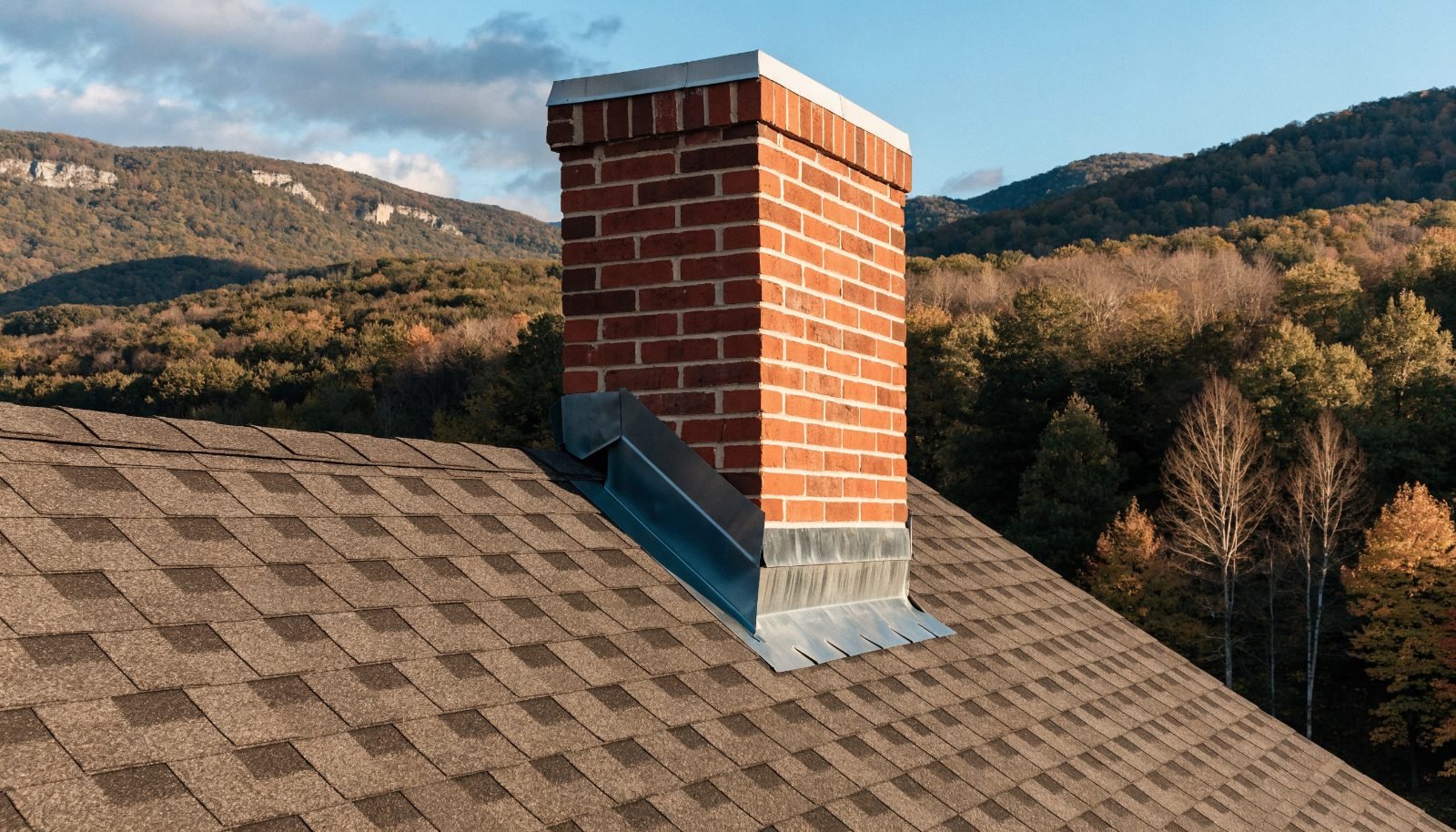
Living in East Stroudsburg means dealing with weather that isn’t kind to home exteriors. One of the most vulnerable spots on your roof is where the chimney meets the shingles. To keep this area dry, builders use what chimney flashing is; a metal transition that creates a waterproof bridge between your masonry and the roof deck. Chimney flashing serves as the primary defense against roof-to-wall water infiltration, ensuring that rain and melting snow flow safely into your gutters instead of into your living room.
The Poconos region is famous for its rapid temperature swings. These freeze-thaw cycles create a constant tug-of-war between your brick chimney and your roofing materials. Metal flashing expands when it’s warm and contracts when it’s cold. Over time, this movement can pull the metal away from the brick or crack the sealant that holds it in place. When the seal breaks, you’ll need a professional chimney flashing repair service to restore the integrity of your roof before structural damage sets in.
Many homeowners deal with what we call the «Hidden Leak» phenomenon. Because water is opportunistic, it often bypasses the flashing and travels down the vertical structure of the chimney. You might not see a drip right away. Instead, the water slowly soaks into your attic insulation or rots the wooden framing behind your drywall. By the time a stain appears on your ceiling, the leak has likely been active for months. Catching these issues early is the key to avoiding expensive repairs later.
Common Signs of Leaking Chimney Flashing
- Ceiling Stains: Look for yellow or brown rings on the drywall near your fireplace or in the attic directly above the chimney.
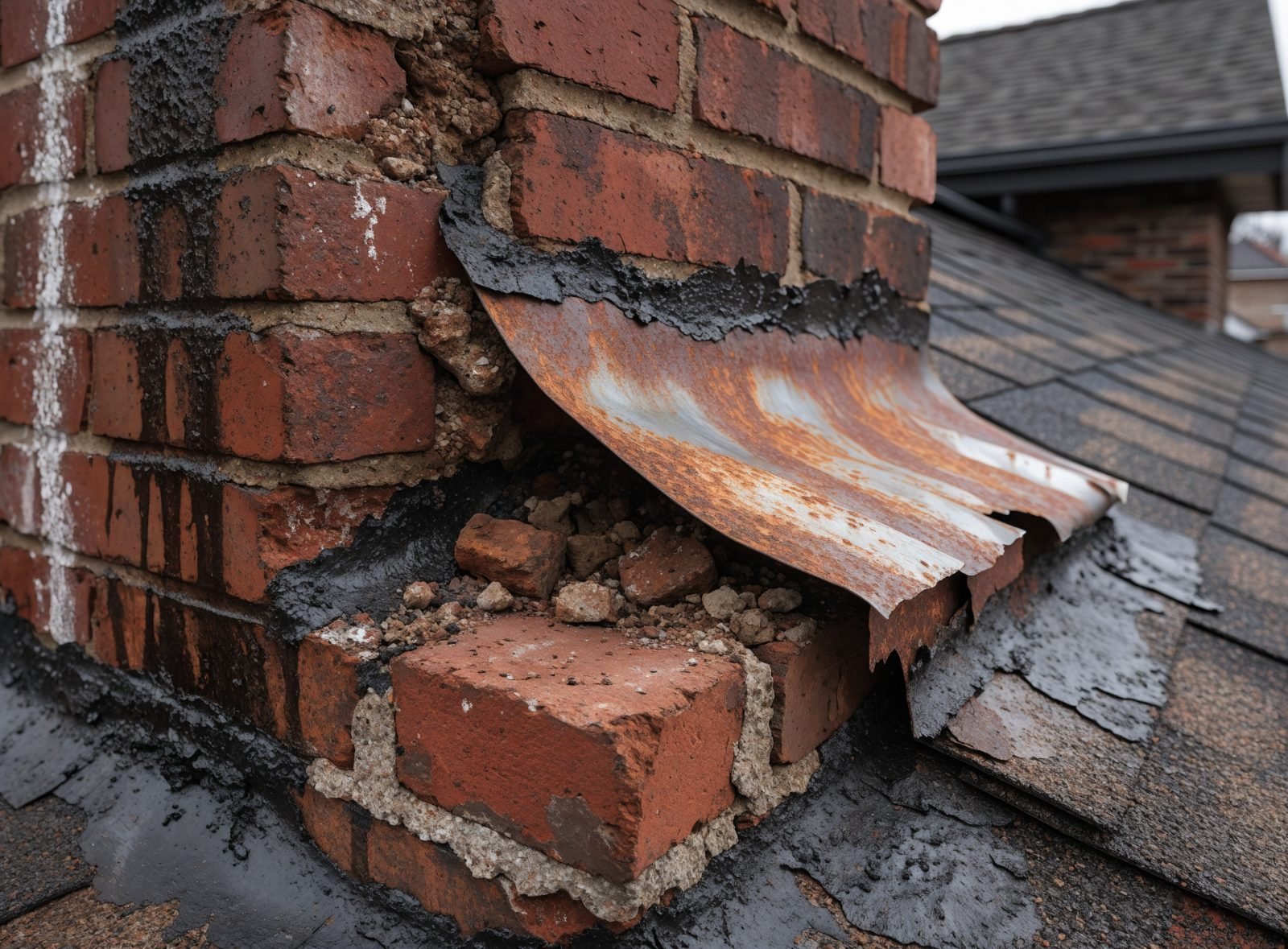
- Rusted Metal: If your flashing looks orange or pitted, the protective coating has failed, and water can now seep through tiny pinholes.
- Crumbling Mortar: When you see «sand» or small bits of brick on your roof, it’s a sign that water is bypassing the flashing and eroding the masonry joints.
- Lifting Shingles: Check for shingles that appear to be pushing away from the chimney base, which often happens when moisture gets trapped underneath.
Why Pennsylvania Winters are Tough on Masonry Seals
Heavy snow loads are a major factor in our area. When a foot of snow sits against your chimney for weeks, the bottom layer turns into slush. This slush can find even the smallest gap in your flashing. Ice dams also play a role. As snow melts and refreezes at the eaves, it backs water up the roof slope and under the flashing lip. Additionally, many of our older East Stroudsburg homes experience slight foundation shifts during the winter. Even a tiny movement in the house can pull the chimney away from the roof, snapping old, brittle seals that were once watertight. This is why a reliable chimney flashing repair service is so important for local property maintenance. To help you stay ahead of these issues, our leaking chimney flashing checklist covering 12 signs to watch for gives you a comprehensive guide to spotting problems before they become costly repairs.
The Anatomy of a Waterproof Seal: Step vs. Counter Flashing
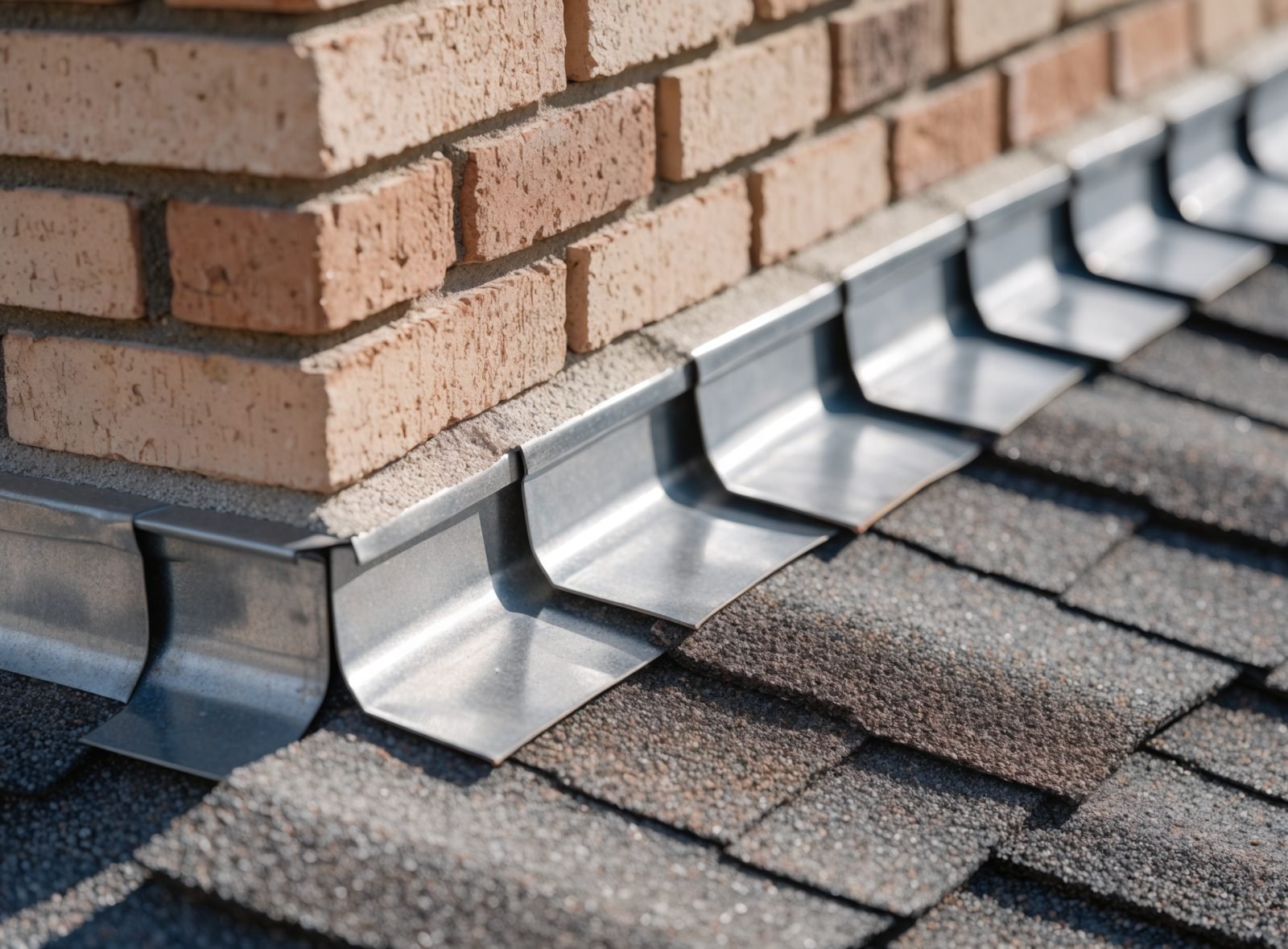
A reliable seal requires more than just a bit of caulk. We use a two-part system that works with gravity to keep your home dry. Step flashing pieces are the first line of defense. These L-shaped metal plates are woven into each shingle course as the roof is built. They catch water and move it down to the next shingle. Counter flashing provides the second layer. We embed this metal into the chimney mortar joints so it overlaps the step flashing below. This layered approach is non-negotiable for a professional chimney flashing repair service because it creates a redundant shield that prevents rain from sneaking behind the shingles.
Why do we insist on this complex setup? Many amateur repairs rely on roofing cement or heavy adhesives. While these might work for a few months, they eventually crack under the Poconos sun. Mechanical fastening, where metal is physically tucked into the masonry, is far superior. It allows the house and chimney to move independently without breaking the waterproof bond. Identifying flashing problems often starts with spotting where a previous contractor used «tar» instead of proper metalwork. If you suspect your flashing was installed incorrectly, you can schedule a professional roof assessment to protect your home’s structure.
Choosing the Right Materials: Copper, Aluminum, or Steel
The material you choose impacts both the cost and the lifespan of your repair. Copper is the gold standard, especially for historic homes in East Stroudsburg. It’s incredibly durable and develops a beautiful patina over time. Aluminum is the most common choice for modern residential roofs because it’s rust-resistant and easy to form. When providing a chimney flashing repair service, we often recommend aluminum for its balance of performance and value. Galvanized steel is a sturdy, budget-friendly option, but it requires regular maintenance to prevent rust from forming in our damp climate. Before approving any contractor quote, review our detailed breakdown of the cost to repair chimney flashing for PA homeowners in 2026 so you know exactly what to expect for materials and labor.
The Role of the Chimney Cricket in Snow Management
If your chimney is wider than 30 inches, a simple metal strip isn’t enough. Pennsylvania building codes require a chimney cricket. This is a small, peaked structure built behind the chimney on the ridge side of the roof. It acts like a snow plow, diverting heavy snow and ice around the chimney instead of letting it pile up in a «snow pocket.» Without a cricket, the weight of the snow can crush your flashing and force water into the house. We evaluate the integrity of your cricket during every inspection to ensure your home is ready for the next Poconos winter. If you also manage a business property in the area, our guide to commercial roof repair Poconos services for 2026 covers how these same snow load challenges affect flat and low-slope commercial roofing systems.

Identifying and Fixing Flashing Leaks: The Allesson Repair Process
Every successful repair starts with an accurate diagnosis. We don’t just guess where the water is coming from; we verify it. Our chimney flashing repair service begins with a comprehensive inspection of your roof and your attic. By looking at the underside of the roof deck, we can trace water trails back to their source. This step is vital because it confirms whether the issue is truly the flashing or perhaps a masonry crack higher up the chimney. We want to ensure we’re solving the right problem the first time.
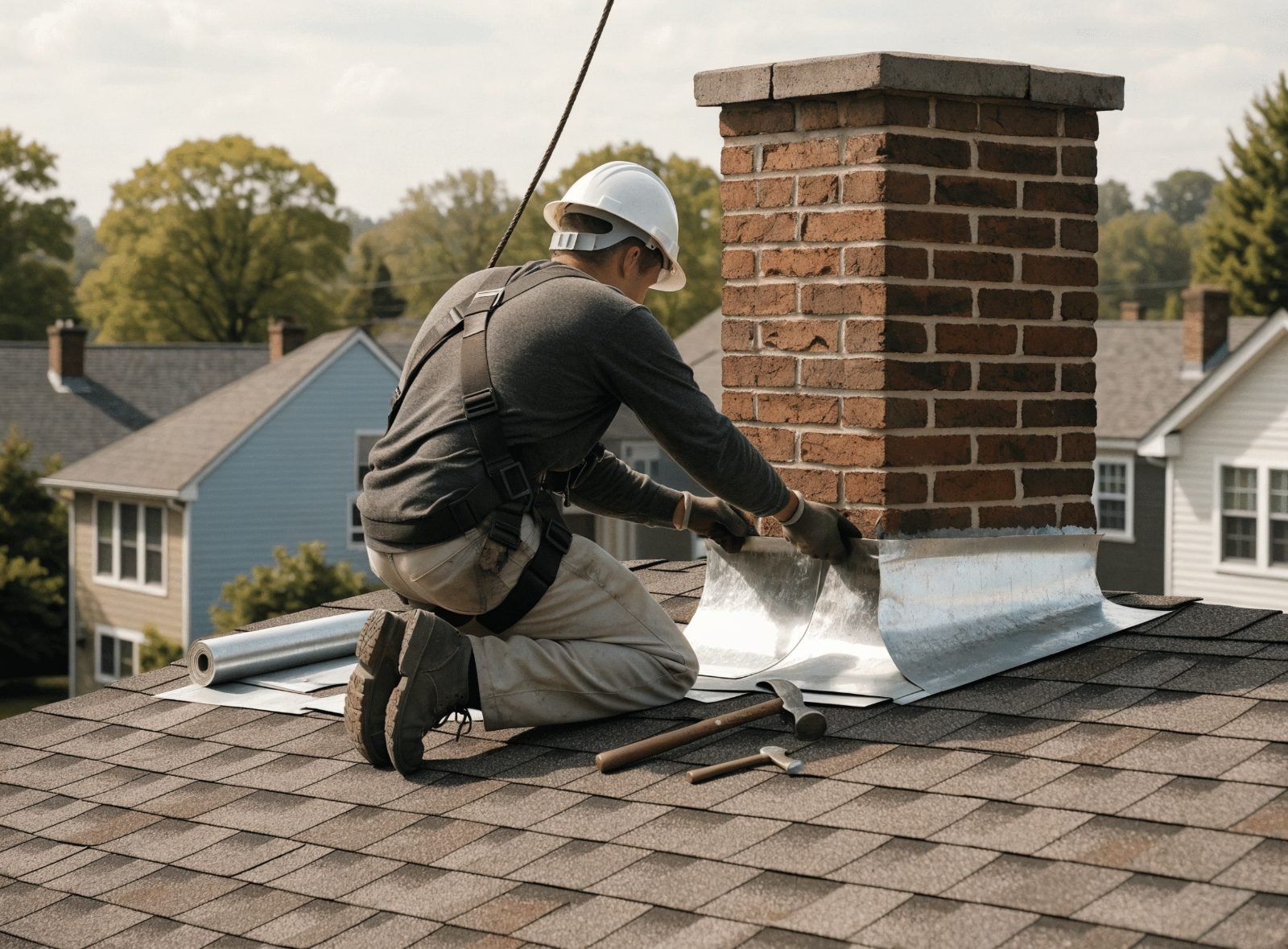
The actual repair work is a precise, technical process. We start by carefully removing old, failed sealant and any rusted metal. Our team is careful not to damage the surrounding shingles during this removal. For the counter flashing, we perform a «grinding» process where we cut a new reglet, or narrow groove, directly into the mortar joints. This allows the new metal to be tucked deep into the chimney for a permanent, mechanical bond. We finish the installation by applying a high-grade masonry caulk to the reglet, creating a flexible seal that won’t crack when the temperature drops.
Our Multi-Point Chimney Inspection
We look beyond the metal to ensure your entire chimney system is healthy. Our inspection includes several critical checks:
- Chimney Crown Check: We look for cracks in the concrete cap that allow water to seep behind the brick and mimic a flashing leak.
- Shingle Adhesion: We evaluate the shingles around the chimney perimeter to ensure they haven’t lost their bond due to moisture.
- Internal Attic Review: We check for signs of long-term seepage, such as wood rot on the rafters or mold growth in the insulation.
Repairing vs. Full Flashing Replacement
Sometimes, a simple reseal is a valid temporary fix if the metal is in excellent condition but the old caulk has simply aged out. However, if the metal is rusted, pitted, or warped, a full replacement is the only responsible path forward. We also check if the bricks themselves need repointing. If the mortar is soft or missing, new flashing won’t have a secure place to anchor. If you are currently dealing with water entering your home, you can refer to our emergency roof repair Poconos guide for immediate advice. For a permanent solution to recurring leaks, contact our team for a professional assessment.
Why Expert Chimney Flashing Replacement Saves Your Roof
It’s tempting to reach for a bucket of roofing cement when you first spot a leak. Don’t fall into the «tar trap.» While a thick layer of black mastic might stop the water today, it’s usually only a six-month solution. In the Poconos, the summer sun bakes that cement until it becomes brittle and pulls away from the masonry. A professional chimney flashing repair service replaces that temporary fix with custom-fit metal that actually moves with your home. This ensures a permanent barrier that won’t crack when the seasons change.
Investing in quality metalwork protects your entire roofing system. When flashing fails, water seeps onto the structural wood decking. Over time, this moisture rots the plywood and can lead to a premature asphalt shingle installation failure. If the wood underneath is soft, the nails holding your shingles won’t stay secure. We provide a transferable workmanship guarantee on our repairs, giving you the peace of mind that your home is truly protected. Allesson Roofing stands as the local East Stroudsburg authority on weatherproof chimney seals, and we take pride in doing the job right the first time.
The Long-Term ROI of Professional Craftsmanship
The cost of a simple flashing fix is small compared to the price of mold remediation. If a leak goes ignored, moisture in the attic can lead to mold growth that can triple your repair bill. Beyond just saving money, professional flashing enhances your home’s curb appeal. We use clean, professionally bent metalwork that looks sharp against your chimney. This attention to detail helps maintain your home’s value, which is a significant advantage for future Poconos real estate transactions. A dry, well-maintained roof is always a strong selling point. Business owners in the region face similar long-term cost calculations, and our commercial roof repair Poconos buying guide for 2026 walks through how to evaluate repair versus replacement ROI for commercial properties.
Schedule Your East Stroudsburg Chimney Assessment
Ready to stop the mystery leaks? You can get a transparent estimate from our team to see exactly what your roof needs. During your first service call, we’ll walk you through our findings and explain the best path forward without any high-pressure sales tactics. Our local roots run deep in East Stroudsburg, and we’re dedicated to helping our neighbors keep their homes safe and dry. We treat every chimney as if it were on our own home, focusing on steady, reliable craftsmanship that lasts for years. Contact us today to schedule your professional assessment.
Secure Your Home Against the Next Poconos Storm
You now understand how our local freeze-thaw cycles challenge your roof and why a mechanical, two-part flashing system is the only way to ensure a dry home. By choosing a professional chimney flashing repair service instead of temporary sealants, you protect your roof decking and maintain your property’s value for the long term. We specialize in these unique Poconos climate challenges and offer high-quality material options like copper and aluminum to fit your home’s specific architectural needs. Our team focuses on providing a permanent barrier that stands up to heavy snow and driving rain.
As locally owned East Stroudsburg specialists, we take pride in providing steady, reliable solutions for our neighbors. Don’t wait for the next heavy rain to discover a mystery leak in your attic. Request Your Expert Chimney Flashing Inspection Today and get the peace of mind that comes with expert craftsmanship and transparent service. We’re ready to help you keep your home safe, dry, and watertight through every Pennsylvania season. Your roof is your home’s first line of defense, and we’re here to make sure it’s a strong one.
Frequently Asked Questions
How do I know if my chimney flashing is the source of the leak?
You can identify flashing leaks by looking for water stains on the ceiling or walls directly adjacent to the chimney structure. Check your attic for damp rafters or wet insulation around the chimney base during a rainstorm. If you see rusted metal or visible gaps between the brick and the roof from the ground, the flashing has likely failed. A professional inspection can confirm if the metal is the culprit or if the masonry itself is porous.
Can chimney flashing be repaired without replacing my entire roof?
Yes, chimney flashing can be replaced as a standalone repair without disturbing the rest of your roofing system. We carefully lift the shingles immediately surrounding the chimney to install new step flashing and counter flashing. This targeted approach makes a professional chimney flashing repair service a cost-effective way to stop leaks. It’s an ideal solution when your shingles are still in good condition but the metal seals have reached the end of their lifespan.
What is the average lifespan of professional chimney flashing in PA?
High quality flashing typically lasts between 20 and 30 years depending on the material and local weather exposure. Aluminum and galvanized steel are durable choices that hold up well against the heavy snow loads we see in East Stroudsburg. If your home features copper flashing, you can expect it to last 50 years or more with proper maintenance. Regular inspections help ensure the sealant remains intact through our region’s frequent freeze-thaw cycles.
Why is my chimney leaking only during heavy wind-driven rain?
Wind-driven rain can force water sideways or upward, pushing moisture into tiny gaps that stay dry during a normal vertical downpour. If the counter flashing isn’t deeply embedded into the mortar joints, high winds can drive rain behind the metal plates. This often indicates that your sealant has become brittle or the metal has slightly warped over time. These small openings are difficult to spot but can cause significant hidden damage in your attic. Before your next inspection, review the warning signs of leaking chimney flashing so you know exactly what to look for from the ground and in your attic.
Does homeowners insurance cover chimney flashing repair?
Insurance coverage generally depends on whether the damage was caused by a sudden, accidental event or gradual wear and tear. If a falling tree limb or a severe hail storm damages your flashing, your policy might cover the cost of the repair. However, leaks caused by old age, rust, or lack of maintenance are typically considered the homeowner’s responsibility. You should review your specific policy or consult with your insurance agent to understand your coverage limits.
What is the difference between chimney flashing and a chimney crown?
Flashing is the metal transition at the base of the chimney where it meets the roof shingles, while the crown is the concrete cap at the very top. Both are essential for waterproofing, but they protect different areas. A cracked crown allows water to soak into the bricks from the top, leading to masonry damage. Failing flashing allows water to bypass the roof deck entirely, which quickly leads to rotted wood and ceiling stains inside your home.