

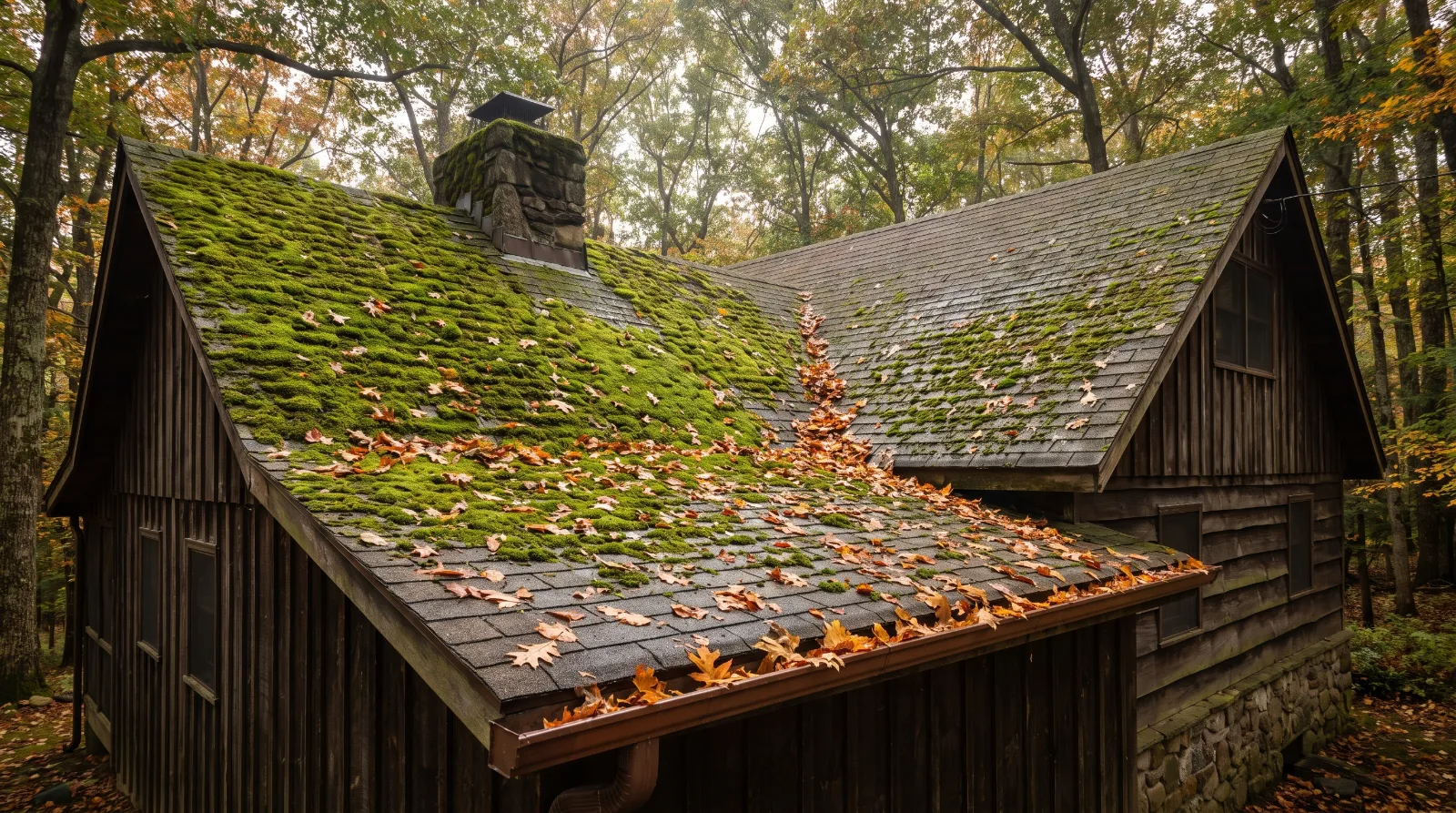
Roof Moss Removal: Why Fall Is the Time to Treat It
Roof moss removal done right is a low-pressure job: a 50:50 mix of household bleach and water, sprayed on, left to work and rinsed off gently. That’s the method the Asphalt Roofing Manufacturers Association recommends. Pressure washing, scraping and stiff brushes strip the granules off asphalt shingles and shorten the roof’s life. Professional moss removal runs about $0.20 to $0.75 per square foot, and fall, before the ground freezes, is the best time to do it in the Poconos.
Why moss grows on Poconos roofs (and why fall makes it worse)
Moss needs three things: shade, moisture and something to hold onto. A lot of roofs in our part of Pennsylvania offer all three. Homes tucked into the woods in Dingmans Ferry, Bushkill and the rest of Pike County sit under a canopy that keeps the north side of the roof shaded most of the day. Down in the Delaware Water Gap, the river valley adds humidity and morning fog.
Fall is when it gets a foothold. Leaves land on the roof, pile up behind vents and in the valleys, and hold water against the shingles for days after every rain. The cool, damp weeks of October and November are ideal growing conditions for moss, and by the time the snow melts in March, patches that were the size of a hand can cover a whole section of roof.
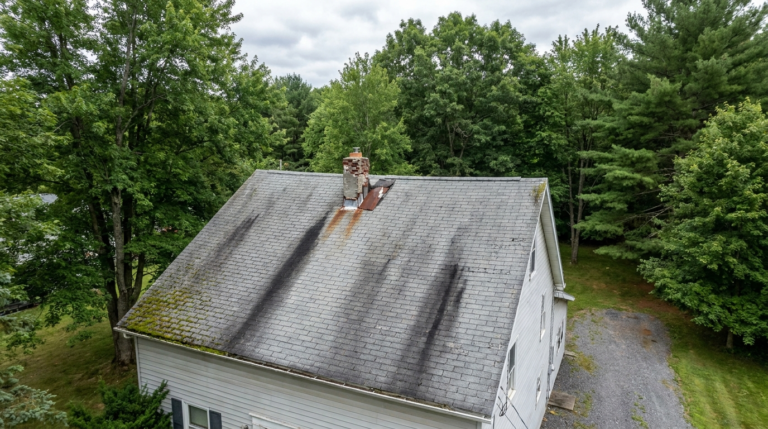
Moss is different from the black streaks you see on so many Pennsylvania roofs. Those are algae, a surface stain, and we explain them in our post on black streaks on a roof. Moss is a plant with a root-like structure, and it grows into the gaps between shingles.
Is moss bad for your roof?
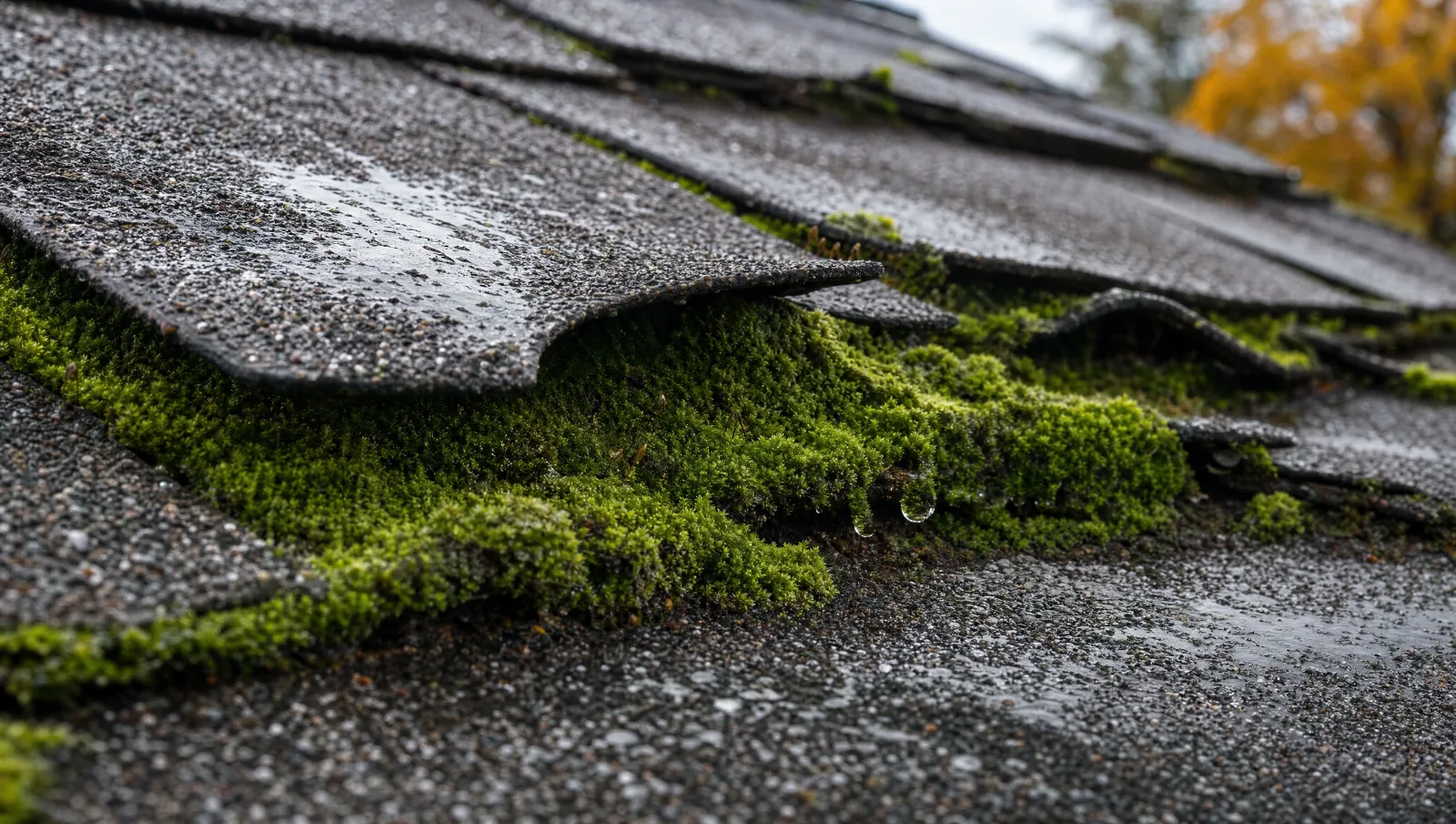
Yes, once it gets established. A thin film of green on the surface is mostly cosmetic. Thick, cushiony moss is not, for three reasons:
- It lifts shingles. Moss grows into the joint where one shingle overlaps the next and slowly pries the edges up. Lifted edges break the adhesive seal, and unsealed shingles are the ones that blow off in the next windstorm.
- It holds water against the roof. A mat of moss acts like a sponge. The shingle and the deck under it stay wet long after the rest of the roof has dried, which speeds up wear and, over time, rot.
- It clogs gutters and valleys. Chunks of moss wash into the gutters and downspouts, and water that can’t drain in December becomes ice at the eaves in January.
Honest advice: if you only see a light green tint on a roof that’s otherwise in good shape, you don’t need to rush. If you can push a finger into it, or if the shingle edges around it are visibly curled, deal with it before winter.
How to remove moss from a roof without damaging it
The manufacturers who make the shingles are blunt about this. ARMA says never to use a pressure washer on an asphalt shingle roof, because it causes granule loss and very likely premature failure of the roof system. The granules are what protect the asphalt underneath from UV. Blast them off and the roof starts aging years ahead of schedule.
The method ARMA recommends instead:
- Protect the landscaping. Wet down plants under the drip line and cover them. Bleach runoff will burn them.
- Mix 50:50 laundry-strength liquid chlorine bleach and water.
- Apply with a low-pressure garden sprayer, working from the ground or a ladder at the eave where you can, not by walking on wet shingles.
- Let it work, then rinse with low-pressure water from a regular hose.
- Repeat if needed. Heavy moss can take more than one treatment, and dead moss often lets go on its own with the next few rains rather than all at once.
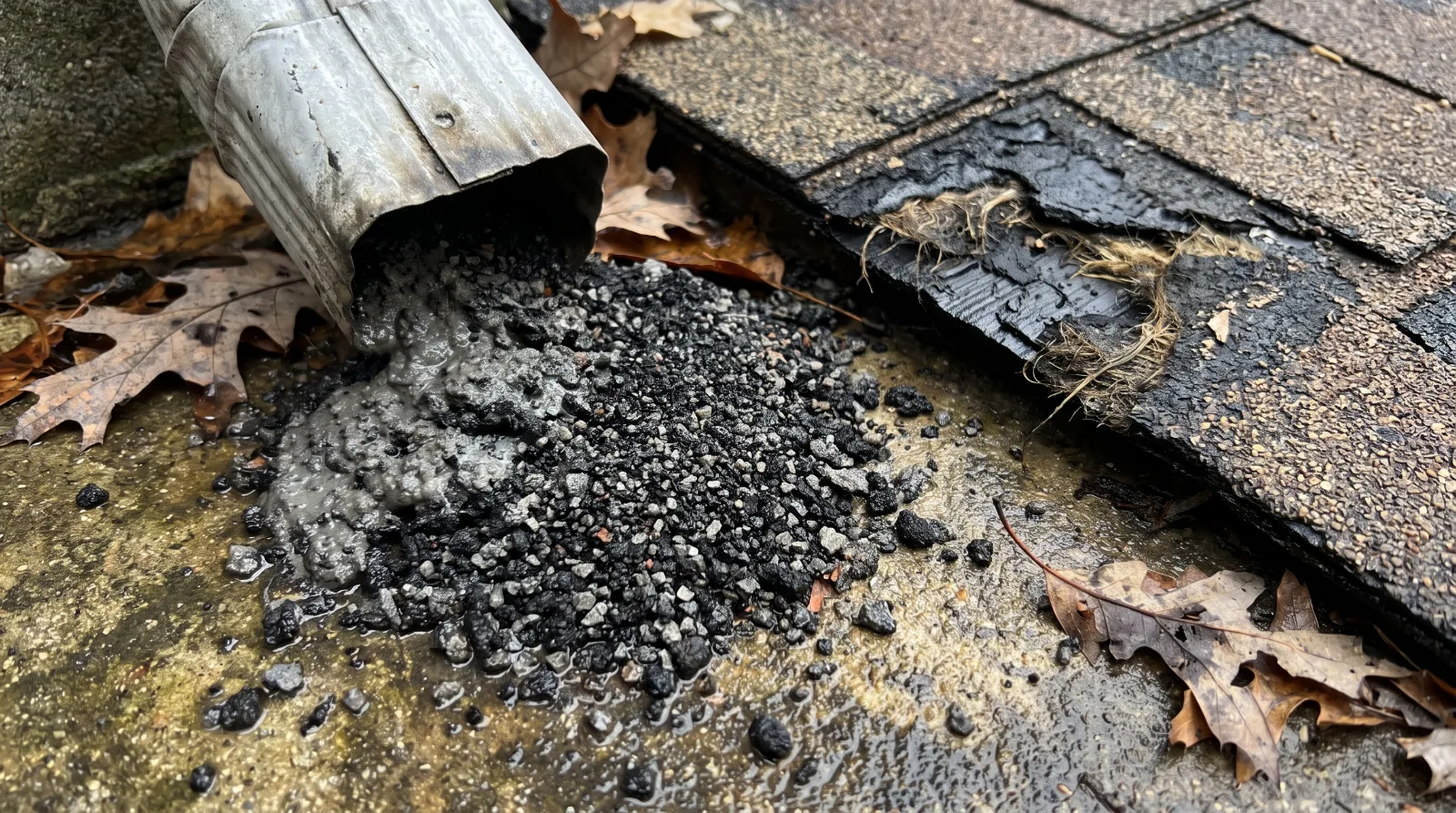
What not to do: pressure wash, scrape with a putty knife or roof rake, sweep with a stiff broom, or scatter zinc sulfate powder. HomeGuide warns that the powder washes off in the rain and can kill the landscaping around the house. If you see a pile of dark, sand-like granules at the bottom of your downspouts after someone cleaned your roof, it was cleaned too hard.
Safety first: a wet, moss-covered roof is one of the slipperiest surfaces you’ll ever stand on. If the moss is anywhere you can’t reach from a ladder, it’s not a DIY job.
Why fall is the right time to treat it
Bleach treatment needs a dry day with temperatures comfortably above freezing, and several days of rain afterward help rinse away what’s left. In the Poconos, that window starts closing in November. Treat it in the fall and the moss is dead and falling away before snow sits on it for three months. Wait until spring and it has had a whole winter to hold moisture against the shingles and work its way further under them.
What roof moss removal costs
| Service | Typical cost |
|---|---|
| Roof moss removal | $0.20 – $0.75 per sq ft |
| Soft-wash roof cleaning | $0.15 – $0.60 per sq ft |
| Average roof cleaning job | $250 – $600 |
| Zinc strips (material only) | $30 – $60 per 50-ft roll |
| Minor roof repair after moss damage | $150 – $3,000 |
National figures from HomeGuide’s roof cleaning cost data. Steep roofs and second stories cost more. When you get a quote, ask one question before anything else: do you use a pressure washer on shingles? If the answer is yes, keep looking.
Keeping moss off: what works and the zinc strip catch
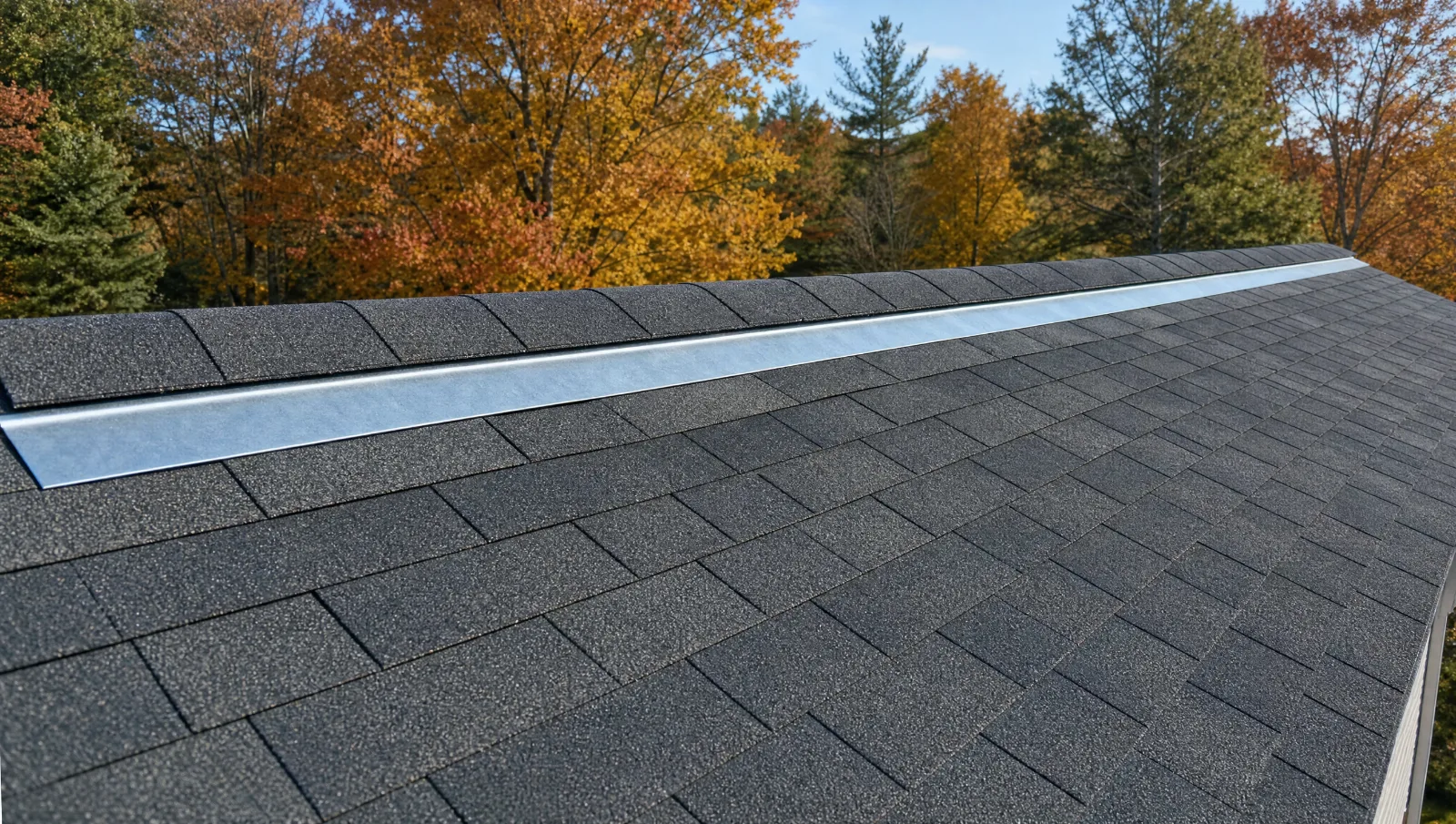
The cheapest prevention is sunlight and airflow. Trim the branches that shade the roof, and keep leaves out of the valleys and gutters every fall. Wet leaves packed into the valleys and gutters give moss its start, which is one more reason to schedule gutter cleaning in Stroudsburg after the leaves are down.
Zinc and copper strips near the ridge do work. Every rain washes a trace of metal down the roof, and moss and algae don’t grow where it lands. But here’s the catch most online guides skip. ARMA does not recommend adding zinc or copper strips to an existing roof. Fastening them means either exposed nails through the shingles, which leak over time, or breaking the shingles’ sealant bond to slide the strip underneath, which invites wind damage.
The right time for a zinc strip, or for algae-resistant shingles with copper granules built in, is when the roof is replaced. If your roof is moss-covered and near the end of its life anyway, that’s worth building into the plan for a roof replacement in the Poconos.
When moss means you need a roofer
Cleaning kills the moss. It doesn’t fix what the moss already did. Call a roofer if, once the moss is gone, you see any of these:
- Shingle edges that stay lifted or curled
- Shingles that are cracked, brittle or missing
- Bare, black patches where the granules are gone
- Soft spots when you press on the deck from the attic side
- Water stains in the attic under the mossy section
Lifted and unsealed shingles are a straightforward shingle roof repair when they’re caught in the fall. Left through a Poconos winter, they’re the shingles that come off in the first nor’easter.
Frequently asked questions
Does moss on a roof mean it needs replacing?
No. Most mossy roofs just need cleaning and a few repaired shingles. Replacement only makes sense if the moss has been there long enough to lift and damage a large area, or if the roof is near the end of its life anyway.
Will moss come back after it’s removed?
If the roof is still shaded and damp, yes, usually within a few years. Trimming trees and keeping leaves off the roof slows it down more than any product.
Is it safe to use bleach on a roof?
It’s the method the shingle manufacturers recommend, at a 50:50 mix. Protect the plants underneath, wear eye and skin protection, and rinse with low-pressure water.
Can I pressure wash a metal roof?
A solid metal roof can handle pressure washing, according to HomeGuide. Asphalt shingles, slate and wood shakes should not be pressure washed.
Does homeowners insurance cover moss damage?
Generally not. Insurers treat moss as a maintenance issue, so damage that develops slowly from it is typically excluded. Our guide to whether insurance covers a roof leak in PA explains the difference between sudden damage and wear.
Find out what’s under the moss
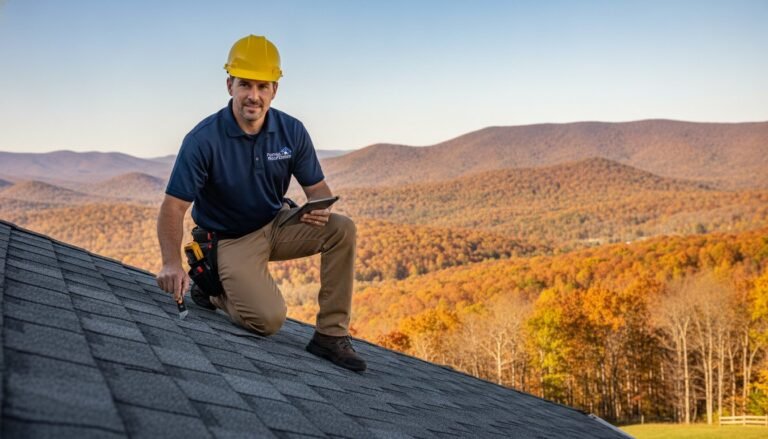
We’ll get up on the roof and tell you honestly what you’re looking at: a cosmetic problem, a handful of lifted shingles, or a roof that’s been holding water for years. If a gentle cleaning is all it needs, you’ll hear that from us. The inspection is free.
Call (570) 426-3505. We cover Stroudsburg, East Stroudsburg, Delaware Water Gap, Bushkill, Dingmans Ferry and the rest of Monroe and Pike County.
One Comment