Emergency Roof Leak Repair in East Stroudsburg: Your 2026 Response Guide
Imagine waking up at 2 AM to the rhythmic drip of water hitting your floor while a Poconos storm rages outside. It’s a moment of pure panic for any homeowner, as you realize that every second of delay means more damage to your ceilings, walls, and peace of mind. You know that a small spot on the drywall can quickly turn into a major restoration project if it isn’t handled immediately. Finding reliable help during a heavy downpour or a winter freeze often feels nearly impossible when your neighbors are all facing the same weather.
This guide will show you exactly how to secure your home and manage the process of emergency roof leak repair East Stroudsburg residents can rely on to stop active water damage. We’ll cover immediate mitigation steps to protect your interior, how the 2021 International Codes adopted earlier this year affect your repairs, and the critical 30 to 60 day timeline for filing insurance claims to ensure you’re covered. You’ll learn how to move from a midnight crisis to a permanent, professional fix with steady, calm assurance.
Key Takeaways
- Master the ‘bucket and board’ containment method and learn to identify critical electrical hazards when water first enters your home.
- Identify how local weather patterns like ice dams and high winds specifically target common roofing materials in the East Stroudsburg area.
- Learn why professional tarping is a vital first step for emergency roof leak repair East Stroudsburg residents use to stop water while awaiting permanent fixes.
- Understand the documentation steps necessary to ensure your insurance provider covers both immediate mitigation and long-term restoration.
Immediate Steps: What to Do When You Find an Active Roof Leak
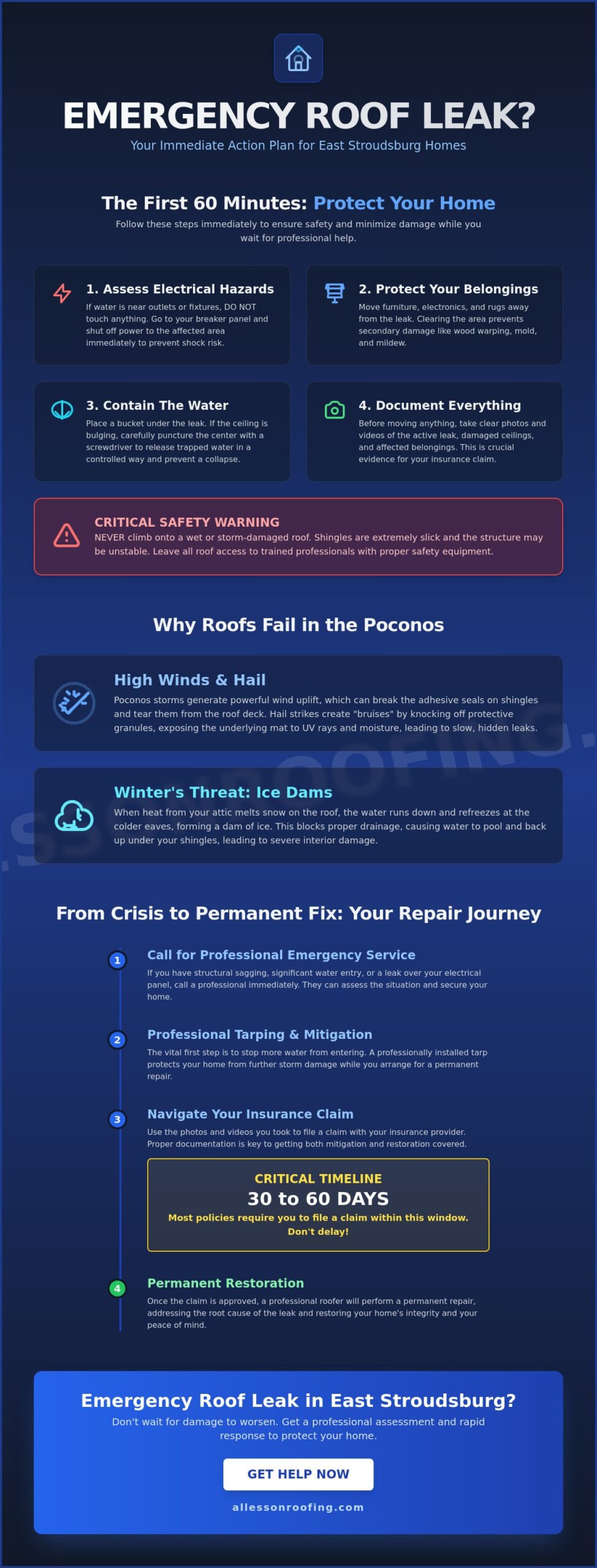
Finding water where it shouldn’t be is a stressful experience, but your first priority must be safety. Before you grab a bucket, look for electrical hazards. If water is dripping from a light fixture or running down a wall near an outlet, don’t touch anything. Go straight to your main breaker panel and shut off power to that room. Water conducts electricity, and a saturated ceiling can create a hidden shock hazard. Once the area is safe, move your electronics, furniture, and rugs to a dry part of the house. This prevents secondary damage like wood warping or mold growth in carpet fibers.
To contain the mess, use the bucket and board method. Place a sturdy bucket under the leak, but don’t just let the water hit the bottom. Lean a small piece of wood or a ruler inside the bucket so the water flows down it. This stops the loud “pinging” sound and prevents splashing that could damage your flooring. If you notice a bulge or a sagging spot in your drywall, it’s likely holding a large amount of trapped water. You can carefully use a screwdriver to poke a small hole in the center of the bulge. This relieves the weight and allows you to control the drainage into your bucket rather than waiting for the entire ceiling section to collapse.
It’s tempting to grab a ladder and a tarp, but you should never climb on a wet or damaged roof yourself. Poconos storms make shingles incredibly slick, and wind-damaged areas can be structurally unstable. Professional teams have the proper harnesses and equipment to handle heights safely. While you wait for help, focus on documenting the situation from the ground and the interior for your future insurance claim.
The First 60 Minutes: A Homeowner’s Checklist
- Document the damage: Take clear photos and videos of the active leak, the ceiling bulge, and any damaged belongings before you move them.
- Clear the floor: Remove items from the “splash zone” to ensure air can circulate, which helps prevent mildew.
- Check the attic: If you can access your attic safely, look for the entry point. It’s often far from where the water actually enters the living space, as water frequently travels down rafters or along roof flashing before dripping.
When to Call for Emergency Professional Help
Not every drip requires an immediate midnight call, but “Level 1” emergencies do. If you see structural sagging, large-scale water entry, or if the leak is directly above your electrical panel, you need help right away. Even minor drips can become critical during multi-day Poconos rain events because the constant moisture quickly weakens your home’s framing. When you need emergency roof leak repair East Stroudsburg contractors can provide, look for someone who offers local readiness and a steady hand to secure your home before the next storm wave hits.
Common Causes of Emergency Roof Leaks in East Stroudsburg
Living in the Poconos means dealing with weather that can change in a heartbeat. From mountain-driven wind gusts to heavy lake-effect snow, our roofs face a unique set of challenges that homeowners in flatter regions rarely encounter. Understanding why your roof failed is the first step toward a successful insurance claim and a permanent fix. Most urgent calls for emergency roof leak repair East Stroudsburg residents make are triggered by a few specific local environmental factors.
Wind and Hail Damage in Monroe County
High winds in the Poconos don’t just blow shingles off; they create a vacuum effect known as wind uplift. This force can pull even recently installed asphalt shingles away from the roof deck, breaking the adhesive seal and allowing rain to drive underneath. Hail is another frequent visitor to Monroe County. After a storm, look for “bruised” shingles, which appear as dark, circular indentations. These spots indicate where protective granules have been knocked away, leaving the vulnerable asphalt matting exposed to the sun and rain. These small entry points often lead to slow, hidden leaks that eventually become major emergencies during the next heavy downpour.
Winter Emergencies: Ice Dams and Heavy Snow Loads
Ice dams are perhaps the most common cause of winter roof failures in our area. When heat escapes from your attic, it melts the snow on the upper parts of your roof. As that water flows down to the cold eaves, it refreezes, creating a thick dam of ice. New meltwater then pools behind this dam and backs up under the shingles, bypassing your roof’s natural shedding system. This process is a leading cause of interior water damage in East Stroudsburg during January and February. For those with flat commercial roofs, heavy snow loads pose an even greater risk. The weight of several feet of wet snow can lead to structural sagging or even collapse if the drainage systems are blocked by ice.
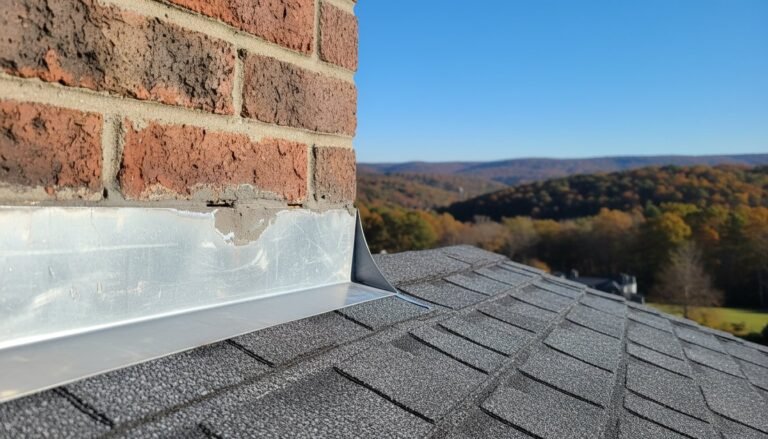
Fallen debris and flashing failure also play major roles in local emergencies. Our neighborhoods are famous for beautiful old-growth trees, but a single heavy limb can puncture a roof deck in seconds during a thunderstorm. Additionally, the areas around your chimney and vents are naturally vulnerable. If your chimney flashing has pulled away due to freeze-thaw cycles, water will find a direct path into your home. Navigating Insurance documentation is much simpler when you can clearly identify these specific causes. If you’ve noticed a new spot on your ceiling after a recent storm, it’s a good idea to reach out for a professional assessment before the next wave of Poconos weather arrives.
Professional Emergency Mitigation: Tarping and Patching
When a storm hits Monroe County, the immediate goal is stabilization. Professional emergency mitigation is the process of temporarily securing your roof to prevent further water ingress until weather conditions allow for a full restoration. It acts as a protective shield for your home’s interior, stopping the “active” part of the crisis so you can breathe easier. At Allesson Roofing, we focus on high-quality emergency roof leak repair East Stroudsburg homeowners can trust to hold up even if another Poconos wind event rolls through the next day.
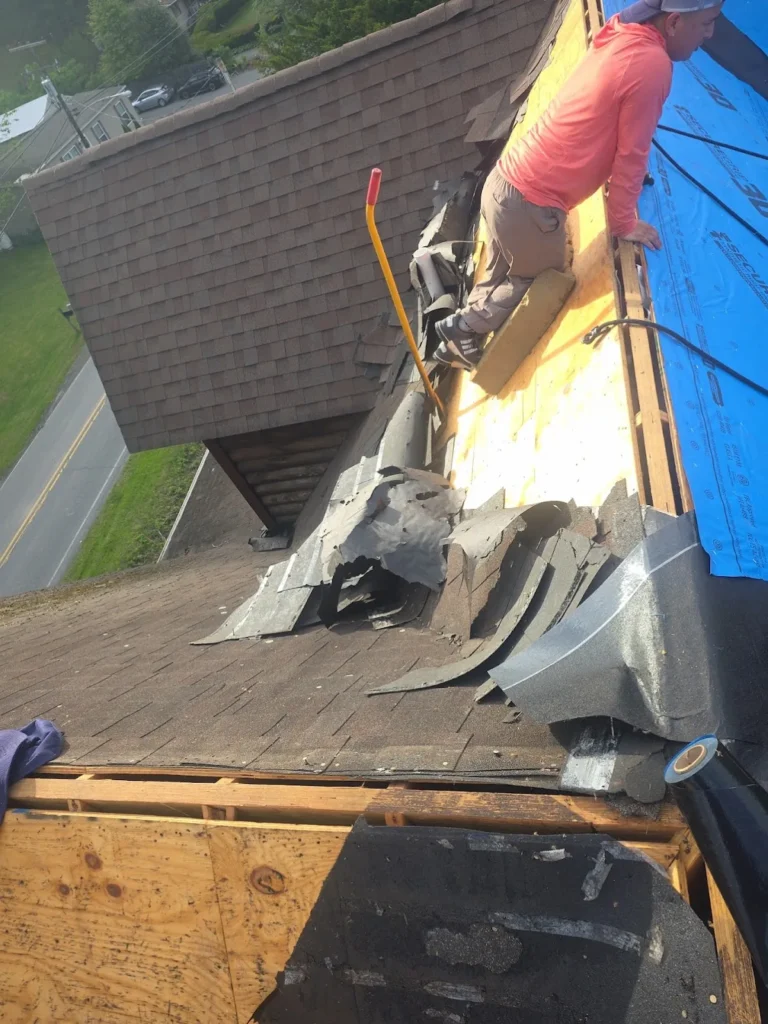
The mitigation process typically involves two main methods: tarping and patching. For large areas of damage, such as missing shingle sections or puncture wounds from fallen branches, we use heavy-duty, UV-resistant tarps. For smaller, localized issues like a cracked vent pipe boot or a small gap in the flashing, we might apply roofing cement or temporary metal flashing. These patches are designed to be watertight but remain easy to remove when it’s time for the permanent fix, ensuring we don’t cause additional damage to the surrounding roof deck during the final repair.
Why Professional Tarping is Better Than DIY
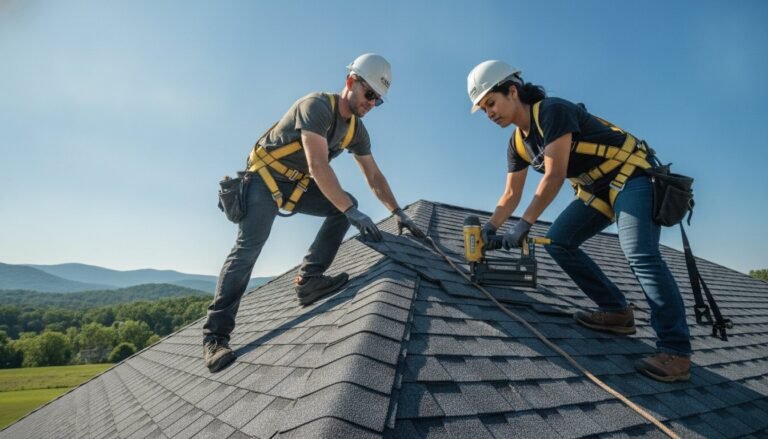
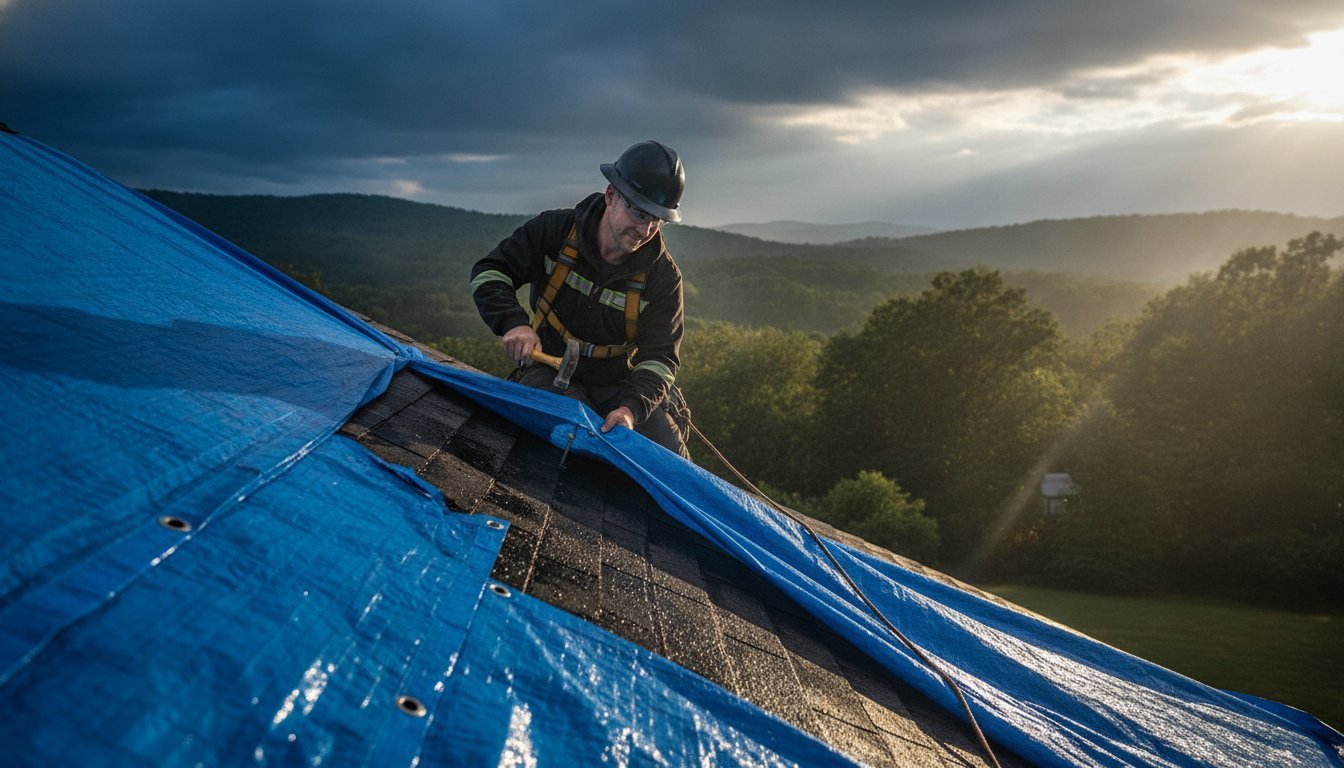
While it’s tempting to throw a blue tarp over a leak yourself, professional installation is significantly more effective. We use specialized roof anchors, harnesses, and high-reach ladders to access steep Poconos rooflines safely. A common DIY mistake is nailing a tarp directly through the remaining good shingles, which creates hundreds of new holes and future leak points. Our team uses wood “furring strips” or weighted systems to secure the tarp edges. This method ensures the tarp stays taut against mountain gusts without compromising the integrity of your existing roof materials.
Transitioning from Tarp to Permanent Repair
A tarp is a reliable bandage, but it’s never a permanent solution. Once the immediate threat is over, we conduct a thorough inspection to assess the full extent of the damage. This includes checking for saturated insulation and weakened roof decking that a simple visual check might miss. After the initial mitigation, the next step is scheduling your permanent asphalt shingle installation or repair. We work with you to move from a temporary 24/7 response to a long-term restoration that meets the updated 2021 building codes. If your home is currently exposed to the elements, you can contact our local team to secure your property today.
Navigating Insurance and Permanent Restoration
Once your home is temporarily secured, the focus shifts to the long-term health of your property. Managing an insurance claim for emergency roof leak repair East Stroudsburg can feel overwhelming, but clear communication with your provider is key. Most Pennsylvania policies distinguish between “emergency mitigation,” which covers the cost of stopping active water ingress, and “permanent restoration,” which covers the actual repair or replacement of the roof. It’s vital to remember that most policies in our state require you to report damage within 30 to 60 days to avoid a potential denial. By acting quickly, you ensure that the immediate costs of tarping and interior protection are recognized as part of your claim.
Local expertise is a significant asset during the adjustment process. Adjusters in Monroe County are familiar with the specific damage patterns caused by Poconos mountain winds and ice dams. When you work with a contractor who understands these regional nuances, they can provide the detailed documentation an adjuster needs to approve a full restoration. If the damage is widespread, such as significant shingle loss across multiple slopes, a full roof replacement may be more cost-effective than numerous patches. Your insurance payout will typically arrive in two stages: the Actual Cash Value (ACV) first, followed by the Recoverable Depreciation (RCV) once the work is finished.
Documentation Requirements for PA Homeowners
Take clear, date-stamped photos of both the interior water damage and any exterior debris or missing shingles before any cleanup begins. Keep every receipt for temporary mitigation supplies, including buckets, plastic sheeting, or cleaning materials, as these are often reimbursable. You shouldn’t sign a contract for a full roof replacement before an insurance adjuster has inspected the property and provided an official estimate. This protects you from being locked into an agreement that may not be fully covered by your policy.
Choosing a Local Authority for Restoration
After a major storm, “storm chasers” often flood the Poconos, offering quick fixes before disappearing to the next disaster area. These out-of-state companies lack a long-term commitment to our community and may not be available if a warranty issue arises later. Choosing a partner with a 10-year local track record in East Stroudsburg ensures that your roof is repaired by someone who takes pride in their craftsmanship and understands Pennsylvania’s 2021 building codes. You deserve a neighborly hand and a professional eye to guide you through the restoration process. If you’re facing an active leak right now, contact Allesson Roofing for 24/7 emergency service to secure your home.
Protect Your Home and Plan Your Permanent Restoration
Dealing with an active roof leak is a test of any homeowner’s patience, but following a clear plan makes the entire process manageable. Focus on immediate containment and interior safety as your first priorities. Once you’ve documented the damage for your insurance claim, professional mitigation provides the necessary barrier against the next wave of Poconos weather. This expert help ensures your home remains protected while you navigate the path to a permanent fix.
As a licensed and insured PA contractor with over 10 years of experience serving our community, we understand the urgency behind every call. We provide a 24/7 emergency storm response to handle emergency roof leak repair East Stroudsburg with steady, calm assurance. Don’t wait for a small drip to become a major renovation project. Get 24/7 Emergency Roof Repair in East Stroudsburg Now and let a dependable local authority secure your property. We’re ready to help you move forward with confidence and a dry, safe home.
Frequently Asked Questions
Is a roof leak considered an emergency?
A roof leak is considered an emergency if water is actively entering your living space, compromising structural elements, or threatening electrical systems. While a small drip might seem minor, continuous water ingress during a Poconos storm can lead to mold growth and wood rot within 24 to 48 hours. If the leak is large or follows a severe weather event, it requires immediate professional mitigation to prevent escalating restoration costs.
How much does an emergency roof tarping cost in East Stroudsburg?
The cost of emergency tarping varies based on the size of the damaged area, the pitch of your roof, and the complexity of the installation. Local factors like the severity of the storm and the height of your home will influence the final price for professional labor and materials. Most homeowners find that their insurance policy covers these mitigation costs as part of the initial claim because it prevents further, more expensive property damage.
Can you repair a roof while it is still raining?
Permanent repairs like shingle replacement or flashing fixes cannot be done during active rain because adhesives won’t bond and safety risks are too high. However, professional teams can perform emergency mitigation, such as tarping, during a storm to stop water ingress immediately. This temporary measure secures your home until the weather clears and a permanent emergency roof leak repair East Stroudsburg can be completed safely.
Will my homeowners insurance cover a roof leak?
Homeowners insurance typically covers roof leaks caused by sudden, accidental events like wind, hail, or fallen trees. It generally does not cover leaks resulting from lack of maintenance or general wear and tear on an old roof. You should review your policy for specific deductibles, as many Pennsylvania policies have separate, higher deductibles for wind and hail damage that are calculated as a percentage of your home’s value.
How long can a temporary tarp stay on my roof?
A professional-grade tarp is designed to protect your home for 30 to 90 days, though it is intended only as a short-term solution. Exposure to high mountain winds and UV rays will eventually degrade the material and the fasteners holding it in place. It’s best to schedule your permanent restoration as soon as your insurance adjuster provides an estimate to ensure your roof’s long-term integrity isn’t compromised.
What are the signs of a hidden roof leak in the attic?
Common signs of a hidden leak include dark water stains on rafters, damp or matted insulation, and a persistent musty odor in the attic space. You might also notice rusted nails or “shiners,” which are nails that frost over in winter and drip when they thaw. Identifying these signs early can help you address issues before they require an emergency roof leak repair East Stroudsburg response during the next heavy storm.