Tree Damage Roof Repair: The Complete Homeowner Recovery Guide
Yesterday, a storm turned your backyard oak into a major structural hazard. Hearing that heavy thud against your rafters is a terrifying experience, and looking up to see branches where your shingles used to be triggers immediate panic. You’re likely wondering if the house is still safe, who to call first, and how you’ll ever navigate the complex world of tree damage roof repair without a massive insurance headache.
It’s completely normal to feel overwhelmed when your home’s primary defense is compromised. You want your family safe and dry, but the path from a fallen limb to a restored roof often feels full of traps. This guide simplifies the recovery process by showing you the exact steps to stabilize your home, manage your insurance claim, and decide whether a repair or a full replacement is your best move. We’ll walk through the essential timeline for filing claims in Pennsylvania, including the 10-day acknowledgment rule, and explain how to coordinate between tree removal and professional roofing services for a seamless restoration.
Key Takeaways
- Learn the immediate safety protocols to follow after a strike, including how to handle utility risks and structural hazards in East Stroudsburg.
- Discover how to spot hidden structural issues using a professional checklist that identifies “bruised” shingles and the impact ripple effect.
- Understand the “25% Rule” to determine if a localized tree damage roof repair is enough or if a full replacement is necessary for your home’s safety.
- Navigate Pennsylvania insurance claims with confidence by learning the difference between “Acts of God” and negligent maintenance.
- Find out how to properly coordinate between tree removal services and roofing teams to ensure your home is dried in and protected quickly.
Phase 1: Immediate Safety and Stabilization Steps
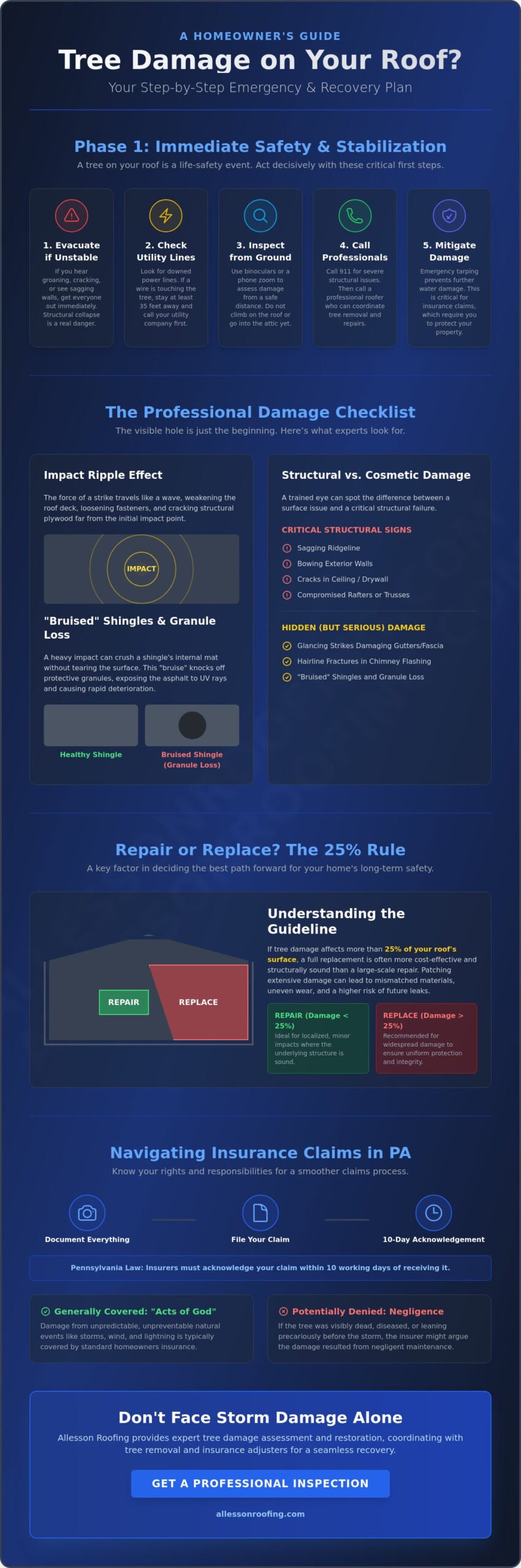
A tree falling on your home isn’t just a property issue; it’s a life-safety event. The weight of a mature oak or pine can exceed several tons, placing localized pressure on rafters that were never designed to bear such a concentrated load. If you hear groaning, popping, or cracking sounds coming from your attic or ceiling after an impact, get everyone out of the house immediately. Structural collapse can happen minutes or hours after the initial strike as the tree’s weight settles into the building’s frame.
Before you inspect the damage, look up for downed power lines. In East Stroudsburg, many of our residential streets are lined with mature trees that sit right next to utility poles. If a limb is touching a wire or if a pole is leaning, stay at least 35 feet away and call your utility provider, such as Met-Ed or PPL, immediately. Electricity can travel through the tree itself or even the ground if the area is wet. Only after the utility company clears the scene should you begin your tree damage roof repair assessment.
Always perform your initial inspection from the ground. Use binoculars or your phone’s zoom lens to look for damage from a safe distance. This keeps you out of the “strike zone,” which is the area where loose branches or shattered roofing materials might still fall. A fallen tree creates a complex set of hazards that go far beyond a simple leak. While many homeowners take pride in a Do it yourself (DIY) approach for weekend maintenance, attempting to stabilize a crushed roof deck without professional equipment is incredibly dangerous.
Evaluating Structural Integrity
Check your home’s exterior for a sagging ridgeline or walls that appear to be bowing outward. These are clear signs that the tree has compromised the structural trusses or rafters. Inside the home, look for fresh cracks in the ceiling or “popped” drywall nails. If you see these signs, the home’s skeleton has shifted. You should call 911 if the impact was severe enough to cause visible structural sagging, as the building may be unsafe to occupy. For less severe impacts where the tree is resting on the roof but the structure appears stable, your next call should be to a local roofing contractor who can coordinate with a tree removal crew.
Emergency Tarping and Mitigation
Professional tarping is a critical first step for insurance compliance in Pennsylvania. Most policies include a “mitigation clause” that requires homeowners to take reasonable steps to prevent further damage. If you leave a hole in your roof and a Poconos rainstorm soaks your insulation and drywall, the insurance company might deny the claim for that secondary water damage. We recommend moving valuables, electronics, and furniture out of the rooms directly below the impact site. This simple step prevents interior mold and wood rot while the restoration process begins. Understanding the full scope of emergency roof repair Poconos homeowners need — from temporary tarping to permit requirements — can help you act quickly and protect your claim.
Identifying Hidden Tree Damage: A Professional Checklist
When a limb hits your home, the visible hole is only half the story. Most homeowners look for obvious punctures, but the real danger often lies in the “Impact Ripple” effect. Think of a heavy branch strike like a stone dropped in a pond; the energy doesn’t stop where the wood touches the shingle. That force vibrates through the roof deck and into the rafters, potentially loosening fasteners or cracking the structural OSB and plywood layers underneath. Even if you don’t see a branch sticking through your ceiling, the structural integrity of your roof might be compromised.
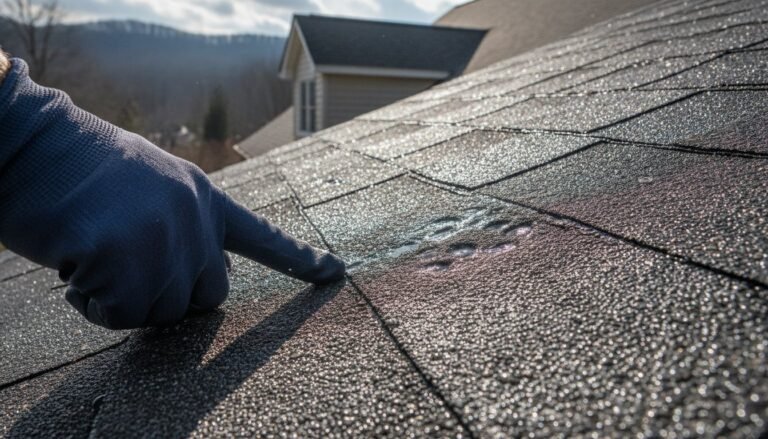
Bruised asphalt shingles are another common issue that many people miss during a tree damage roof repair assessment. A heavy impact can crush the shingle’s internal mat without actually tearing the surface. These “bruises” look like dark spots or indentations where the protective granules have been knocked away. Without those granules, the underlying asphalt is exposed to the sun’s UV rays, leading to rapid deterioration and leaks within just a few months. Glancing strikes are just as problematic. A limb that slides down the roof can rip away gutters or pull the fascia board away from the rafters, creating gaps where Poconos pests or driving rain can enter your attic.
Structural vs. Cosmetic Damage
Determining the difference between a surface scratch and a structural failure requires a trained eye. We often find that granule loss is dismissed as cosmetic, but it’s actually the first stage of a total roof failure. We also look for hairline fractures in chimney flashing or masonry, which can be shaken loose by the vibration of a tree strike. Because these micro-cracks are nearly impossible to see from the ground, a professional roof inspection is non-negotiable for long-term peace of mind.
The Poconos Factor: Heavy Timber Risks
Our region is home to dense hardwoods like Oak and Maple, along with towering White Pines. These species have immense weight, and even a medium-sized limb can carry enough force to distort the roof plane. If the tree isn’t removed carefully, the weight can shift, causing secondary damage to your siding or shingles during the restoration process. These distorted roof planes also create subtle “dips” where water can pool. In the winter, these uneven surfaces become prime real estate for ice dams. The US Forest Service provides excellent resources on identifying Hazard Trees before they become a threat to your home. If you’ve already had a strike, our team at Allesson Roofing can help with emergency storm damage restoration to ensure your home remains a dry, safe haven for your family.
Tree Damage: Should You Repair or Replace the Roof?
Deciding between a targeted fix and a total overhaul is the most critical choice you’ll make after a strike. It’s not always about the size of the hole in your ceiling. Often, the age and condition of your existing materials dictate the best path forward. If your asphalt shingles are approaching the 15 or 20-year mark, they’ve likely become brittle. Attempting a tree damage roof repair on an old roof can actually cause more harm than good. When we lift aged shingles to install new flashing or underlayment, the surrounding material often cracks, leading to a chain reaction of leaks that a simple patch can’t stop.
We generally follow the “25% Rule” used by many industry professionals and insurance adjusters. If the impact has compromised more than 25% of a single roof facet, a full replacement is usually the more logical, long-term solution. Beyond just the surface area, we have to look at the “bones” of the house. If the rafters or trusses are cracked, the structural integrity is gone. A patch won’t fix a sagging frame. Proactive homeowners often focus on Managing Tree Hazards and Risk to avoid this dilemma, but once the wood has met the shingles, the focus must shift to structural stability.
The Case for Localized Repair
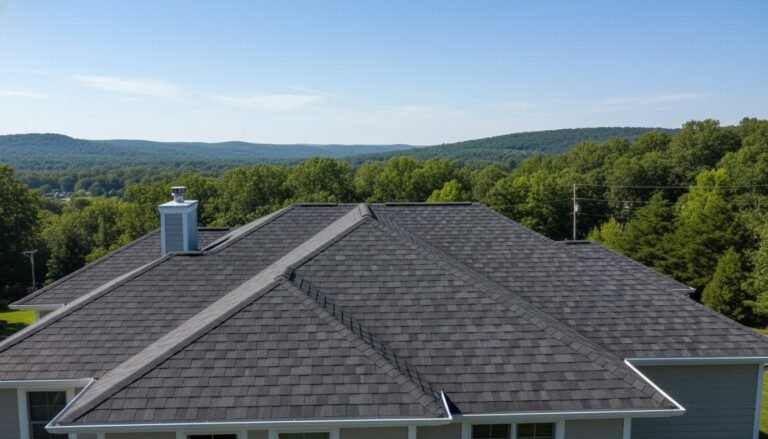
Localized repairs are excellent for minor limb strikes on relatively new roofs. If your shingles are less than ten years old, they’re usually flexible enough to handle the manipulation required for a seamless fix. We focus on matching the specific profile of your architectural shingles to ensure the repair doesn’t look like an afterthought. This is a cost-effective way to restore your home’s envelope without the timeline of a full project, provided the impact didn’t shake the underlying deck or chimney flashing.
When a Full Replacement is Mandatory
There are times when a patch simply isn’t an option. If a tree has caused multiple impact points across different sides of your home, the labor to weave in dozens of small patches often nears the cost of a full replacement. Pennsylvania also has specific “matching” standards. If we can’t find a shingle that provides a reasonable color match to your existing roof, insurance may cover a full replacement to maintain your home’s appearance and value. This is also a perfect opportunity to upgrade to impact-resistant shingles. These modern materials are designed to withstand the heavy timber and high winds common in our region, providing better protection against the next big storm.
Navigating Insurance Claims for Tree Damage in PA
Dealing with insurance adjusters can feel like learning a second language while your living room is open to the sky. In Pennsylvania, most tree-related incidents are classified as “Acts of God.” This means the damage was caused by an unpredictable natural event, like a Poconos windstorm or a heavy ice load. However, if an insurer can prove “negligent maintenance,” such as leaving a clearly dead tree standing for years, they might deny the claim. This distinction is why professional documentation is your best defense during a tree damage roof repair claim. You need clear evidence that the event was sudden and accidental.
What happens if your neighbor’s tree falls on your roof? This is one of the most common questions we hear from homeowners in East Stroudsburg and the surrounding areas. Generally, your own homeowners insurance will cover the damage under your policy. Unless you have written proof, such as a certified letter, that you warned the neighbor about their hazardous tree before the storm, you’ll likely be responsible for your own deductible. It’s a frustrating reality, but focusing on a swift restoration is usually more productive than a neighborhood dispute. We recommend capturing high-quality photos and videos of the tree, the roof, and any interior damage before the removal crew begins their work.
The Claims Process Step-by-Step
Pennsylvania law protects homeowners with specific timelines that ensure your claim doesn’t sit on a desk for months. Once you file your claim, insurers are required to acknowledge it within 10 working days. They must complete their investigation within 30 days and provide an acceptance or denial within 15 days of receiving your proof of loss. We recommend having your roofer present when the adjuster arrives. A contractor who understands the insurance supplement process can point out hidden structural issues, like the “impact ripples” mentioned in previous sections, that an adjuster might overlook. Never feel pressured to accept the first check. Often, the initial estimate doesn’t cover the full scope of modern building codes or material matching requirements. Understanding exactly what to do after roof damage — including Pennsylvania’s 2026 claim deadlines and the legal role of local contractors — can help you avoid costly mistakes during this critical window.
Avoiding Common Claim Pitfalls
Time is your enemy after a storm. Most policies require you to report damage within 30 to 60 days of the event. If you wait too long, the insurer may argue that “previous wear and tear” caused the leak rather than the tree strike. You also need to understand how your specific policy handles deductibles and depreciation. If you have an “Actual Cash Value” policy, the insurer will subtract the age and condition of your roof from the final payout. This can lead to significant out-of-pocket costs if your roof was already near the end of its lifespan. If you’re feeling overwhelmed by the paperwork or the technical requirements of the adjuster, our team can guide you through the emergency storm damage restoration process to ensure nothing is missed.
Expert Tree Damage Restoration with Allesson Roofing
Allesson Roofing stands as a dependable local authority for families facing the aftermath of a storm. We’ve spent years rooting our business in the community, and we take quiet pride in being the steady hand homeowners need during a crisis. Our team understands that a tree strike is more than a maintenance issue; it’s a disruption to your family’s safety. We specialize in tree damage roof repair by combining technical expertise with the hospitality of a helpful neighbor. Because we’re family-owned, we treat every East Stroudsburg roof as if it were protecting our own relatives.
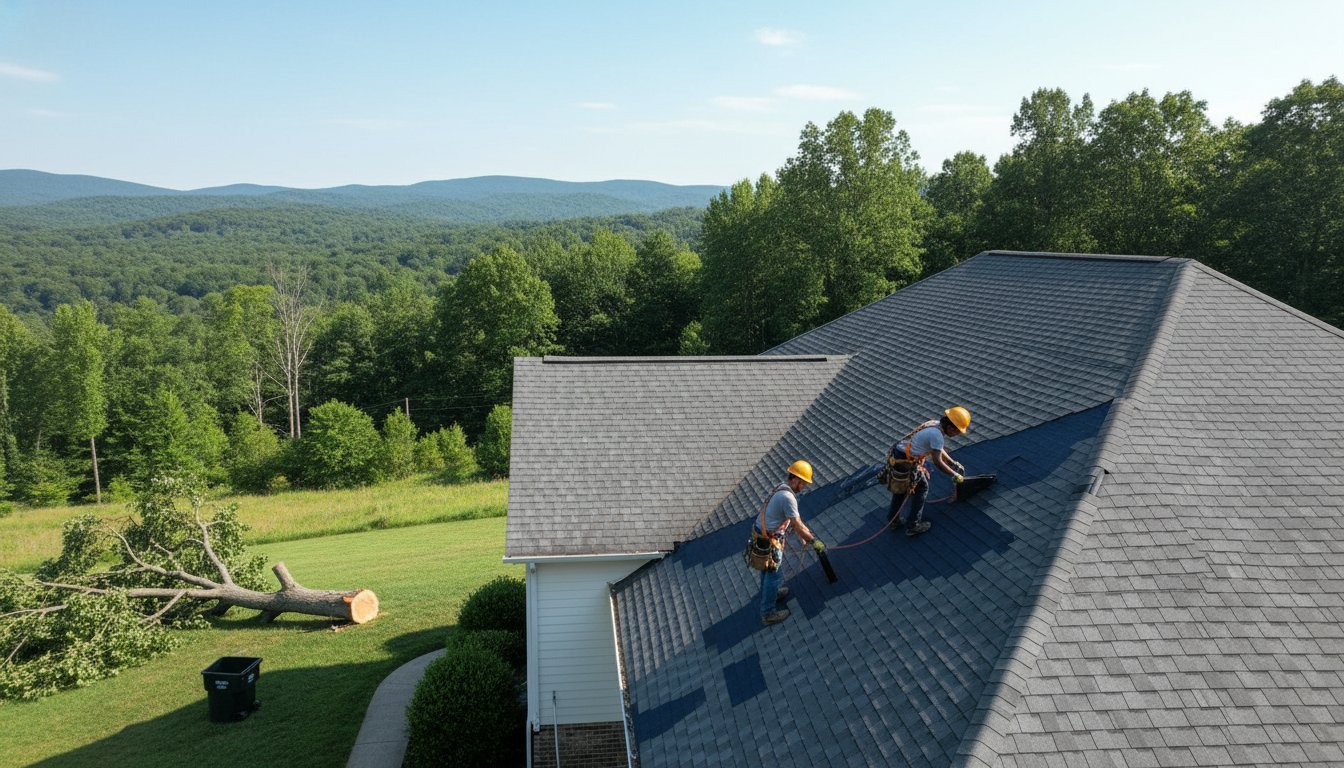
One of the most challenging aspects of recovery is the handoff between different service providers. You shouldn’t have to manage the complicated logistics of when the tree comes down and when the roof gets covered. We provide emergency roof repair Poconos homeowners can count on, focusing on rapid stabilization. By coordinating closely with tree removal teams, we ensure your building envelope is secured the moment the wood is cleared. This seamless handoff prevents the secondary water damage that often complicates insurance claims and leads to interior mold or wood rot.
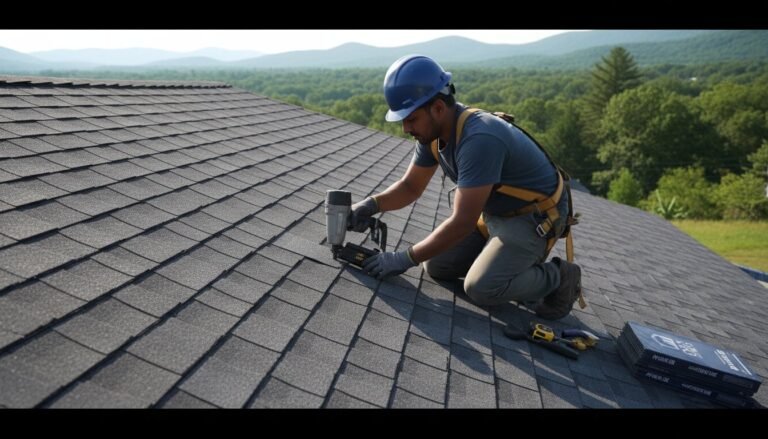
Our mastery of asphalt shingle installation is particularly relevant for homes across our region. We don’t just patch holes. We restore the structural and aesthetic integrity of your entire roofing system. Whether you need a localized repair for a small limb strike or a full residential roofing service after a major collapse, we use our deep knowledge of Pennsylvania weather patterns to select materials that stand up to our region’s heavy snow and high winds. We focus on the physical evidence of our work, ensuring every shingle is laid with precision and care.
Our “Safety-First” Restoration Process
We never rush into the shingling phase. Our process begins with a full structural analysis of your rafters and decking to ensure the “impact ripples” we discussed earlier haven’t compromised the home’s skeleton. We check every fastener and joint. Once the structure is cleared, we use premium materials to build a weather-tight seal that exceeds standard requirements. You can expect transparent communication from the first tarp to the final nail. We keep you informed about every step, ensuring you feel confident in the longevity of your repair and the safety of your family.
Schedule Your Inspection Today
If you’re a resident of Stroudsburg or the Lehigh Valley, getting professional eyes on your roof is the first step toward peace of mind. We offer easy contact options to get our team to your site quickly. While emergency stabilization is our priority after a storm, we also provide free estimates for non-emergency tree damage assessments. This allows you to understand your repair vs. replacement needs without any initial financial commitment. Don’t let a minor strike turn into a major leak over time. Reach out today and let a local authority handle your restoration with the steady, calm assurance your home deserves.
Restore Your Home’s Safety and Value
You’ve learned how to prioritize safety immediately after a strike and why identifying hidden structural ripples is vital for your home’s long-term health. Deciding between a localized fix or a full replacement depends on your roof’s age and the extent of the impact; it’s a choice that becomes much clearer with a professional inspection. Navigating the insurance process in Pennsylvania is also much simpler when you have documented evidence and a contractor who understands the specific local regulations.
When you’re ready to move from crisis to recovery, remember that a successful tree damage roof repair requires a partner who understands both the technical challenges and the local landscape. Allesson Roofing is locally owned and operated in East Stroudsburg. We are specialists in Poconos storm damage restoration with extensive experience in both residential and commercial roofing systems. Get Expert Tree Damage Help from Allesson Roofing Now. Don’t let a fallen limb weigh down your peace of mind. Take the first step toward a dry, secure home today.
Frequently Asked Questions
Does homeowners insurance cover a tree falling on my roof?
Yes, homeowners insurance in Pennsylvania generally covers damage from fallen trees if a storm or wind caused the impact. This coverage typically includes the cost of the tree removal if it landed on an insured structure like your home or garage. However, if the tree was dead or diseased and you didn’t maintain it, your carrier might deny the claim. Checking your specific policy for “Act of God” clauses is always a smart first step.
Who is responsible if my neighbor’s tree falls on my house in Pennsylvania?
In Pennsylvania, you are typically responsible for damage to your own property even if the tree belonged to your neighbor. You should file the claim through your own insurance company. The only exception is if you can prove the neighbor was negligent, such as having a certified letter showing you warned them about a hazardous limb. Otherwise, your policy covers the tree damage roof repair while the neighbor’s policy covers their own yard cleanup.
How much does it cost to repair a roof after tree damage?
Industry data suggests that repair costs for tree or impact damage typically range from $900 to over $6,500. This wide range depends on the size of the tree, the extent of debris removal, and whether structural remediation is needed. Minor fixes for small limb strikes might fall between $350 and $1,900. For a complete roof replacement in Northeastern Pennsylvania, homeowners often see averages around $15,000, though costs vary based on material and roof size.
Can I remove the tree from my roof myself to save money?
You should never attempt to remove a tree from your roof yourself. The weight of a fallen tree creates immense pressure on your home’s frame, and moving even a small limb can cause a sudden structural shift or collapse. There’s also a high risk of encountering downed power lines or causing secondary damage to your shingles. Professional crews use specialized equipment to lift the tree safely without further compromising the building’s integrity.
How long do I have to file a roof damage claim after a storm?
Most insurance policies require you to report damage within 30 to 60 days of the storm event. In Pennsylvania, insurers must acknowledge your claim within 10 working days and complete their investigation within 30 days. Waiting too long to start your tree damage roof repair can lead to claim denials, especially if secondary water damage or mold begins to develop in your attic because the hole wasn’t addressed quickly.
What is the difference between emergency tarping and permanent repair?
Emergency tarping is a temporary mitigation step designed to stop active leaks and prevent further water damage. It usually costs between $800 and $1,200 in our region. Permanent repair involves actually restoring the shingles, underlayment, and any damaged roof decking to their original condition. Tarping is often required by insurance companies as part of your “duty to mitigate,” but it doesn’t count as a final fix for the damage.
Will my insurance rates go up if a tree falls on my roof?
Filing a single claim for a storm-related event doesn’t always lead to an immediate rate hike, but it can impact your future options. Pennsylvania homeowners saw average premium increases of 40-45% between 2021 and 2024 across the board. Since nearly all homeowners claims are for property damage, insurers look at your total claim history. If the repair cost is only slightly higher than your deductible, paying out-of-pocket might be more cost-effective.
How do I know if the tree damage caused structural issues?
Look for interior signs like fresh ceiling cracks, “popped” drywall nails, or doors that suddenly stick in their frames. On the exterior, a sagging ridgeline or bowing walls are clear indicators of structural distress. If you see these signs, the “impact ripple” has traveled through the roof deck and into the home’s skeleton. A professional inspection is the only way to confirm if the rafters or trusses have been fractured by the tree’s weight.