What to Do After Roof Damage: A Step-by-Step Recovery Guide for 2026
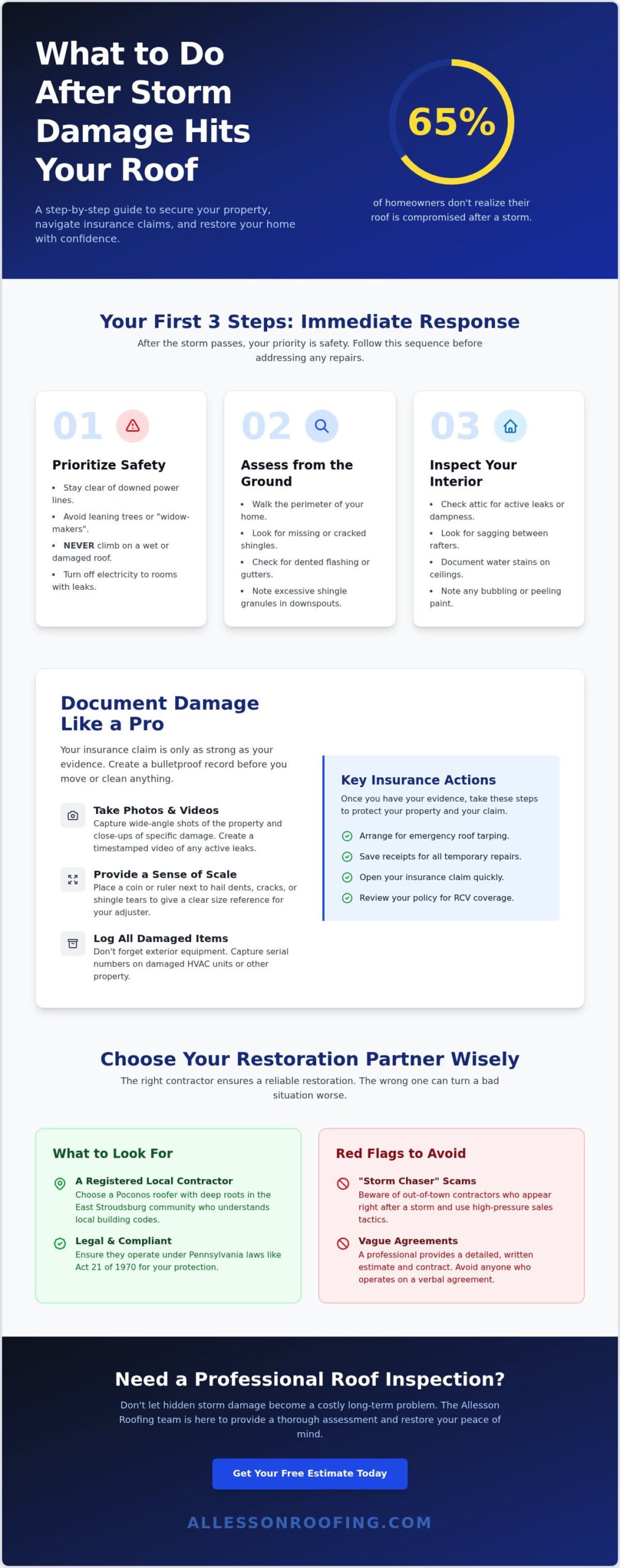
Did you know that 65% of homeowners with storm damage don’t realize their roof is compromised until weeks or months after the clouds clear? It is a stressful realization, especially when you are already worried about hidden water leaks or the fear of an insurance claim denial. Knowing exactly what to do after roof damage is the difference between a smooth recovery and a costly, long-term headache. You want your home back to normal, but the thought of navigating paperwork while avoiding “storm chaser” scams feels overwhelming.
We understand that your home is your most significant investment; you need a steady hand to help you protect it. Follow this expert-led sequence to secure your property, document damage for your insurance provider, and restore your roof without the stress. We will walk through Pennsylvania’s strict 2026 claim deadlines, explain the legal role of local contractors under Act 21 of 1970, and show you how to ensure your home stays watertight for years to come. This methodical approach ensures you stay informed and in control of your home’s recovery from start to finish.
Key Takeaways
- Prioritize safety by staying clear of downed power lines and leaning trees while performing a simple ground-level damage assessment.
- Learn exactly what to do after roof damage to secure your claim, including how to document interior leaks and exterior shingle loss effectively.
- Navigate the insurance process with confidence by opening your claim quickly and reviewing your policy for Replacement Cost Value coverage.
- Ensure a reliable restoration by choosing a registered Poconos contractor with deep roots in the East Stroudsburg community.
Immediate Response: Safety and Initial Roof Damage Assessment
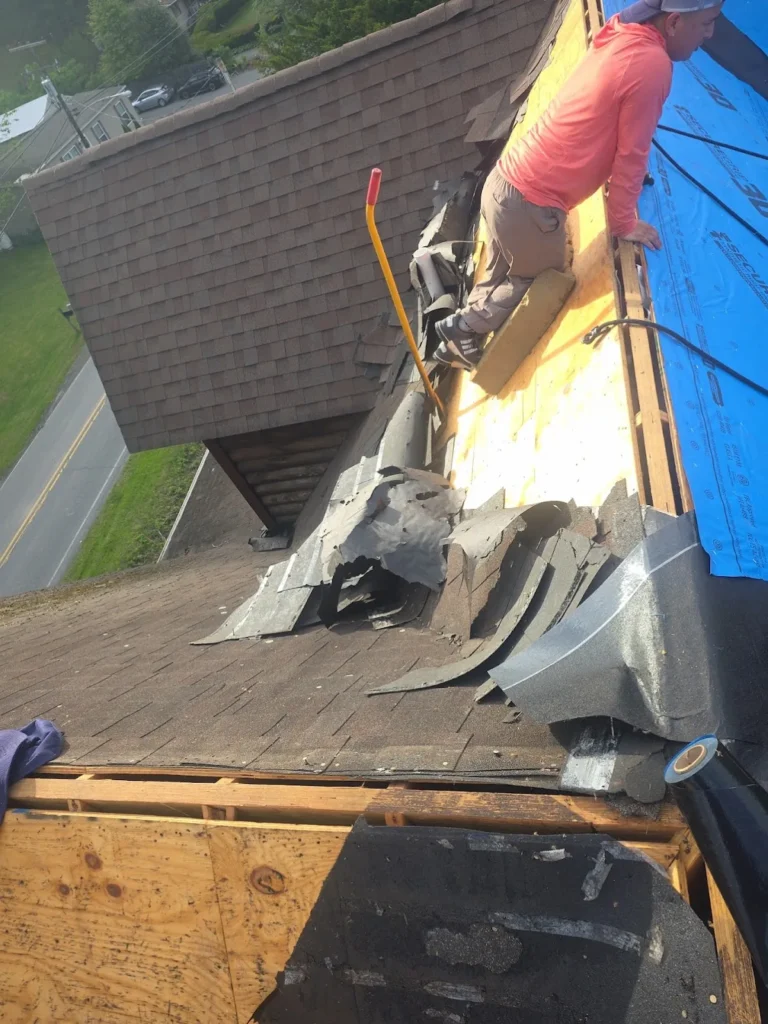
The moments following a severe storm are often chaotic, but your first priority must be the environment around your home rather than the roof itself. Before you step outside, ensure you are not walking into a hazard. Stay far away from any downed power lines or leaning trees that could shift without warning. Once you’ve confirmed the area is stable, perform an Initial Roof Damage Assessment from the safety of the ground using a pair of binoculars if you have them.
Roof mitigation is the immediate action taken to prevent further property loss, such as stopping an active leak or covering a hole. To start this process, conduct a ground-level perimeter walk to spot missing asphalt shingles or dented chimney flashing. During daylight hours, head into your attic to check for active leaks or visible structural sagging between the rafters. Pay close attention to high-risk areas like roof valleys where water naturally accumulates, as these are common failure points during heavy Poconos rain.
Safety Protocols for Poconos Homeowners
The terrain in East Stroudsburg often means dealing with tall timber and steep slopes, which adds specific risks after a storm. Follow these rules to stay safe:
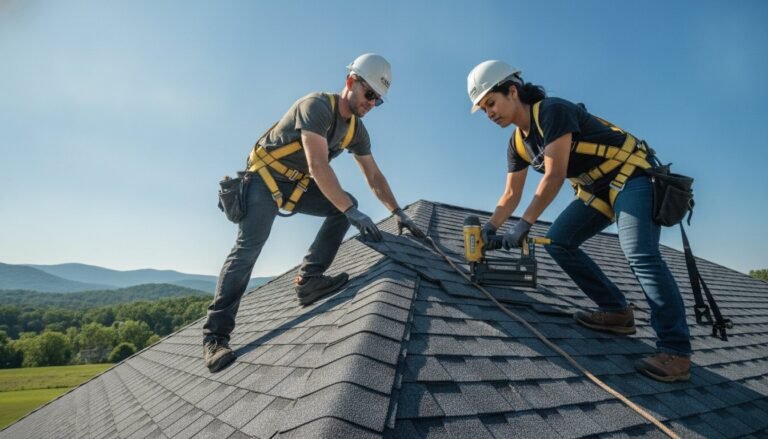
- Avoid climbing: Never get on a wet or damaged roof yourself. Leave high-altitude checks to professionals who have the proper safety harnesses.
- Beware of “widow-makers”: These are loose, heavy branches caught in the tree canopy above your roofline that could fall at any moment.
- Kill the power: Turn off the electricity to any rooms where water is actively dripping from the ceiling or running down the walls.
Assessing Interior and Exterior Damage Signs
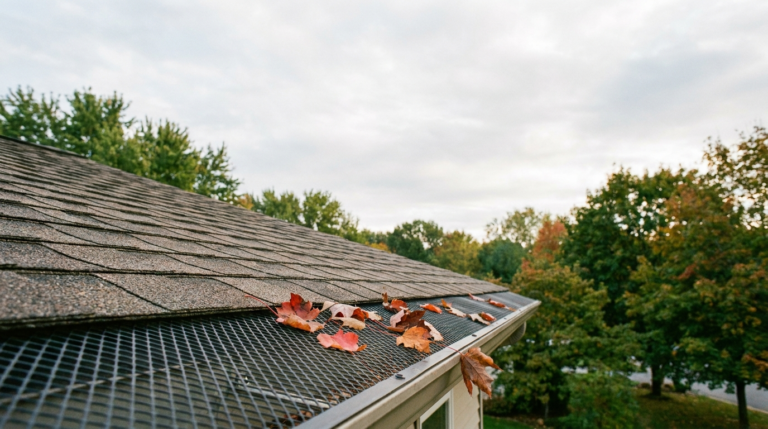
Understanding what to do after roof damage involves identifying subtle signs that indicate long-term trouble. On the exterior, look for “bruising,” which are dark, circular spots on asphalt shingles that signal a heavy hail impact. You should also check your downspout openings for excessive granule loss. If your gutters are filled with sandy debris, your shingles have lost their protective layer and are prone to leaking. For a deeper understanding of what these circular impact marks mean for your shingles’ long-term integrity, our guide on hail damage roof repair explains how to distinguish cosmetic blemishes from structural failures. Inside the home, document any water stains on ceilings or bubbling paint on the upper floors. These interior signs are critical evidence for your recovery process. You can find more tips on maintaining your home’s exterior on our blog.
Documenting Damage and Preventing Further Loss
Once you’ve safely identified the issues, the next step in knowing what to do after roof damage is creating a bulletproof record for your insurance adjuster. You shouldn’t move a single branch or piece of debris until you’ve captured the scene exactly as it is. Why is this so important? Insurance companies rely on clear evidence to determine the extent of your loss; comprehensive visuals prevent disputes during the claim process. Start by taking wide-angle photos of the entire property to show the context of the storm’s impact, then move in for close-up shots of specific damage points like cracked asphalt shingles or dented flashing.
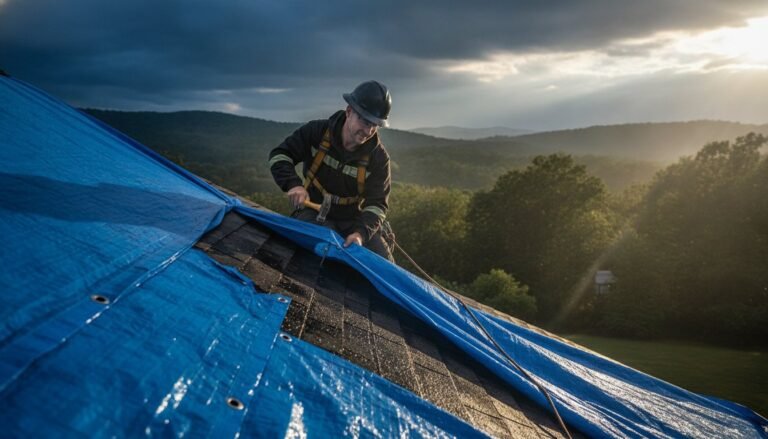
Don’t forget the interior of your home. Create a timestamped video log of any active leaks, showing water entering the attic or living spaces and any resulting puddles or stains. This video provides an undeniable timeline that links the damage directly to the specific weather event. While you’re gathering evidence, you also have a responsibility to prevent further damage to your property. Arrange for emergency roof tarping as soon as possible to keep the interior dry. Did you buy buckets or plastic sheeting at a local shop in East Stroudsburg? Save every single receipt. Most insurance policies reimburse you for the cost of these temporary measures, so keep them organized and ready for your claim.
How to Document Storm Damage Like a Pro
Precision matters when you are dealing with insurance paperwork. Use these professional tips to make your documentation stand out:
- Use a scale: Place a coin or a ruler next to hail dents or shingle tears in your photos to provide a clear sense of size.
- Check exterior units: Capture the serial numbers on any damaged exterior equipment like HVAC units, as these are often overlooked during a quick walk-around.
- Go digital: Store all photos and videos in a dedicated cloud folder. This ensures you can’t lose the files and makes sharing them with your adjuster incredibly simple.
Temporary Mitigation: Tarping and Water Management
Focus your tarping efforts on the ridges and valleys of the roof. These are the most vulnerable areas where water is likely to accumulate and penetrate the structure. You should also move heirlooms or electronics from the top floor to lower levels to protect them from potential ceiling failures. If you’re feeling overwhelmed by the process, you can find more information on emergency roof repair in the Poconos. Choosing a Local Poconos Roofing Contractor who understands our local climate is the best way to ensure your home is restored correctly. If you need assistance securing your property or documenting the damage, feel free to reach out to our team for a steady hand during the recovery.
Navigating the Insurance Claim Process in Pennsylvania
Once you’ve documented the storm’s impact, contact your insurance provider immediately to open a claim. You will receive a unique claim number that serves as your reference for all future communication. In Pennsylvania, insurance companies must adhere to strict timelines as of 2026. They are required to acknowledge your claim within 10 working days and complete an investigation within 30 days. Understanding these deadlines is a vital part of knowing what to do after roof damage to ensure your case stays on track and doesn’t get buried in paperwork.
You should also be aware that many policies require you to file a formal “proof of loss” form within 60 days of the damage. This sworn statement details the extent of the property loss and its estimated value. If you miss these windows, you risk a claim denial. Keeping a log of every phone call and email with your insurer will help you hold them accountable to these state-mandated schedules.
Understanding Your Policy: ACV vs. RCV
Does your policy cover the full cost of restoration? It’s vital to determine if you have Actual Cash Value (ACV) or Replacement Cost Value (RCV) coverage. An ACV policy only pays the depreciated value of your roof based on its age. In contrast, an RCV policy covers the full cost of a new roof at today’s market prices. For most Poconos homeowners with asphalt shingles, having RCV coverage is the difference between a small out-of-pocket deductible and a massive unexpected bill. Review your declarations page now to see which coverage you have.
The Role of Your Contractor in the Claim
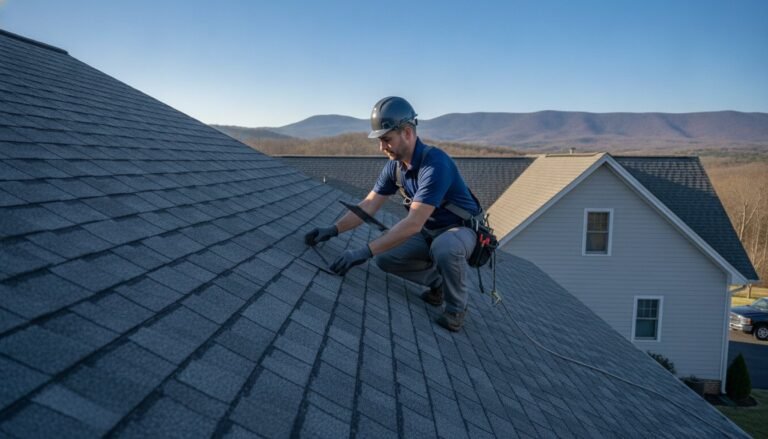
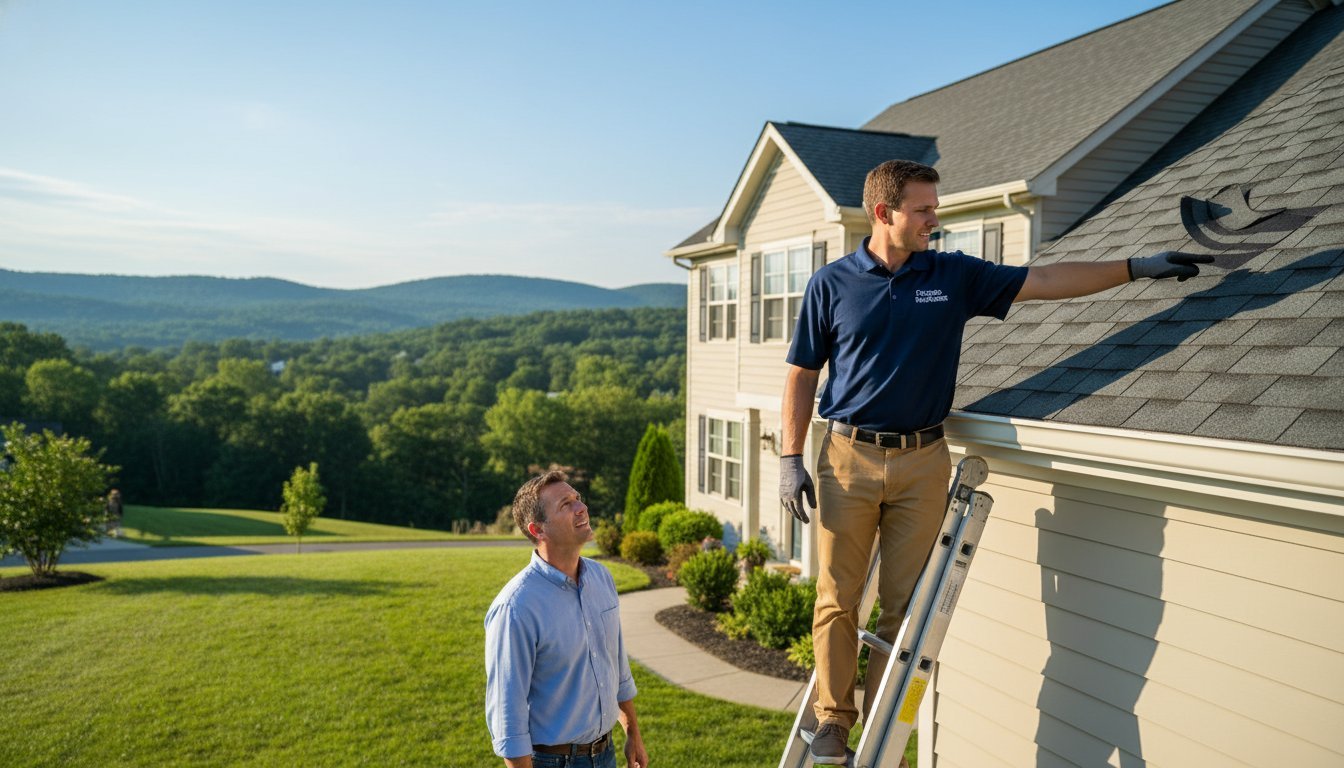
One of the biggest mistakes homeowners make is meeting the insurance adjuster alone. Schedule a professional roof inspection to get a detailed estimate before the adjuster ever sets foot on your property. We recommend having your contractor present during the adjuster’s visit to point out hidden damage, such as compromised chimney flashing or structural sagging, that might be missed from a ground-level view. Professional roofers use Xactimate and precise measurement data to ensure pricing is accurate; you can learn more about 1ESX Roof & Wall Reports to see how digital reporting supports transparent and fair claim settlements.
- Factual Reporting: Under Pennsylvania’s Act 21 of 1970, your contractor cannot legally negotiate the claim for you, but they can provide the factual repair needs to the insurer.
- AOB Warning: Avoid signing any “Assignment of Benefits” (AOB) forms. These forms sign over your claim rights to a third party and can lead to legal complications.
- Local Expertise: A local contractor understands the specific weather patterns of the Poconos and can better explain storm-related wear to an out-of-area adjuster.
If you are ready to get a professional eyes-on assessment before your adjuster arrives, contact us today to schedule your inspection and ensure your home is properly evaluated. For a complete walkthrough of the paperwork and deadlines involved in filing a roof claim for wind damage in Pennsylvania, our dedicated 2026 guide covers every step from documentation to settlement.
Choosing a Local Poconos Roofing Contractor for Restoration
Selecting the right team to repair your home is the final, most critical step in the recovery process. When you’re deciding what to do after roof damage, you want a partner who will be here long after the storm clouds have moved on. Prioritize companies with deep roots in East Stroudsburg rather than out-of-state “storm chasers” who follow weather patterns from state to state. In Pennsylvania, any contractor performing more than $5,000 of work per year must register with the Attorney General’s Bureau of Consumer Protection. Always verify that your contractor holds a current Home Improvement Contractor (HIC) license before you sign any agreements.
If your home was hit by falling limbs or a downed trunk, ensure your team has specific experience in tree damage roof repair. This type of restoration requires more than just new shingles; it often involves a careful inspection of the structural decking and rafters to ensure the home is safe. Finally, review your warranty options for both materials and labor. A dependable local authority will offer clear, written protection for your new asphalt shingles, ensuring your investment is secure for years to come.
Avoiding “Storm Chasers” and Scams
Storm chasers often appear within hours of a weather event, using high-pressure tactics to get you to sign a contract quickly. Be extremely wary of anyone who demands full payment upfront or offers to “waive” your insurance deductible. This practice is often a red flag for insurance fraud and can leave you legally vulnerable. Check local reviews on Google and the BBB specifically for the East Stroudsburg area. A reliable business will have a permanent physical office nearby, not just a temporary hotel room or a truck with out-of-state plates.
The Restoration Process: From Estimate to Completion
Once you’ve selected a trusted partner, review the detailed scope of work together. This document should outline every phase of the project, including the tear-off of old materials, the installation of new chimney flashing, and improvements to attic ventilation. Understanding the timeline for material delivery and the actual installation day helps you prepare your household for the work ahead. For long-term protection against future weather events, consider expert asphalt shingle installation. This methodical approach ensures your home is restored correctly, making it the final successful step in knowing what to do after roof damage.
Secure Your Home and Start Your Recovery Today
Recovering from a major storm is a process that requires patience and the right information. By prioritizing your safety, documenting every leak, and understanding the specific insurance timelines in Pennsylvania, you’ve already taken the most important steps. You now know exactly what to do after roof damage to protect your family and your investment. The final piece of the puzzle is partnering with a dependable local authority who understands the unique environment of the Poconos.
We take quiet pride in our craftsmanship and our long-standing commitment to the East Stroudsburg community. As specialists in asphalt shingle insurance restoration, we provide the steady hand you need to navigate your claim and restore your home’s integrity. Get a Professional Storm Damage Inspection from Allesson Roofing to ensure your property is evaluated with expert care. Our 24/7 emergency response is available for Poconos homeowners who need immediate assistance when it matters most. You don’t have to face the aftermath of a storm alone; let’s get your home back to its best together.
Frequently Asked Questions
How long do I have to file a roof insurance claim in Pennsylvania?
You should check your specific policy, but many Pennsylvania insurance contracts require you to file a claim within one year from the date of the damage. It’s also common for policies to require a formal proof of loss statement within 60 days. Acting quickly ensures you stay within the state’s legal windows and helps you avoid the risk of a claim denial based on missed deadlines.
Can I repair my roof myself after storm damage?
You can certainly lay a tarp or clear small debris to prevent immediate leaks, but you should avoid performing permanent repairs yourself. Major restoration work on asphalt shingles or flat roofs requires professional tools and safety gear. Additionally, insurance adjusters often require documentation from a registered contractor to verify that the repairs meet local building codes and policy standards for reimbursement.
What happens if my insurance claim is denied?
If your claim is denied, don’t lose hope. You can request a formal letter of denial and ask for a second inspection if you believe the adjuster missed something. It’s often helpful to have a local contractor present during this re-inspection to provide factual evidence of the damage. You also have the legal right to hire a licensed public adjuster to negotiate on your behalf under Pennsylvania law.
Will my insurance premiums go up if I file a roof damage claim?
Filing a single claim for storm damage typically won’t cause your individual insurance premiums to spike. Insurance companies usually view weather events as Acts of Nature that are outside of your control. However, rates may rise for an entire zip code if the area experiences frequent severe weather. Understanding what to do after roof damage means recognizing that your premium is an investment in this very protection.
How much does emergency roof tarping cost?
The price for emergency tarping depends on the size of the hole and how difficult it is to access the roof. Since this is a temporary measure to prevent water from destroying your ceilings and insulation, most insurance providers will reimburse you for the expense. You should save all receipts from the contractor who performs the service to include them in your final insurance settlement.
What is the difference between wind damage and hail damage on shingles?
Wind damage usually presents as shingles that are missing, torn, or have a visible horizontal crease where they flipped up. Hail damage is different; it looks like dark, circular pits or bruises where the impact knocked off the protective granules. While wind damage is often obvious from the ground, hail damage can be subtle and requires a close inspection to confirm the shingle’s integrity is compromised. If your roof has suffered hail-related loss, our comprehensive resource on hail damage roof repair will help you identify hidden structural failures and navigate Pennsylvania’s 2026 insurance landscape. If your roof has suffered wind-related loss, our step-by-step resource on filing a roof claim for wind damage will help you meet Pennsylvania’s 2026 reporting deadlines and maximize your settlement.