The 2026 Cost to Install Vinyl Siding in the Poconos and Lehigh Valley
What if the lowest quote you received for your home renovation is actually the most expensive mistake you’ll make this year? It’s a common frustration for homeowners across the Poconos and Lehigh Valley who find themselves stuck between conflicting price estimates and the fear of hidden fees. You might worry about whether your investment can withstand our freezing Pennsylvania winters or if the cost to install vinyl siding will skyrocket once the old layers are removed. We understand that you want a beautiful home without the stress of unexpected expenses or materials that crack under pressure.
This guide provides a transparent look at what goes into a professional siding project in 2026. You’ll learn how the recent adoption of the 2021 International Codes across Pennsylvania impacts your project requirements and budget. We’ll also break down the differences between standard and premium vinyl grades, explain local labor considerations, and show you how to find a dependable contractor who knows our local climate. By the end of this article, you’ll have a realistic framework for your 2026 home improvement goals and the confidence to start your project with a steady hand.
Key Takeaways
- Review how 2026 market trends and labor availability in East Stroudsburg and the Lehigh Valley are shaping current project estimates.
- Identify the specific architectural factors and insulation choices that determine the final cost to install vinyl siding on your home.
- Prepare for the reality of removal fees and wall inspections to ensure your project stays within budget without hidden surprises.
- Discover how proper installation techniques protect your investment against Pennsylvania’s extreme temperature swings and prevent moisture damage.
2026 Vinyl Siding Installation Costs in the Poconos and Lehigh Valley
The market for home exteriors in East Stroudsburg and the Lehigh Valley has seen a shift toward stabilization as we move through 2026. While the rapid price hikes of previous years have leveled off, the overall cost to install vinyl siding remains closely tied to local labor availability and the updated Pennsylvania building codes. When you start gathering quotes, you’ll likely hear contractors mention “squares.” In the siding world, a square is simply a 100-square-foot area. Understanding this terminology helps you compare estimates more accurately, especially when looking at different Vinyl siding material grades.
Price brackets for these materials generally fall into three categories. Basic vinyl offers a cost-effective way to refresh a home’s look, while mid-grade options provide better impact resistance. Premium insulated vinyl is often the preferred choice for our region. It includes a contoured foam backing that helps manage energy loss during our harsh Poconos winters, which is a significant factor for homeowners looking to improve their home’s efficiency.
Average Price Per Square Foot in Pennsylvania
Local factors in the Lehigh Valley often lead to variations in pricing compared to national averages. This is largely due to the specific climate demands and the complexity of older homes in areas like Bethlehem or Allentown. Larger projects often benefit from economies of scale, as fixed costs like permitting and equipment mobilization are spread across more square footage. For a standard 2,000-square-foot home in 2026, the final investment is shaped by the selection of premium materials and the labor necessary to ensure the structure meets updated state energy performance standards.
Material vs. Labor: Where Your Money Goes
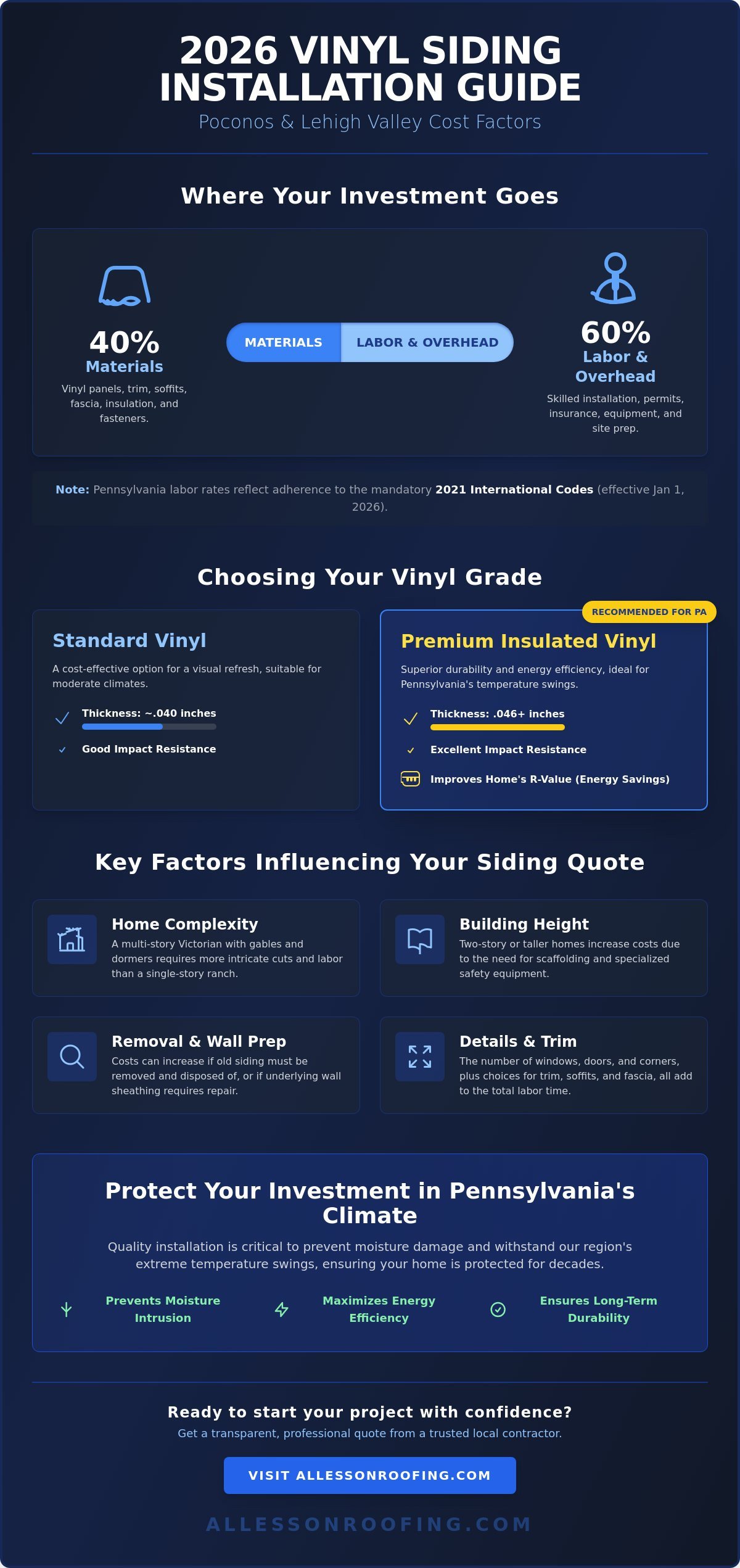
It helps to look at your siding quote as a split between physical products and professional expertise. Typically, materials account for about 40% of the total, while labor and overhead make up the remaining 60%. In Pennsylvania, labor rates reflect the need for specialized insurance and adherence to the 2021 International Codes, which became mandatory for all renovation projects on January 1, 2026. Additionally, the geography of the Poconos plays a role; fuel and transportation costs for reaching more rural job sites can influence the final cost to install vinyl siding. Working with a local team ensures these logistical factors are handled efficiently without the surprises often found with out-of-town crews.
Key Variables: What Influences Your Total Siding Quote?
While the base price per square provides a starting point, your home’s unique footprint determines the final cost to install vinyl siding. Think of your siding quote as a custom puzzle. A simple, single-story ranch with long, straight runs of panels requires far less labor than a multi-story Victorian with intricate gables and dormers. Every time a contractor has to cut a panel to fit around a window, door, or architectural feature, it adds time and precision to the job. These details, along with your choice of trim, soffits, and fascia, often make the difference between a standard update and a complete transformation.
Color and texture choices also play a role in the budget. Modern manufacturing has made darker, fade-resistant colors more accessible, but these often carry a premium compared to traditional light tans or grays. Similarly, panels that mimic the deep grain of cedar shakes require more complex manufacturing, which is reflected in the material price. These aesthetic choices aren’t just about looks; they often coincide with higher durability standards that protect your home over the long term.
Vinyl Grades: Standard vs. Premium Insulated
Thickness is a primary indicator of quality. Economy panels usually measure around .040 inches, while premium grades reach .046 inches or higher. This might seem like a small difference, but it significantly impacts how the siding resists impact from hail or stray debris. In our region, many homeowners choose premium insulated siding to boost their home’s R-value. This extra layer of protection is vital for Pennsylvania winters. For a deeper look at which materials hold up best in our climate, check out our Best Siding for PA Homes: 2026 Guide to Durability and Style.
Home Complexity and Height
Height is another major variable that can sway the total cost to install vinyl siding. Two-story homes require scaffolding and specialized safety equipment, which increases the labor portion of the quote. Intricate features like dormers or gables require extra flashing and careful wrapping to prevent moisture intrusion. The number of corners on your home also matters. Every corner requires specialized trim pieces and additional labor hours to ensure a watertight seal. This focus on detail is what ensures a high return on investment. According to Remodeling’s 2023 Cost vs. Value Report, high-quality siding replacement remains one of the most effective ways to retain home value. If you’re unsure how your home’s layout might affect your project, you can reach out for an on-site assessment to get a clear picture of your specific needs.
Beyond the Panels: Understanding Labor, Removal, and Prep Costs
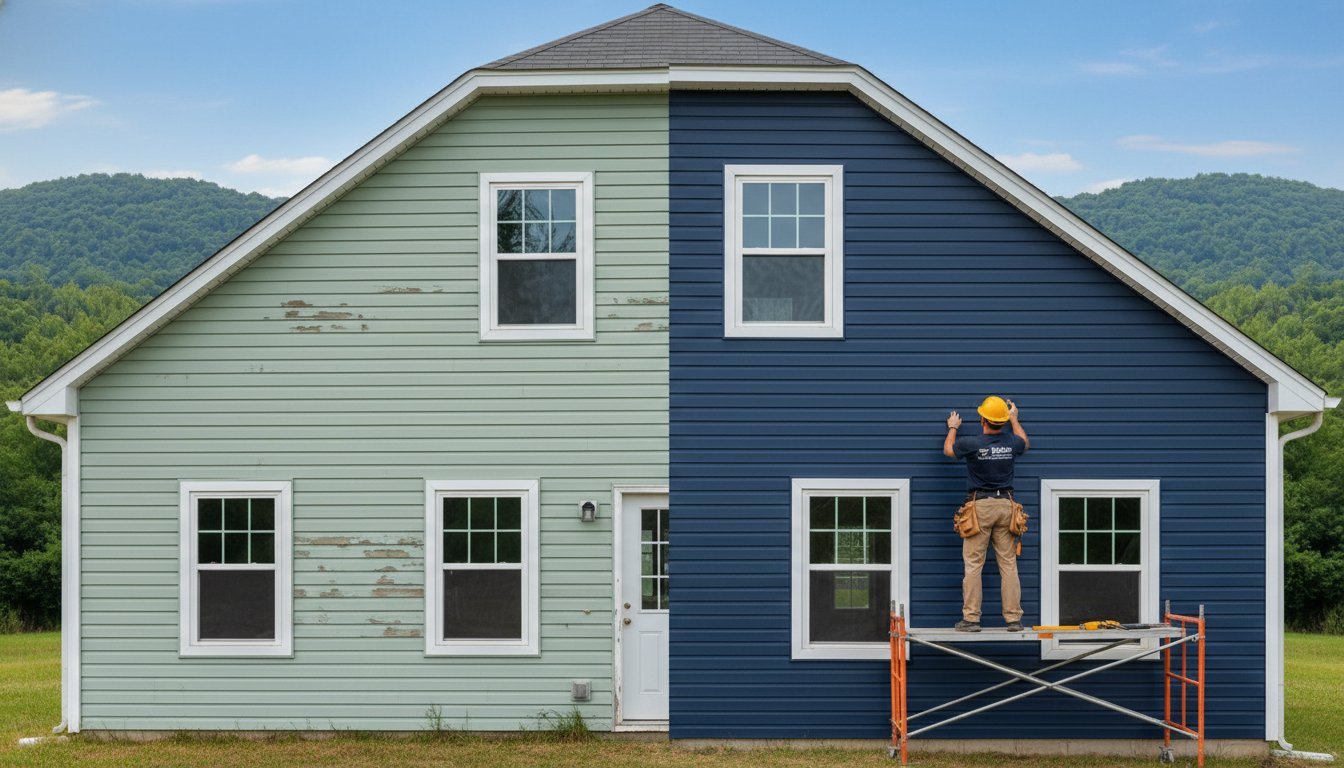
When calculating the cost to install vinyl siding, it’s easy to focus solely on the color and texture of the new panels. However, the most critical work often happens before the first new piece is ever nailed into place. Professional installation involves a methodical process of stripping away the old exterior, managing waste, and preparing the “bones” of your home to ensure the new system lasts for decades. In East Stroudsburg and across Monroe County, this process must also align with the updated 2021 International Codes that took effect on January 1, 2026.
Beyond the labor itself, logistical expenses like permit fees and disposal costs are standard parts of a realistic budget. For example, permit costs in the Poconos area typically hover around $200, while homeowners should budget approximately $250 for the cleanup and disposal of old siding materials. These figures help provide a clearer picture of the total investment required to do the job right the first time. Skipping these steps or failing to account for them often leads to the “hidden fees” that many homeowners fear.
Removing and Disposing of Old Siding
Stripping away one layer of old vinyl is relatively straightforward, but removing older materials like cedar shakes requires significantly more labor hours. The real value of a professional tear-off lies in the inspection. If your contractor finds hidden water damage or rot in the sheathing, it’s better to address it now than to trap moisture behind your new siding. Following the standards set by the Vinyl Siding Institute, we ensure that every square inch of your home’s exterior is ready for a fresh start. We take pride in a clean job site, ensuring all debris is hauled away responsibly according to local Monroe County environmental guidelines.
The Critical Underlayment and Flashing
In the Lehigh Valley, where humidity can be high, a high-quality house wrap acts as a vital moisture barrier. This “invisible” layer allows your home to breathe while preventing wind-driven rain from reaching the wooden structure. Proper flashing is equally important, especially where the siding meets your roofline or chimney. If you’ve noticed issues near your roof, you may also need a professional chimney flashing repair service in East Stroudsburg to ensure the entire exterior is watertight. Integrating these systems correctly is what separates a long-lasting installation from one that requires repairs in just a few years. Ready to get a clear, honest assessment of your home’s exterior needs? Contact us today for a detailed on-site consultation.
Maximizing ROI: Why Quality Installation Matters in Pennsylvania
The real cost to install vinyl siding isn’t just the initial check you write. It’s the total value of the system over its twenty-year lifespan. A cheap installation often leads to expensive “hidden costs” like buckling panels, rattling in high winds, or moisture traps that cause rot in your wall sheathing. In Pennsylvania, our temperatures can swing from below zero in the winter to over ninety degrees in the summer. This requires a specific installation technique that allows the material to breathe and move.
Vinyl expands and contracts significantly with these temperature shifts. A common mistake made by inexperienced crews is “nailing it tight” to the wall. When panels are pinned too firmly, they have nowhere to go as they expand, resulting in unsightly warping and waves across your home’s exterior. Professional installers leave a small gap at the nail head, essentially hanging the siding so it can slide horizontally. This precision ensures your home looks as good in five years as it does on the day of installation.
Long-Term Value and Curb Appeal
Investing in high-quality vinyl provides a strong return on investment by drastically reducing maintenance needs. Unlike wood, which requires painting every few years, or fiber cement, which may need specialized caulking, vinyl simply requires an occasional wash. This saves thousands of dollars in upkeep over the decades. Modern textures and colors have also evolved to perfectly match the “East Stroudsburg aesthetic,” offering the look of natural wood without the vulnerability to Poconos moisture. Before you choose a partner for your project, review our guide on Hiring the Best East Stroudsburg Siding Companies to ensure you’re asking the right questions about workmanship.
The Allesson Roofing Difference
We approach every siding project with a roofing-first perspective. This is a major advantage for homeowners because the most common failure points for siding occur where the walls meet the roofline. Our expertise in asphalt shingle and flat roof installation means we understand exactly how to integrate step flashing and J-channels to keep these transitions watertight. We take quiet pride in our craftsmanship and our deep roots in the Poconos and Lehigh Valley communities. You deserve a partner who values direct communication and local reliability. Ready for a precise quote? Contact Allesson Roofing for a free siding estimate and let us help you protect your home for the years ahead.
Take the Next Step Toward a Durable Home Exterior
Investing in your home’s exterior is a significant decision that impacts both your daily comfort and your property’s long-term value. By focusing on the 2021 building code requirements and choosing materials that handle our local temperature swings, you ensure your project is built to last. Remember that a successful siding project is about more than just the panels; it’s about the invisible layers of protection and the expertise of the team behind the tools. When you understand the factors that drive the cost to install vinyl siding, you can move forward with confidence and clarity.
At Allesson Roofing, we bring a roofing-first perspective to every project, ensuring your entire home remains watertight and protected from the elements. As a locally owned and operated business in East Stroudsburg, we take pride in offering transparent pricing and a helpful, no-pressure experience for our neighbors in the Poconos and Lehigh Valley. We’re ready to help you navigate your options and find the best fit for your home and budget.
Get Your Free, No-Pressure Siding Estimate Today
Your home is your most valuable asset. We look forward to helping you keep it beautiful and resilient for years to come.
Frequently Asked Questions
How much does it cost to side a 1,500 sq. ft. house with vinyl in 2026?
The final investment for a mid-sized home depends heavily on the architectural complexity and the grade of material you select. Factors like the number of stories and the inclusion of insulated backing will influence the total cost to install vinyl siding more than square footage alone. We recommend an on-site assessment to account for your home’s specific layout and any necessary wall preparations that might be unique to your property.
Is it cheaper to install vinyl siding over existing siding?
Installing new vinyl over old siding is rarely the best long-term choice for Pennsylvania homes. While it might seem like a way to save on labor, it often traps moisture and prevents a thorough inspection of the underlying wood sheathing. A full tear-off is the only way to ensure your home meets the 2021 International Codes and remains protected from rot and structural damage over time.
How long does a typical vinyl siding installation take?
A professional siding replacement for a standard residential property typically takes between one and two weeks to complete. This timeline includes the removal of old materials, wall preparation, and the detailed installation of trim and panels. Weather conditions in the Lehigh Valley can occasionally shift this schedule, but a dedicated local crew works efficiently to minimize any disruption to your daily routine.
What is the most expensive part of a vinyl siding project?
Labor and specialized detail work represent the largest portion of a siding project’s budget. While high-quality panels are an investment, the hours spent on precise window wrapping, corner trim, and gable fitting are what ensure a watertight seal. These intricate areas require a high level of skill to manage the material’s natural expansion and contraction during our local temperature swings.
Does vinyl siding increase home value in Pennsylvania?
High-quality vinyl siding consistently ranks as one of the best home improvements for boosting property value in our region. Beyond the immediate curb appeal, the promise of low maintenance and improved energy efficiency is very attractive to Pennsylvania buyers. It transforms the look of an older home while providing a modern, weather-resistant shell that protects the structure for decades.
Can I install vinyl siding myself to save on costs?
Taking a DIY approach to siding might save on upfront labor, but it often leads to costly mistakes that void material warranties. Proper flashing and the correct “hanging” of panels are difficult to master without professional experience and specialized tools. Given the strict 2021 building codes in the Poconos, a professional installation is the safest way to protect your home’s structural integrity and ensure it passes future inspections.