Cost to Repair Chimney Flashing: 2026 Price Guide for PA Homeowners
What if that small water spot on your living room ceiling isn’t actually a roof problem, but a failure in the metal armor surrounding your chimney? Most homeowners in the Poconos know that our harsh freeze-thaw cycles and heavy snow loads don’t play fair with older roofing materials. It’s frustrating to look at a confusing contractor quote and wonder if you’re paying for a permanent fix or just a temporary bandage that will leak again by next winter. You’re likely searching for the cost to repair chimney flashing because you want to stop moisture from entering your home before it causes expensive structural damage or mold growth.
Need this fixed rather than explained? See our chimney flashing repair in Stroudsburg, PA service page, or call (570) 426-3505 for a free inspection.
We understand that you want a leak-free home without the stress of hidden fees or recurring repairs. This guide provides a transparent breakdown of 2026 industry trends, including how recent price increases for aluminum and galvanized steel flashing impact your project. You’ll learn the critical differences between a quick patch and a professional replacement, along with how to find a reliable local roofer who understands Pennsylvania weather. We will walk you through the material options and labor factors that determine your final investment, ensuring you have the clarity needed to protect your home’s value.
Key Takeaways
- Understand how material choices like aluminum or steel set the baseline for your project budget.
- Identify how roof pitch and chimney size directly influence the labor required and the final cost to repair chimney flashing.
- Learn to spot the hidden signs of flashing failure, such as roof deck rot, to avoid more expensive repairs later.
- Gain insight into how Pennsylvania’s freeze-thaw cycles and ice dams impact your chimney’s performance and longevity.
Average Cost to Repair Chimney Flashing by Material
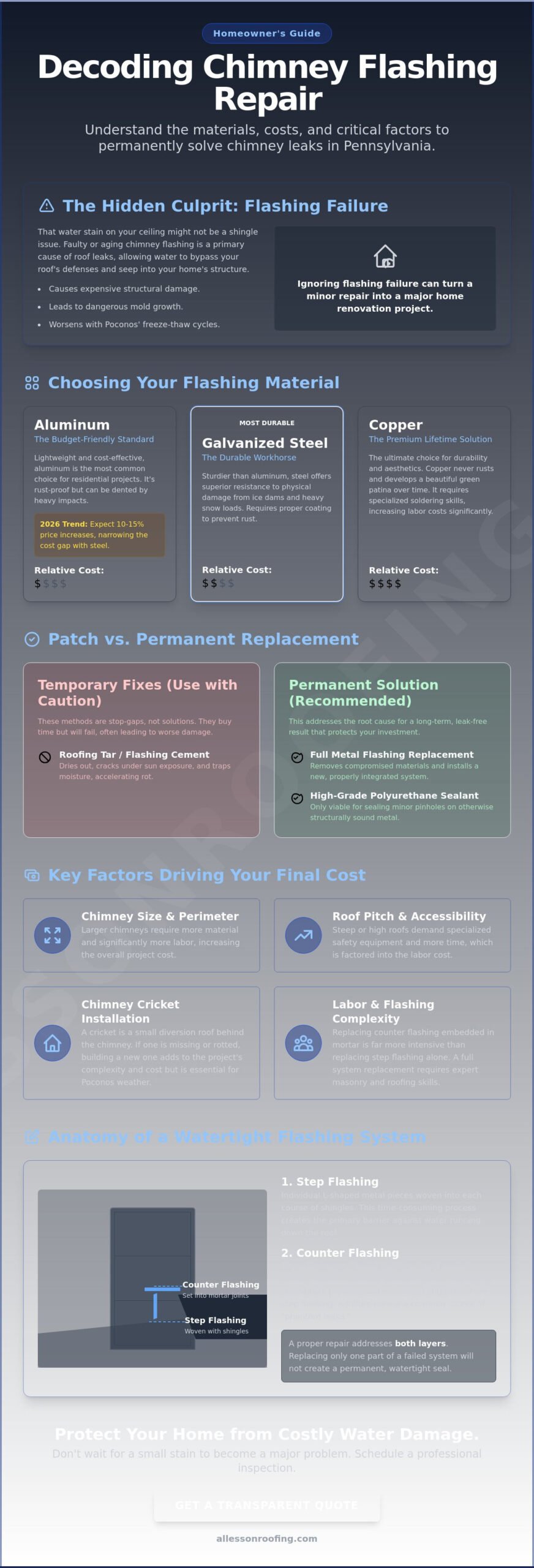
Choosing the right material is the first decision that shapes your total estimate. While it is tempting to pick the least expensive option, our local climate in the Poconos often favors long-term durability over low upfront savings. The metal used for Flashing (weatherproofing) acts as a vital barrier between your roofing shingles and the masonry of your chimney. If this barrier is thin or prone to rust, the cost to repair chimney flashing will likely become a recurring line item in your home maintenance budget.
Aluminum remains the most common choice for residential homes because it is lightweight and budget-friendly. However, homeowners should be aware of recent market shifts. In early 2026, manufacturers like Gibraltar and PlyGem implemented price increases on aluminum products ranging from 10% to 15%. Galvanized steel offers a sturdier alternative that resists the physical stress of heavy PA snow loads, though it requires proper coating to prevent rust during our humid summers. For high-end estates or historical homes, copper is the premium “lifetime” solution. It is highly durable and develops a beautiful patina, but it requires specialized labor and soldering skills that increase the initial investment.
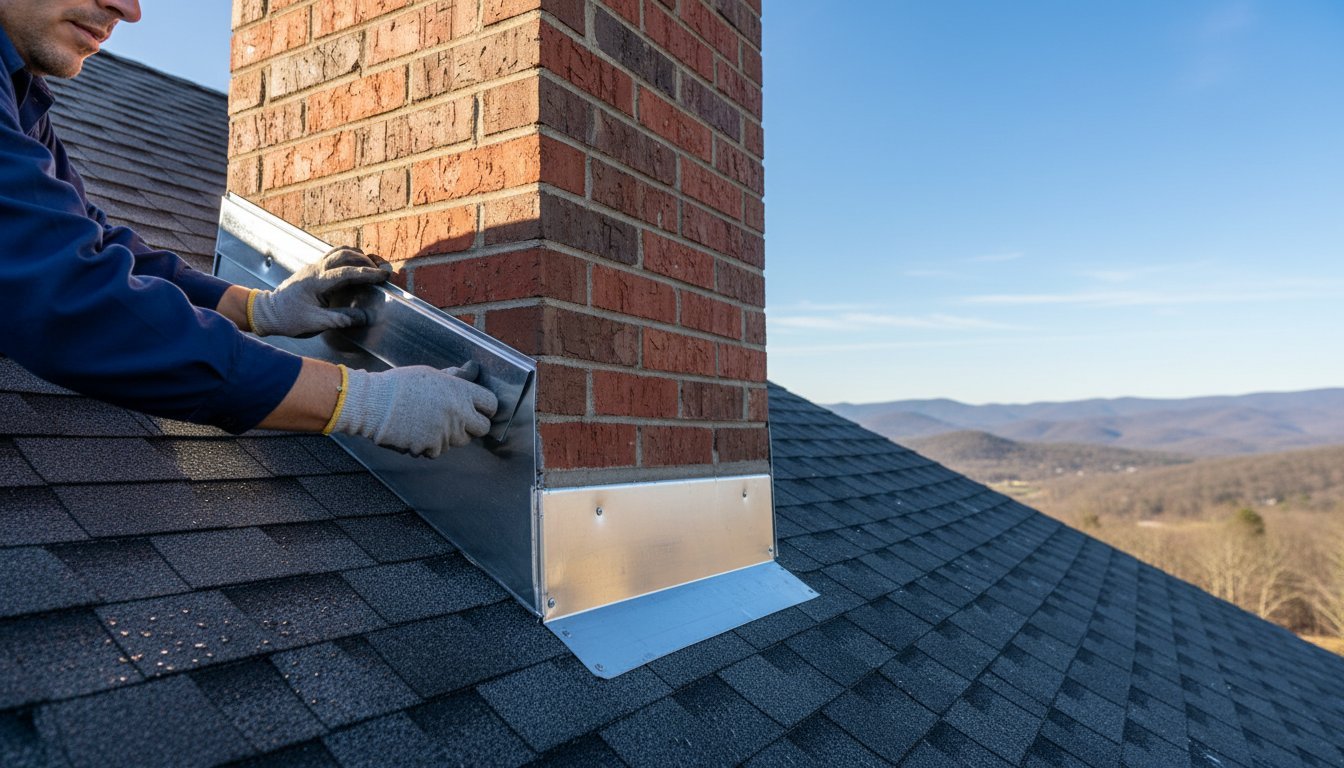
One detail often missed in generic quotes is the difference between step flashing and counter flashing. Step flashing is woven into your shingles, while counter flashing is actually embedded into the chimney’s mortar joints. Replacing counter flashing is more labor-intensive because it requires a roofer to carefully cut a “reglet” or groove into the brickwork. This extra masonry work is why estimates can vary so widely between a simple shingle-side patch and a full system overhaul.
Standard Material Price Ranges
- Aluminum: Usually the most affordable per linear foot, though 2026 price hikes have narrowed the gap with steel.
- Galvanized Steel: A mid-range option that provides better rigidity against ice dams.
- Copper: The most expensive material, often costing three to four times more than aluminum due to high market value and the need for expert installation.
- Lead: Occasionally used in masonry-heavy applications because it is soft and easy to mold around irregular stone shapes.
Sealants and Adhesives vs. Metal Replacement
Is a full replacement always necessary? If the metal is still structural and only has minor pinholes, a high-grade polyurethane sealant can provide a viable low-cost fix. Be wary of contractors who suggest thick layers of roofing tar; this material dries out and cracks quickly under the Poconos sun, leading to even worse leaks. Flashing cement is a temporary stop-gap that buys you a few weeks rather than providing a permanent repair. For a lasting result, replacing the metal is almost always the better path forward.
Key Factors That Drive Your Chimney Flashing Estimate
Every chimney presents a unique challenge. This is why a one-size-fits-all estimate rarely works for local homeowners. When calculating the cost to repair chimney flashing, we look closely at the total perimeter of the structure. A massive stone chimney requires significantly more linear feet of metal and labor than a small, single-flue brick version. According to research on the Cost To Replace Flashing Around A Chimney, factors like height and accessibility also play a major role in the final bill. If your roof is particularly steep, our teams must use specialized safety equipment and spend more time securing the workspace. Safety is a priority.
Another often overlooked factor is the “cricket.” This is a small, peaked diversion roof built behind the chimney to prevent water from pooling against the masonry. If your home lacks a cricket or the existing one is rotted, building a new one adds complexity. It is essential for preventing leaks in the Poconos’ heavy rain and snow. We also evaluate the number of layers involved, checking the condition of the base, step, and counter flashing to ensure a complete seal.
Step Flashing vs. Counter Flashing Complexity
Understanding the layers of your flashing system helps demystify your quote. Step flashing consists of individual L-shaped pieces of metal interwoven with each course of shingles. This is a time-consuming process that requires precision. Counter flashing is the outer layer that is actually ground into the mortar joints of the chimney. This requires a specialized skill set to ensure the metal is seated deeply enough to create a watertight seal. If a contractor only replaces one layer while leaving the other damaged, you will likely experience “phantom leaks” that are difficult to trace later.
Roofing Material Integration
The type of roof you have dictates how we approach the repair. Most residential projects involve Expert Asphalt Shingle Installation in PA, where we must carefully remove and replace the surrounding shingles to access the base flashing. For metal or flat roofing systems, the techniques and sealants change completely. If you are noticing damp spots near your fireplace, it is wise to reach out for a professional assessment to see which layers of your system are failing before the next big storm hits.
Hidden Costs: What Happens When Flashing Fails
The total cost to repair chimney flashing often involves more than just the price of new metal. If water has been seeping behind your shingles for months, the project scope might expand to include structural wood repairs. We frequently find rotted OSB or plywood roof decking directly beneath failed flashing. Replacing these structural sheets is a necessary step to ensure your new flashing has a solid, level surface for attachment. Industry data from NAHB flashing repair cost estimates highlights that failing to seal these roof penetrations correctly leads to significant long-term expenses that far outweigh a proactive repair.
Inside your home, a slow chimney seep can destroy attic insulation and leave ugly brown stains on your ceiling drywall. If left unaddressed, this moisture creates a breeding ground for mold. Remediation for mold is a specialized process that can quickly become the most expensive part of the project. Catching a leak early is the best way to keep your home safe and your budget intact.
Identifying Sub-Roof Damage
Water is patient. It bypasses the metal and hits the structural wood, leading to soft spots that you can actually feel when walking on the roof. If you notice these dips or sagging areas near your chimney, it is a clear sign that the wood is no longer structurally sound. These “soft spots” require immediate attention before they compromise the safety of your roof. You can check our 12 Signs of Leaking Chimney Flashing to see if your home is currently at risk for hidden structural damage.
Masonry Integration and Repointing
Your chimney’s brickwork serves as the foundation for your flashing system. If the mortar is crumbling or the bricks are spalling, the new metal will not have a secure grip to keep water out. We use “reglet” cuts to embed the counter flashing into the masonry, but this requires solid mortar to hold the seal. Flashing cannot be properly secured to crumbling mortar. Adding masonry repointing to a roofing job is common in older Poconos homes. While this adds to the initial bill, it ensures the cost to repair chimney flashing is a one-time investment rather than a recurring headache. If you are worried about the state of your chimney, schedule a flashing inspection to identify these hidden masonry issues before the next storm.
Why Poconos Weather Demands Professional Flashing Repair
Living in the Poconos means your home faces some of the most aggressive weather patterns in Pennsylvania. Our region is famous for its rapid freeze-thaw cycles, where temperatures swing above and below freezing multiple times in a single week. These fluctuations cause metal flashing to expand and contract constantly. If the metal is not high-quality or the fasteners are poorly placed, the seal will eventually break. Understanding the cost to repair chimney flashing is only half the battle; the other half is ensuring the repair survives the physical stress of a local winter.
Homeowners in East Stroudsburg often deal with severe ice dams. When snow melts on the upper parts of your roof and refreezes at the colder eaves or around the chimney base, it creates a dam that traps liquid water. This backed-up water is forced under shingles and behind flashing that isn’t perfectly seated. A DIY “caulk fix” or a cheap roofing tar application usually fails during the first major storm because these materials lack the flexibility to handle the weight and pressure of ice. Professional installation ensures the metal is integrated into the roofing system to shed water even when ice is present.
Ice Dam Prevention and Flashing Design
We use specific techniques to combat the unique challenges of our climate. This includes the use of ice and water shield membranes as a secondary defense layer beneath the metal. Professional flashing profiles are designed to shed heavy snow more effectively, preventing the buildup that leads to leaks. If you are currently dealing with an active leak during a storm, our Emergency Roof Repair Poconos Response Guide provides immediate steps to protect your interior while waiting for a permanent fix.
The ROI of Professional Installation
Choosing a professional Stroudsburg roofing contractor provides more than just a leak-free home; it protects your financial interests. Many homeowners don’t realize that unverified DIY repairs can sometimes void your insurance coverage for water damage claims. Adjusters look for professional workmanship when assessing a leak. Investing in a professional repair gives you peace of mind during the next Nor’easter, knowing the job was done right the first time. Take the first step toward a dry home and get a free chimney flashing inspection from Allesson Roofing today.
Secure Your Home Against the Next Poconos Storm
Protecting your property starts with understanding the real cost to repair chimney flashing and recognizing the signs of failure before they lead to structural damage. We’ve discussed how material choices and the complexity of your roof pitch shape your final estimate. Addressing small leaks now prevents the hidden expenses of rotted roof decking or mold remediation later. Our weather in East Stroudsburg is unforgiving. Your chimney needs a flashing system that can withstand heavy snow and constant freeze-thaw cycles without failing.
We are a locally owned business in East Stroudsburg. Our team specializes in Poconos storm damage and maintains deep expertise in both masonry and shingle integration. We ensure your flashing isn’t just a temporary patch; it’s a durable barrier built to last. Don’t wait for the next heavy rain to test your roof’s integrity. Take a proactive step today to keep your family dry and your home secure. We are ready to help you navigate your next home maintenance project with transparency and care.
Schedule Your Professional Chimney Inspection Today
Frequently Asked Questions
Is it cheaper to repair or replace chimney flashing?
Repairing minor issues is initially cheaper, but a full replacement is often the most cost-effective long-term choice. If your existing metal is rusted or the shingles are failing, a patch will only delay the inevitable. A complete replacement provides a fresh seal that protects your home for years. We recommend a full system overhaul if your current flashing shows signs of widespread pitting or structural fatigue.
How long does a professional chimney flashing repair take?
Most professional chimney flashing repairs take between two and six hours to complete. The exact time depends on the size of your chimney and how steep your roof is. Projects that require us to grind into old mortar to reset counter flashing will take longer than a simple shingle-side repair. Our goal is always to finish the work in a single visit so your home is protected before the next storm.
Can I use roofing tape or sealant to fix a chimney leak myself?
Roofing tape and sealants are temporary fixes that rarely survive the harsh Poconos winter. While these products might stop a drip for a few weeks, they don’t address the underlying metal failure. Professional repairs use mechanical flashing that sheds water naturally without relying on adhesives that eventually dry out and crack. Using a DIY sealant often masks a bigger problem until it becomes a much more expensive structural repair.
Does homeowners insurance cover the cost to repair chimney flashing?
Homeowners insurance usually covers chimney flashing repairs if the damage was caused by a sudden, covered peril like a storm. It rarely pays for repairs needed due to normal wear and tear or lack of maintenance. You should review your policy or speak with your agent to see if “sudden and accidental” leaks are covered. Documenting storm damage with photos immediately after an event can help support your insurance claim.
How often should I have my chimney flashing inspected in Pennsylvania?
You should have your chimney flashing inspected at least once a year to catch issues before they cause water damage. Our local freeze-thaw cycles in Pennsylvania can loosen metal joints and crack mortar quickly. An annual check-up in the fall is the best way to control the long-term cost to repair chimney flashing. Catching a small gap early prevents expensive structural repairs and mold growth inside your attic space.
What is the difference between step flashing and counter flashing?
Step flashing is woven into the shingles, while counter flashing is the outer layer embedded into the chimney’s masonry. These two components work together to create a watertight seal around the base of your chimney. When you receive an estimate for the cost to repair chimney flashing, make sure it covers an inspection of both layers. Replacing only one side often leads to persistent leaks that are difficult to track down later.