

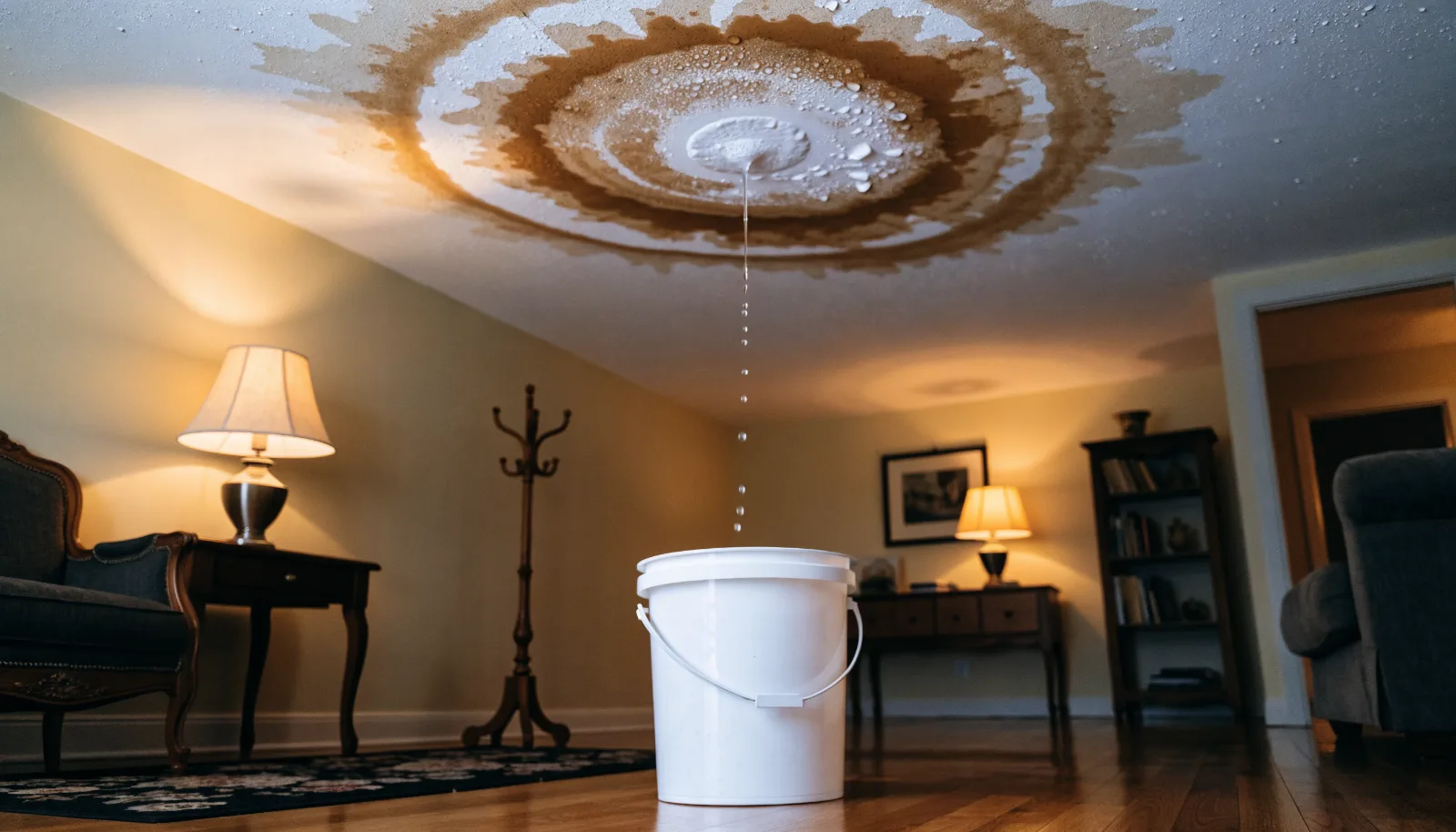
Will Homeowners Insurance Cover a Roof Leak in PA?
Usually yes — if the leak was caused by something sudden, like wind tearing shingles off or a branch coming through the deck. Usually no — if the leak is the result of a roof that simply wore out. Every standard Pennsylvania homeowners policy is built on that single distinction, and almost every denied roof claim comes down to which side of it your adjuster lands on.
The frustrating part is that the water stain on your ceiling looks identical either way. So does the puddle. What decides the claim is the cause, and proving cause is a job that starts the day the leak appears.
Sudden damage versus slow wear
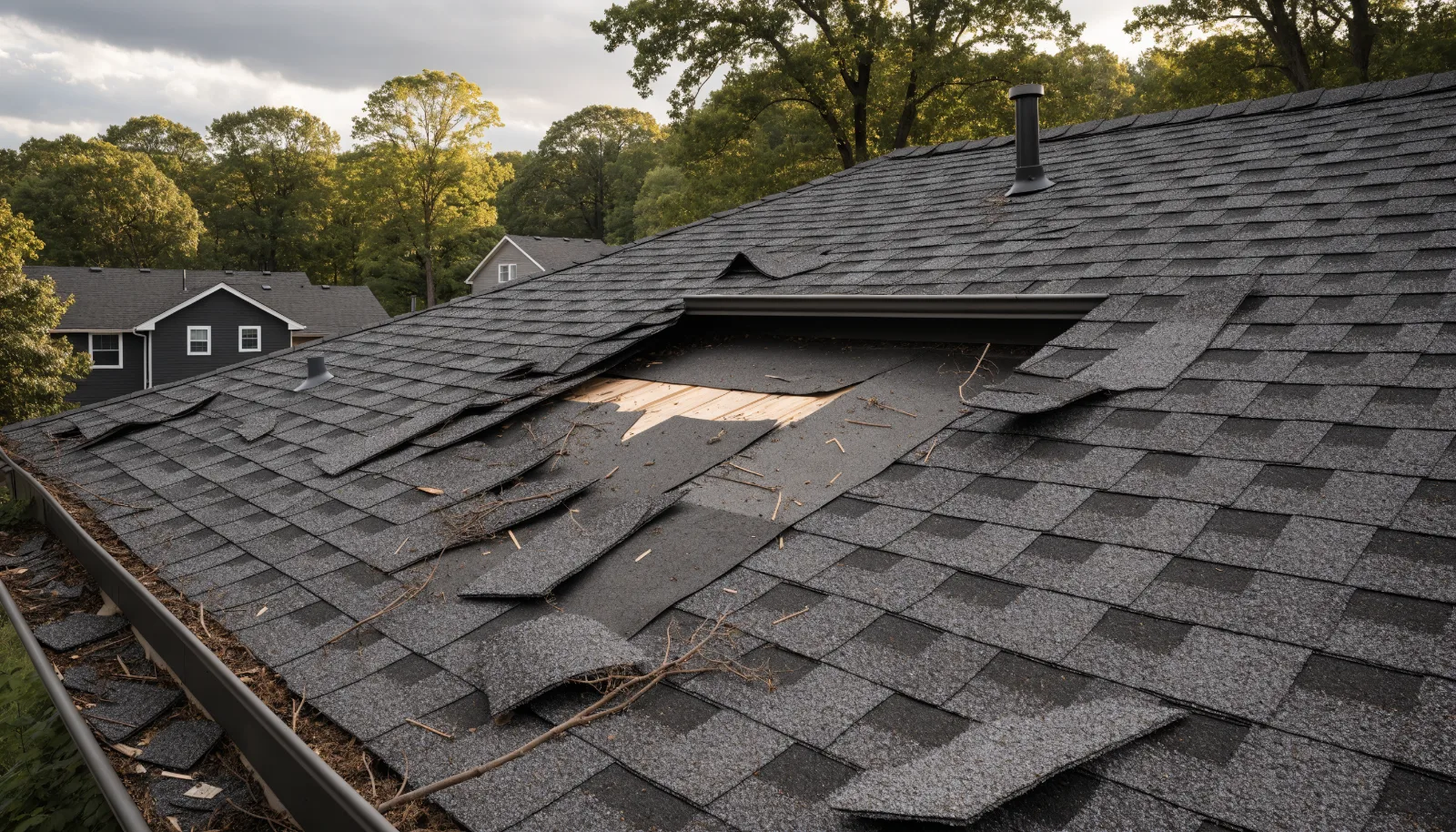
Insurance covers perils. It does not cover aging. A standard HO-3 policy lists wind, hail and falling objects as covered perils, and excludes wear and tear, deterioration and neglect.
In practice, here is how that plays out on a roof in Monroe County:
| What happened | Likely outcome |
|---|---|
| Wind lifted and creased a section of shingles in a storm | Covered |
| A limb punctured the decking | Covered |
| Hail bruised the shingle mat | Covered |
| A pipe boot cracked from age and let water in | Not covered |
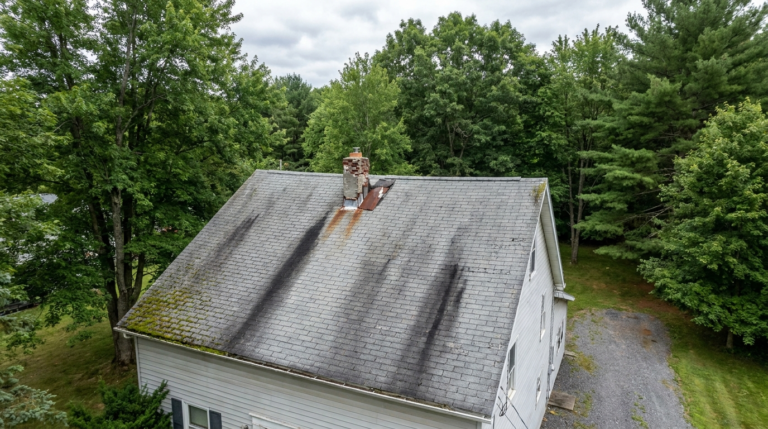
| Shingles are 24 years old and curling | Not covered |
| A leak you knew about and left for two winters | Not covered (neglect) |
| Ice dam forced water under the shingles | Depends on the policy — check yours |
There is one wrinkle worth knowing, because it saves people real money. Even when the roof itself isn’t covered, many policies still pay for the resulting interior damage — the ceiling, the drywall, the insulation, sometimes the flooring. Your carrier may decline to pay for the failed boot and still pay to put your living room back together. It is worth asking specifically, because adjusters don’t always volunteer it.
What almost never gets paid
Three things sink roof claims here with depressing regularity.
Age. Pennsylvania carriers have been steadily tightening on older roofs — inspections at 15 years, non-renewals in the 20-to-25 range. If your roof is in that bracket the claim gets read sceptically from the start. We went through what triggers it in how old a roof can be before insurance drops you in PA.
Actual cash value. Plenty of policies in this area have quietly moved the roof from replacement cost to actual cash value, which means depreciation comes off the payout before you see it. A $14,000 roof on a 20-year-old ACV policy can settle for a fraction of that. If you don’t know which one you have, find out before you need it — actual cash value vs. replacement cost on a PA roof explains what to look for on the declarations page.
Delay. Every policy obliges you to report promptly and to prevent further damage. A leak reported four months after the storm invites the carrier to argue that whatever damage exists came from the four months, not the storm.
What Pennsylvania law requires your insurer to do
Homeowners are rarely told that the claim process has actual deadlines. Pennsylvania’s unfair claims settlement regulations (31 Pa. Code Chapter 146) set these minimum standards:
- 10 working days to acknowledge your claim once you report it, and to send you the claim forms and instructions you need (§ 146.5).
- 30 days to complete the investigation. If they can’t, they owe you a written explanation of the delay — and another one every 45 days after that (§ 146.6).
- 15 working days after you submit proof of loss to tell you whether the claim is accepted or denied (§ 146.7).
- A denial must be in writing and must name the specific policy provision or exclusion it relies on (§ 146.7). “It’s wear and tear” is not a denial. “Excluded under Section I, Exclusion 2.c” is.
Be realistic about what this gives you. These are regulatory standards enforced by the Insurance Department against patterns of behaviour, and Pennsylvania courts have held there is no private right to sue under them. What they do give you is a clear, documented basis to push back — and a complaint to the Pennsylvania Insurance Department carries more weight than most homeowners expect.
The practical move: put every request in writing, and ask for the written denial with the exclusion cited. Claims that were going to be quietly closed have a way of reopening at that point.
What the adjuster is actually looking for
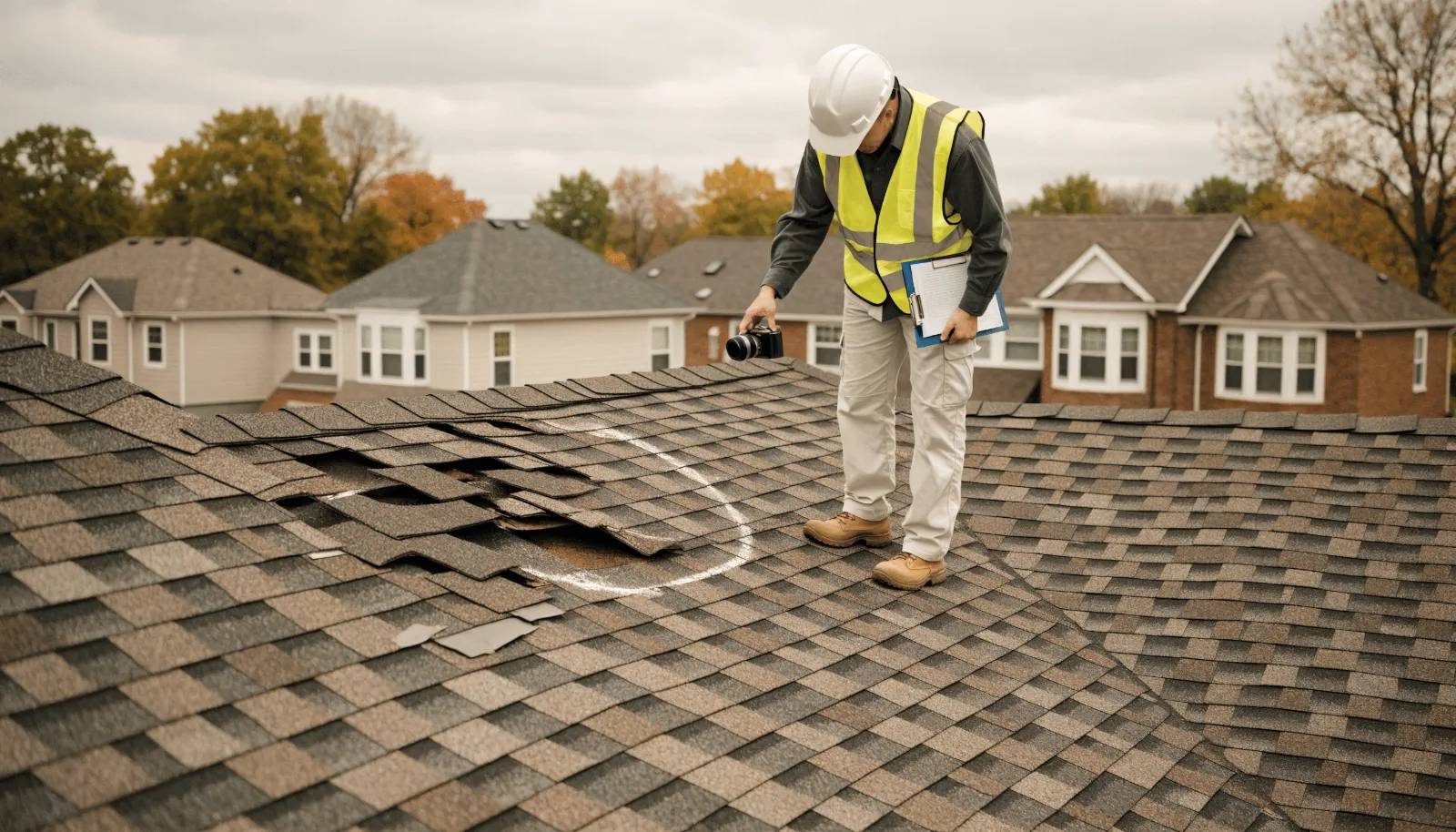
An adjuster on a roof is answering one question: is this damage consistent with a sudden event on the date you reported?
They look at whether shingle creases run in a consistent direction (wind) or scatter randomly (age). They check whether tears are clean and recent or weathered and dirty. They look at the granule loss across the whole field, because a roof shedding granules everywhere reads as worn out, not storm-struck. And they photograph the areas you didn’t report, to see whether the rest of the roof tells the same story.
Two things help you here, and both are free:
- Your own photographs, dated. Shot the day you found the leak, not a month later. Include the interior stain, the exterior damage, and anything the storm did to the yard — a downed branch dates an event better than any argument.
- A roofer’s inspection before the adjuster comes. Not to fight anyone. To make sure someone who works on roofs has documented the entry point and the mechanism, so the conversation is about evidence rather than opinion.
One warning. If a contractor knocks on your door after a storm offering to handle the whole claim, or to “cover” your deductible, walk away. Waiving a deductible means misrepresenting the loss to your carrier, which is insurance fraud in Pennsylvania, and it is the homeowner whose name is on the claim. We listed the rest of the pattern in roofing scams to avoid in Pennsylvania.
The first 48 hours matter most
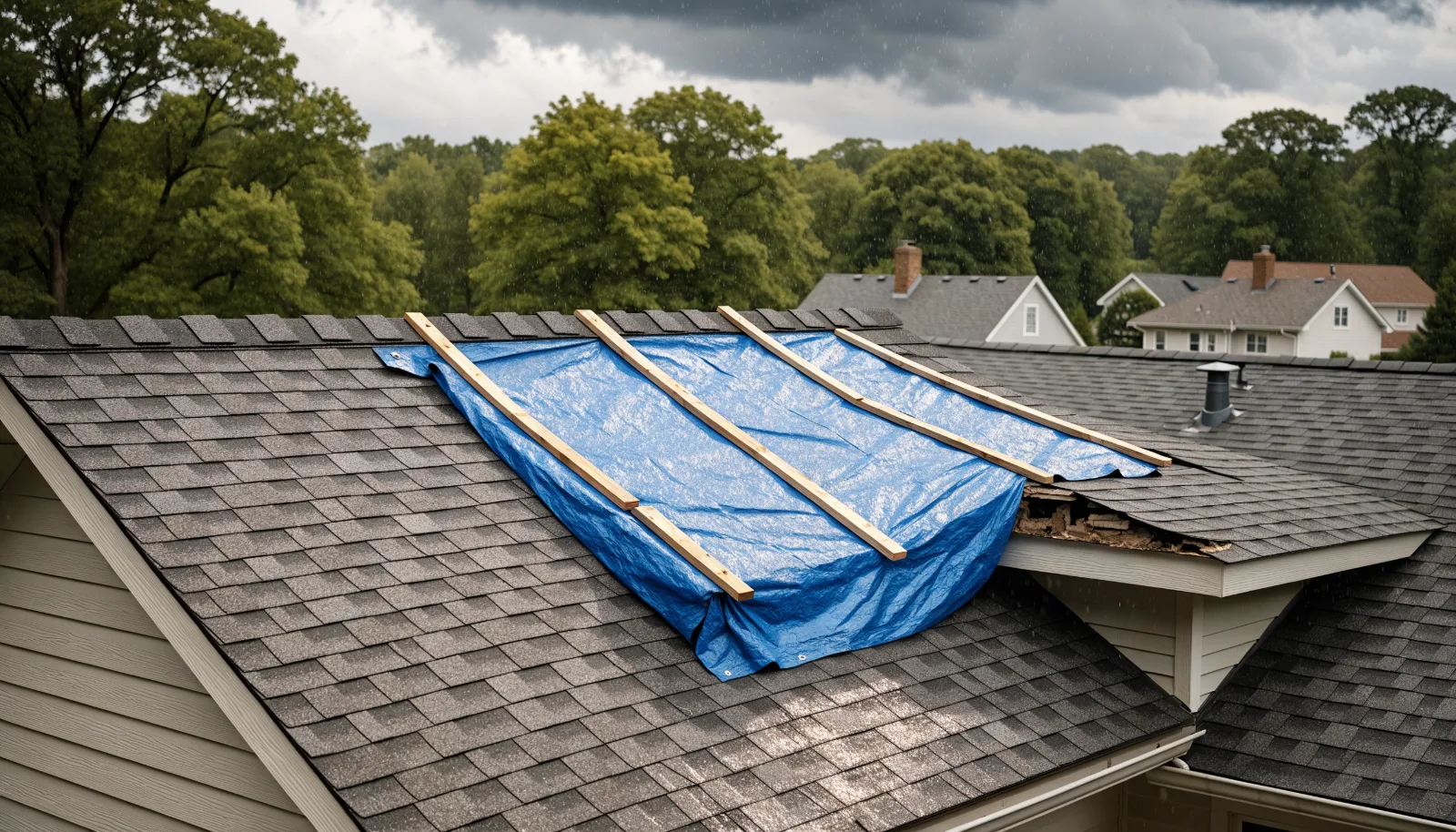
What you do immediately does more for the claim than anything you do later.
- Photograph everything before you clean up. Ceiling, walls, contents, and the roof from the ground. Video is fine and timestamps itself.
- Stop the water, don’t repair the roof. Your policy requires you to mitigate further damage — a tarp over the opening is exactly that. A full repair before the adjuster sees it removes their evidence and gives them a reason to dispute the claim.
- Keep every receipt. Tarps, a dehumidifier, a motel night if the house is unusable. Emergency mitigation is typically reimbursable even when the roof itself isn’t.
- Report it, in writing, now. A phone call starts the clock, but an email creates the record.
- Move the furniture and lift the rugs. Secondary damage to contents that you could reasonably have prevented is a standard argument for reducing a payout.
If water is coming in at this moment, the tarp is the whole job — emergency roofing in Stroudsburg covers what that looks like and how fast we can get there.
Be honest with yourself about whether to file at all
This is the part that costs us money to say. Most roof leaks should not become insurance claims.
A typical repair around here — a boot, a run of flashing, a dozen shingles — lands between $150 and $1,000, and most Pennsylvania deductibles are $1,000 or higher. You would pay the whole thing yourself anyway, and you would have a claim on your loss history doing quiet damage to your renewal. We put the real numbers side by side in how much it costs to fix a roof leak in PA.
File when the damage is sudden, documented, and clearly larger than your deductible. Pay out of pocket when it isn’t. That rule will serve you better than any negotiating tactic.
Frequently asked questions
Does homeowners insurance cover water damage from a roof leak?
Often yes, even when the roof repair itself is excluded. The distinction most policies draw is between the failed component — not covered if it wore out — and the resulting damage to your ceilings, walls, insulation and contents, which many policies still pay. Ask about it explicitly.
Does insurance cover roof leaks from rain?
Rain alone is not a peril; it is weather. Covered leaks come from something rain accompanied — wind that lifted shingles, hail that bruised them, a branch that punched through. If ordinary rain is getting in, that points at the roof’s condition, and condition is excluded.
Will my insurance go up if I file a roof claim?
Often, and the bigger risk in Pennsylvania right now is non-renewal rather than a rate increase. Carriers here have been shedding older roofs. A single weather claim on a newer roof is usually fine; a second claim, or any claim on a roof past 20 years, is where the letters start.
How long do I have to file a roof claim in PA?
Your policy sets the deadline, and most require prompt notice with a filing window measured in months, not years. Practically, report within days. Delay is one of the easiest grounds a carrier has to challenge causation.
What if my claim is denied?
Get the denial in writing with the specific exclusion cited, then request the adjuster’s full report and photographs. You can appeal internally, hire a licensed public adjuster, or file a complaint with the Pennsylvania Insurance Department. Our guide to what to do when a roof insurance claim is denied walks through the order to do it in.
Get the damage documented properly
We inspect the roof and the attic, photograph what we find, and give you a written report that describes the cause — not just the cost. If the damage is storm-related, that report is what your claim rests on. If it isn’t, we will tell you that too, before you file something that goes nowhere.
Call (570) 426-3505 for a free inspection, or read more about roof repair in Stroudsburg, PA. We serve East Stroudsburg, Monroe County, the Poconos and the Lehigh Valley.


2 Comments