Emergency Roof Tarping Service in East Stroudsburg: Fast Storm Protection
Imagine waking up to the steady sound of water dripping onto your hardwood floors after a sudden East Stroudsburg storm. It’s a helpless feeling that quickly turns into anxiety about mold, ruined ceilings, and mounting repair costs. When your roof is compromised, calling for a professional emergency roof tarping service is the most effective way to stop the clock on water damage. You’re likely wondering how to protect your property right now while making sure your insurance company has everything they need to process your claim fairly.
We understand that a leaking roof feels like a race against time, but you don’t have to handle the stress alone. In this guide, you’ll learn how a high-quality tarping job secures your home’s structure and prevents the secondary issues that often follow heavy rain. We will preview the professional documentation required for insurance adjusters and outline the steps for moving from a temporary shield to a permanent restoration. This clear, methodical approach ensures your home stays protected while you plan for the next steps in your recovery.
Key Takeaways
- Learn why immediate action stops manageable leaks from turning into costly structural rot or mold growth in your East Stroudsburg home.
- Understand how a professional emergency roof tarping service utilizes industrial-grade materials and safety protocols to create a secure, weather-tight seal.
- Discover the essential documentation and photographic evidence required to protect your insurance claim after wind or hail damage occurs.
- Find out how to bridge the gap between a temporary tarping solution and a permanent, high-quality roof restoration plan.
What is an Emergency Roof Tarping Service and Why is it Essential?
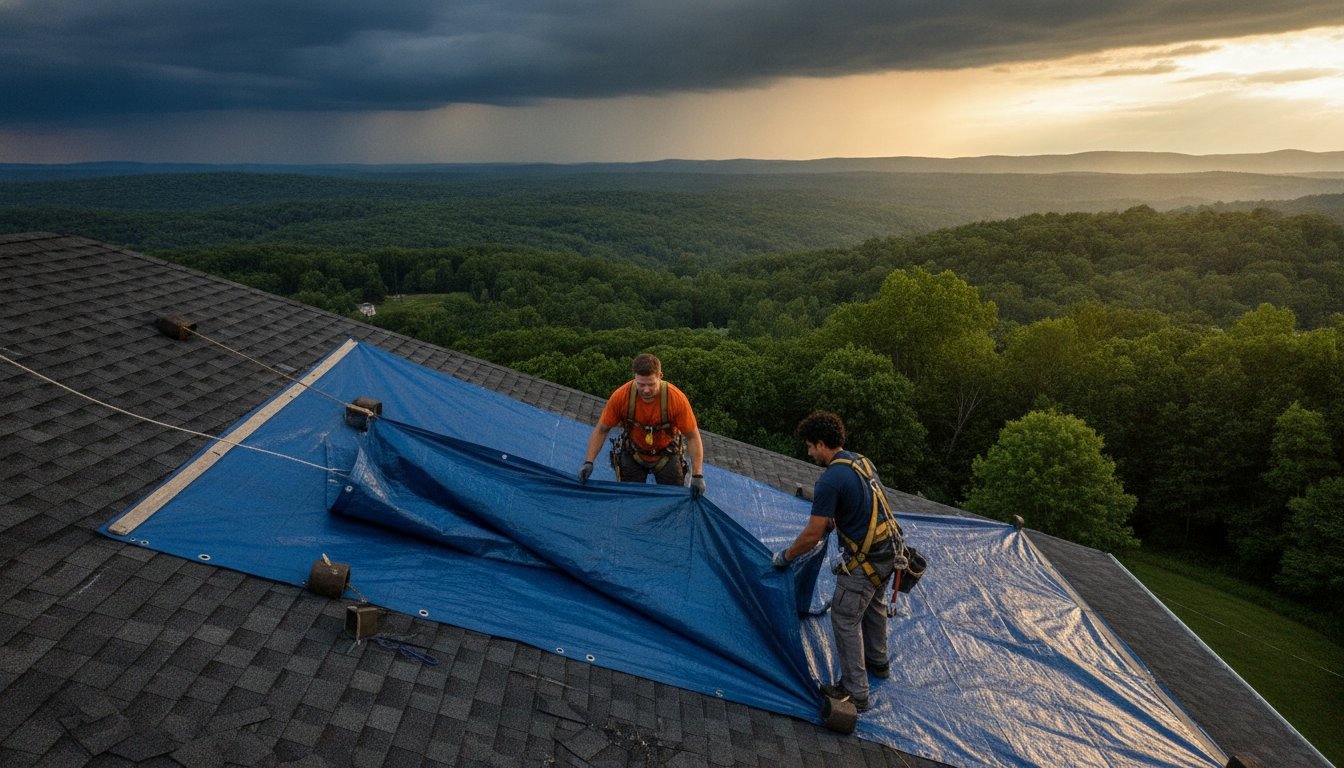
East Stroudsburg storms can be unpredictable, often leaving homeowners with sudden, severe damage that requires immediate attention. An emergency roof tarping service is a professional intervention that uses heavy-duty, UV-resistant tarps and wood furring strips to temporarily seal a breached roof. Unlike a quick DIY fix, this service involves anchoring durable materials directly to your home’s structure to create a weather-tight barrier. Emergency roof tarping serves as the primary defense against secondary water damage following a structural breach. It’s a vital step that buys you the time needed to coordinate permanent repairs without worrying about every passing rain cloud.
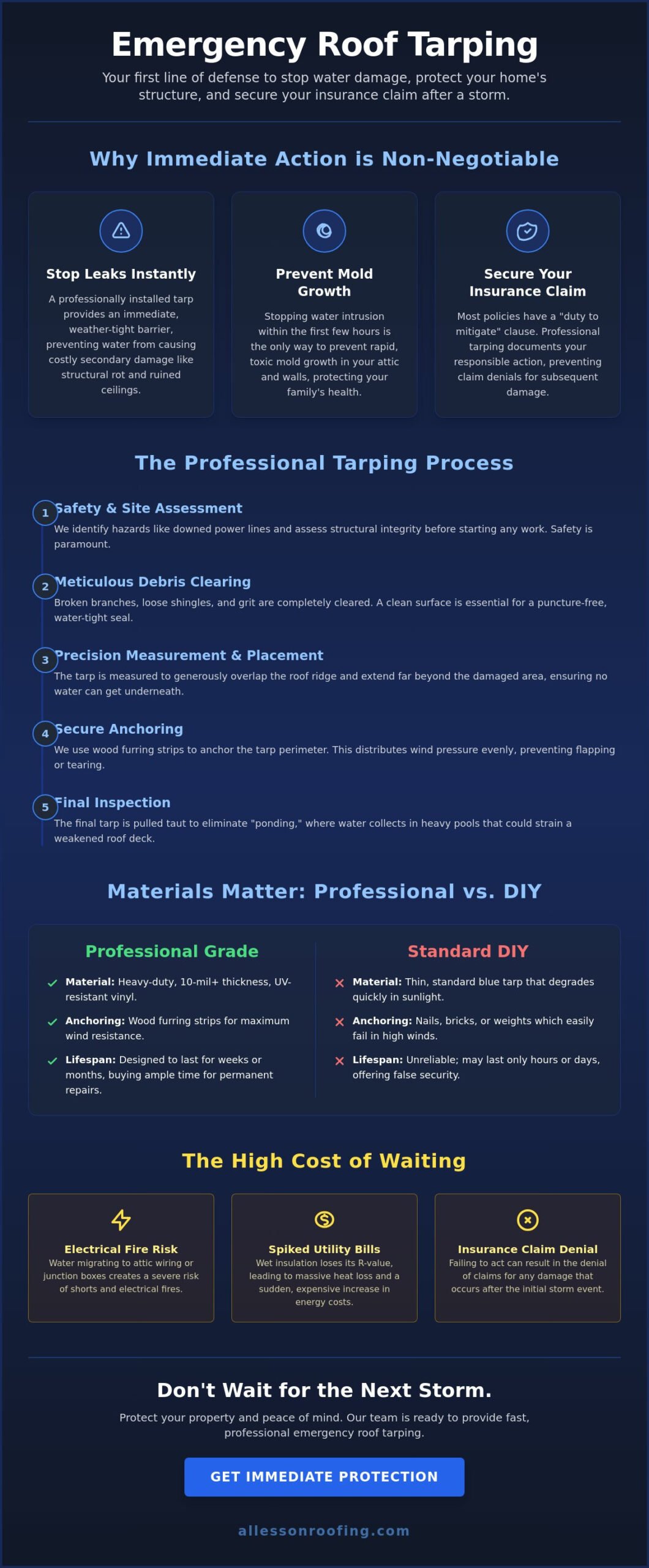
Speed is the most important factor when your roof’s integrity is compromised. Stopping water intrusion within the first few hours is the only way to prevent rapid mold growth and deep structural rot. Beyond physical protection, there’s a legal and financial component to consider. Most insurance policies include a “duty to mitigate” clause. This means the homeowner is responsible for taking reasonable steps to prevent further damage after a storm. If you leave a hole exposed, your insurance provider might argue that subsequent water damage was avoidable, potentially complicating your claim. Professional tarping provides the physical evidence and documentation needed to show you’ve acted responsibly to protect your property.
Critical Scenarios Requiring Immediate Tarping
- Severe Wind Damage: High winds in the Poconos can strip asphalt shingles down to the plywood decking, leaving the most vulnerable parts of your home exposed.
- Fallen Trees: Heavy branches or entire trees can puncture the roof envelope during a storm, creating large openings that allow massive amounts of water to enter.
- Large-Scale Hail: Significant hail strikes can crack tiles or bruise shingles so badly that the roof’s water-shedding ability is completely lost.
The Dangers of Delayed Mitigation
Waiting even a few days to secure a damaged roof can lead to a chain reaction of expensive problems. When water enters an attic, it doesn’t just sit there; it migrates. This creates a high risk of electrical fires if moisture reaches attic wiring or junction boxes. Your home’s energy efficiency also takes a hit. Wet insulation loses its R-value, leading to rapid heat loss and spiked utility bills. Most importantly, failing to act can result in the denial of insurance claims for any damage that occurs after the initial storm event. Taking quick action with an emergency roof tarping service keeps these risks under control while you plan your next steps.
The Professional Roof Tarping Process: What to Expect
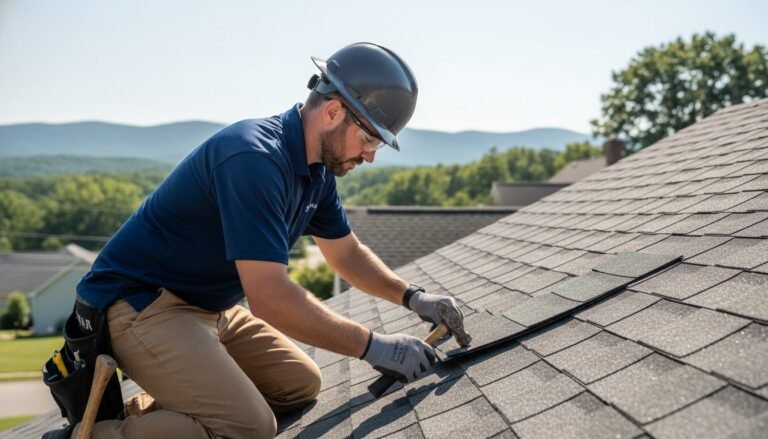
When our team arrives for an emergency roof tarping service, we prioritize safety and structural integrity above all else. We begin with a rigorous site assessment to identify hazards like downed power lines or compromised rafters that might make climbing dangerous. In the Poconos, high winds often leave debris scattered across the roof surface. We meticulously clear away broken branches, loose shingles, and grit. This step is essential because a tarp cannot create a water-tight seal if it’s sitting on top of sharp debris that could puncture the material from underneath.
Precision measurement is what separates a professional job from a temporary patch. We ensure the tarp is large enough to overlap the roof ridge and extend well beyond the damaged area. This prevents water from running under the top edge. To combat the strong wind gusts common in East Stroudsburg, we secure the perimeter using wood furring strips rather than just nails or weights. These strips distribute the pressure evenly, which keeps the tarp from flapping or tearing away during the next storm. If you’re dealing with active leaks right now, it’s best to reach out for professional assistance before the next rain cycle begins.
Step-by-Step Tarp Installation
The installation follows a specific order to ensure water sheds naturally down the slope. We position the material starting from the highest point of the damage and work downward. Our fastening techniques are designed to be firm yet respectful of your remaining roofing material. We use specialized roofing nails driven through the furring strips to minimize unnecessary holes in your good shingles. A final inspection ensures the material is pulled taut. This prevents “ponding,” where water collects in heavy pools that could eventually collapse a weakened roof deck.
Materials Matter: Professional vs. DIY Tarps
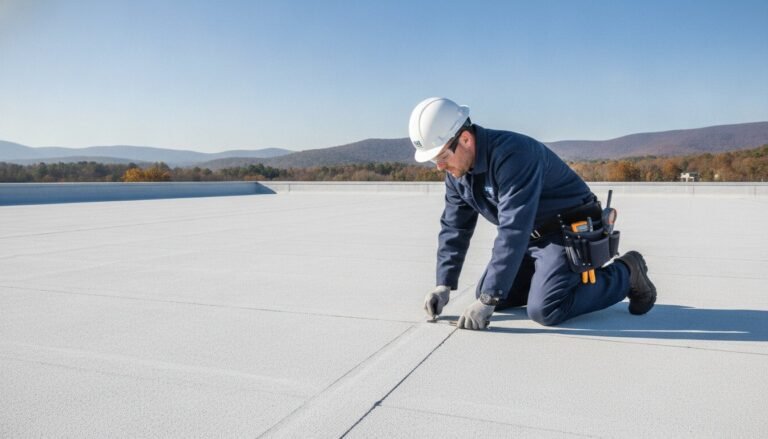
Not all tarps are created equal. While a standard blue tarp from a hardware store might work for a few hours, it typically lacks the 10-mil thickness and UV resistance required for long-term protection. Professional-grade tarps are designed to withstand sun exposure and temperature swings for several weeks. For flat roof scenarios, we often use specialized adhesives or industrial sandbags to secure the barrier without creating new penetrations in the membrane. These high-quality materials ensure your home stays dry until a permanent restoration can be scheduled.
Navigating Costs and Insurance for Emergency Tarping
Understanding the financial side of storm recovery is just as important as the physical repairs. An emergency roof tarping service is typically billed as a standalone cost, separate from the permanent restoration work that follows. Most homeowner’s insurance policies categorize this as a “temporary repair” necessary to mitigate further loss. Because you have a contractual obligation to protect your property from secondary damage, insurance companies generally look favorably on professional tarping invoices. In fact, many policies provide specific reimbursement limits for these mitigation efforts, often ranging between $500 and $1,500 depending on your coverage details. For a deeper look at this process, you can read our guide on Filing a Roof Claim for Wind Damage.
Professional documentation is your strongest asset when meeting with an insurance adjuster. We provide clear photographic evidence of the damage before the tarp is installed and a detailed report of the steps taken to secure the structure. This transparency helps ensure your claim reflects the true scope of the storm’s impact. It also establishes a clear timeline, showing that you acted immediately to prevent mold or rot. Taking these steps helps protect your deductible and ensures that the emergency service fees are properly accounted for in your total settlement.
Factors Influencing Tarping Service Fees
Several variables determine the final cost of securing a roof. Steep-slope roofs with a pitch greater than 4:12 require specialized safety equipment and more labor-intensive fastening techniques to meet OSHA fall protection standards. The height of the building and the total square footage of the damaged area also play a role. Additionally, industry data from June 2026 shows that emergency calls typically carry a surcharge of 25% to 40% compared to scheduled maintenance. This reflects the need for immediate mobilization, often during active weather or outside of standard business hours, to provide the rapid protection your home needs.
Working with Your Adjuster
Once the immediate threat is neutralized, the tarp buys you the necessary time to gather accurate quotes for a permanent asphalt shingle installation. Be wary of “storm chasers” who may offer free tarping in exchange for signing over your entire insurance check. A reputable local partner will provide a transparent invoice you can hand directly to your adjuster. Given that roofing material prices have already seen increases of up to 8% in early 2026, having a professional assessment early helps you lock in accurate project scopes before costs climb further. If you need a professional to document your damage and secure your home, contact our team for a detailed assessment.
Transitioning from Temporary Tarping to Permanent Restoration
A professional tarp is an excellent bridge to safety, but it’s never a permanent substitute for a solid roof. While industrial-grade materials used in an emergency roof tarping service are durable, industry standards and FEMA recommendations suggest completing permanent repairs within 30 to 90 days. Leaving a tarp on for too long exposes the underlying wood decking to temperature fluctuations and trapped humidity, which can lead to wood rot over time. To ensure your home’s long-term health, it’s vital to move quickly from mitigation to a full recovery plan. If you’re feeling overwhelmed by the next steps, our guide on what to do after roof damage provides a clear, step-by-step path forward.
Choosing a local East Stroudsburg contractor for the final restoration is the best way to protect your investment. Local experts understand the specific wind loads and heavy snow weights your roof must endure in the Poconos. Working with someone in your community also ensures that your manufacturer warranties remain valid and that you have a dependable partner nearby if you need follow-up support. This transition period is the perfect time to schedule a comprehensive inspection that looks beyond the obvious breach to find hidden moisture before it causes mold.
The Full Damage Assessment
- Attic and Insulation: We check for water stains on rafters and compressed, wet insulation that can lead to hidden mold growth and reduced energy efficiency.
- Collateral Damage: Storms rarely affect just the shingles. We examine chimney flashing and siding for cracks or gaps that could allow future leaks if left unaddressed.
- Structural Integrity: If a tree impact occurred, we review the roof trusses to ensure the skeleton of your home hasn’t shifted or suffered structural weakening.
Selecting Your Permanent Roof System
The restoration phase is a great opportunity to improve your home’s resilience against future Poconos weather. Many East Stroudsburg homeowners choose to upgrade to architectural shingles, which offer significantly better wind resistance than standard three-tab shingles. For business owners, we can discuss flat roof upgrades that provide better drainage and puncture resistance. Whatever your needs, the goal is to move from a temporary shield to a permanent, worry-free system. When you’re ready to start the journey back to a safe home, contact Allesson Roofing for an immediate emergency response and a detailed restoration estimate.
Secure Your Home and Start Your Recovery Today
Securing your home after a storm shouldn’t be a source of constant stress. By choosing a professional emergency roof tarping service, you’re doing more than just stopping a leak. You’re fulfilling your insurance requirements and preventing long-term structural decay before it starts. Remember that a high-quality tarp provides a vital 30-to-90-day window, giving you the time needed to plan a permanent asphalt shingle restoration with a local expert who understands Poconos weather patterns.
Our local East Stroudsburg emergency response team is ready to provide the steady hand you need during a difficult time. We specialize in providing the precise storm damage insurance documentation that adjusters require, ensuring your claim stays on track. As specialists in Poconos asphalt shingle restoration, we take pride in helping our neighbors move from temporary protection to a permanent, worry-free roof system. Don’t let a manageable leak turn into a major structural issue. You can get 24/7 emergency tarping support from Allesson Roofing and take the first step toward a fully restored home. We’re here to help you get back to normal with confidence and care.
Frequently Asked Questions
How long can an emergency tarp stay on my roof?
A professional roof tarp is designed to be a temporary bridge that lasts between 30 and 90 days. While industrial-grade materials are durable, FEMA recommends completing permanent repairs within 30 days to prevent moisture from becoming trapped underneath the decking. Prolonged exposure to temperature swings can eventually cause wood rot, so it’s best to schedule your permanent restoration as soon as your insurance claim is approved.
Will my insurance company pay for emergency roof tarping?
Most homeowner’s insurance policies cover an emergency roof tarping service under the “reasonable repairs” or “mitigation” section of the contract. Since you’re required to take steps to prevent secondary damage like mold or structural decay, insurers typically reimburse the cost of professional tarping. Always keep your detailed invoice and the photos provided by your contractor to ensure a smooth reimbursement process with your adjuster.
Can I install a roof tarp myself to save money?
While DIY installation is possible, it’s extremely dangerous and often fails to provide a weather-tight seal. Professional installers use 10-mil thick, UV-resistant materials and follow strict OSHA safety protocols for fall protection on steep-slope roofs. A hardware store blue tarp lacks the durability to withstand Poconos wind gusts and is frequently dislodged, which can lead to even more water damage and a potential denial of your insurance claim.
Does emergency tarping stop all leaks immediately?
Yes, a correctly positioned professional tarp creates an immediate watershed barrier that directs rain away from the damaged area. By overlapping the roof ridge and extending the material several feet beyond the breach, installers ensure that water flows naturally down the slope. This stops active dripping into your attic and living spaces, providing the peace of mind you need while you wait for a permanent repair crew.
What happens if the tarp blows off during another storm?
If a tarp is secured with wood furring strips and precision fastening, it’s designed to stay taut even during high winds. However, if extreme weather dislodges the barrier, it needs to be inspected and re-secured immediately to maintain protection. Our team focuses on high-tension installation techniques that prevent wind from getting under the edges, which is the most common reason why DIY or poorly installed tarps fail.
Is tarping necessary if the rain has already stopped?
Tarping is essential regardless of current weather because an exposed roof remains vulnerable to the next storm, debris, and pests. Moisture in the air can still seep into exposed decking, leading to wood rot or weakened trusses. Furthermore, insurance providers expect you to secure the breach immediately. Waiting for the next rain cloud to act could jeopardize your coverage for any damage that occurs after the initial storm event.